



Kerri Sackville wrote the survival guide to midlife dating after eight and a half years of getting it wrong. If you have just come out of a long marriage, the pull to get back out there fast is strong, and it is usually loneliness doing the talking. She sat across from a lot of newly separated men who really just needed someone to talk to. Kerri is a writer and columnist for Sunday Life and the Sydney Morning Herald. She ended a 17-year marriage, went out there, and wrote the book she wishes she'd had. Men started writing to thank her, so she wrote a second one about being alone. Her verdict is uncomfortable: you cannot feel seen by someone else while you are still a stranger to yourself. Learning to sit with your own thoughts is harder than it sounds, and she says it changed how she connects with everyone. Try the drive home with the radio off.
Top Moments
Meet the Guest
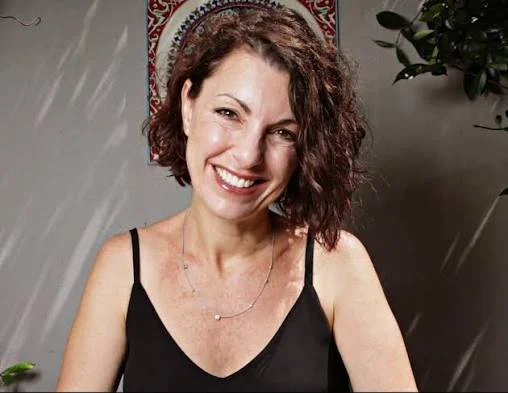
Kerri Sackville
Kerri Sackville is a Sydney writer and a regular columnist for Sunday Life, the Sydney Morning Herald and The Age. She is the author of five books, including Out There: A Survival Guide for Dating in Midlife and The Secret Life of You: How a bit of alone time can change your life, relationships, and maybe the world. She ended a 17-year marriage and spent eight and a half years on the midlife dating scene before meeting her current partner. She is 57, has three children, and lives in Sydney. Connect with Kerri Sackville Website Instagram Facebook X (Twitter) Books and products Out There: A Survival Guide for Dating in Midlife (book) The Secret Life of You: How a bit of alone time can change your life, relationships, and maybe the world (book)
-
speaker-0 (00:00.43)
Kerry, welcome to Don’t Let the Old Man In. Great to see you. Well, I first came across you when you wrote an extraordinary book on dating and you followed that up on a story book on not dating and being alone. So I want to chat to you about both of those. What will our audience get from our conversation today?
speaker-1 (00:02.976)
Yeah, you too.
speaker-1 (00:18.51)
Hopefully they'll take something away about what you need to live a... Oh yeah, yeah, yeah, of course.
speaker-0 (00:36.342)
Yeah.
speaker-1 (00:37.666)
starting it from scratch. Okay, yeah. All right.
speaker-0 (00:41.144)
Kerry, welcome to Don't Let the Old Man In. Great to see you. I first came across you when you wrote a really helpful and maybe even extraordinary book on dating in midlife. And you followed that up with a book on not dating in midlife in of having time by yourself. I want to explore all those topics together because our audience is very much in that space. But before we start, why should anyone listen to us today?
speaker-1 (00:43.662)
Good to be here.
speaker-1 (01:05.315)
I think that hopefully through my experiences on the dating scene in midlife and then the...
hate the word journey, but I guess the journey that I took after that to learn to be okay with myself will have something that resonates with other people. Either struggling in a relationship, out of a relationship, learning to be comfortable with themselves, learning how to navigate relationships. We'll see. I think I learned a lot and I've tried really hard to be able to share that with other people.
speaker-0 (01:39.342)
As I said to you, I came across your book Out There, not because I was reading it for myself, because I am in a very happily married state, but a lot of my friends were mentioning this book that they were using, and it was written for women. And my men friends were reading it to learn what to do. So, huge impact that way.
speaker-1 (01:56.448)
Yeah, actually was out there a survival guide for dating midlife. It was written specifically for women. And there was a lot about what I'd learned and advice that I would have had for myself had I known all this before I embarked on the dating scene. But of course, because I date men, I was writing a lot about what I found that men were doing wrong on the dating scene or lessons that I thought they could take away. And then I just kept getting messages from men saying, thank you. And I think one of the
big problems is that there is, because of the transactional nature of online dating particularly, you might reject someone or be rejected and never find out why. And there's no feedback. And so hopefully people who read this book can get some indication of not only the behaviours that they're seeing but maybe some of the behaviours that they're displaying. Women and men.
speaker-0 (02:52.066)
Before we got to the book, you came out of a 17 year long marriage. The moment of deciding to date again. What's that like?
speaker-1 (03:02.71)
was not a great decision at the time. If I was to go back and advise myself and when I talked to other people, I would say, really, you need to take some time to get yourself together because leaving a relationship that long is one of the hardest, most life-changing transitions you can make, really, it's huge. And I made the decision to try dating late at night,
alone in my room after going through some emotional turmoil and it was really a spur of the moment decision and...
I I wrote about it in the book. I vividly remember I downloaded at the time, I think it was RSVP, which was like a dating site. was, you you go on and you answer like, I can't remember, but it felt like 150 questions. It was probably about 30. And I started to do it and I was like, no, this is too hard. This is too hard. And I deleted it and stopped. And then I think the next night I downloaded Tinder, which was so much easier because it's like swipe, swipe, swipe. So it felt like this massive world was opening up, but I was
you need to date from a position of robustness and strength because it's really brutal and also just so that you've got something to offer other people and I really was dating from a position of loneliness and fear and chaos which is not a good way to...
speaker-0 (04:27.886)
I would imagine you were not unique. I imagine a lot of people go there because either the expectations are I should be or I've announced that I'm separating and my friends are saying well now that you're on the market here's what you should be doing.
speaker-1 (04:42.606)
Yeah, and I actually think in my experience, you know, when you're talking generalisations, I always, I used to write a lot about dating and I would say, you know, generally speaking, and people would write to me and say, hang on, I didn't do that. So obviously, not all men, not all women. But in my experience, I was more unusual in that most women seem to take some more time out before they start dating, just to settle the kids, to settle themselves. Whereas most men,
but most men tend to jump straight into it. And I think the reason for that, there's a couple of different reasons, but one of them is that women tend to be able to get their emotional needs met after divorce through their friendships. We women, particularly at this age, I'm 57 now, so hopefully younger men are getting better at having these, you know.
authentic relationships, but the men of our generation tended to get their emotional needs met through their wives and not necessarily have the kind of relationships with other men where they could really feel emotionally deeply connected. And so after separation, particularly if it's their blind side, particularly if they're not the ones leaving the relationship, who are they going to talk to? They don't have their wife. They have sort of less
deep and meaningful conversations with their male friends so they start dating sometimes to get sex and validation but a lot of the time just to connect and just to be able to have you know moments of real genuine authentic engagement with another person and so what I found on the dating scene is that very early on I was dating a lot of newly separated men who really just needed someone to talk to about their separations about their
about their pain, about their children. And again, that's something that comes in a relationship, but it's not a great way to start a new one. Exactly. It's not great first date.
speaker-0 (06:44.394)
Start a new one.
speaker-0 (06:48.645)
We had Ginny Coots on here recently, who's the head of Coots Family Law, one of largest divorce firms in Australia. Family law firms in Australia. And she said something very similar to you. She said that in her room, what she sees is once a decision is made to separate, irrespective of who catalyzed it. Now she used the word peace, which I thought was interesting. So the men seem to seek a sense of peace, which is this is far, far too angry or noisy. They need to go somewhere and get some peace.
her women clients in to go I need to set some time alone to get over my anger or whatever it is before deciding what to do. Yeah. So it looks from the outside world is he's just gone and moved on very quickly and she's not there for it's all his fault. Not at all. It's just a different way of dealing with it.
speaker-1 (07:34.168)
Yeah, absolutely. That really makes sense to me and resonates. And I think everybody benefits from taking time out and having time alone. But to do that, you also need kind of the scaffolding of relationships and support. And if you don't have that, it's kind of natural that you're going to seek that from your next romantic partner. So it's, you know...
I wrote a book about dating, I wrote a book about being alone, but they're very interconnected. you can't really have meaningful alone time unless you feel secure in other ways. You need the scaffolding of the good relationships, but then you can't have good relationships without having that kind of solid foundation of knowing who you are and being comfortable with who you are. So it's all very interconnected, which I didn't realize when I started dating.
speaker-0 (08:28.046)
So you wrote the definitive book on midlife. From a woman's perspective. So it wasn't just your experience, you obviously spoke to a of people along the way and collated all of that. So let's just walk us through the good, bad and the ugly. The men that seem to do dating in midlife well, what are they doing well that gives the experience a positive memory for the person they're
speaker-1 (08:31.342)
for me.
speaker-1 (08:52.878)
That's such a good question. First of all, I think that they've got themselves together a little bit. We all have baggage. And like you will see a lot of people on the midlife dating scene who say, no baggage, I don't want any baggage. And that's just nonsense. I mean, you can't get to your 40s or 50s with no baggage. Like that's just ridiculous. But you gotta kind of have your baggage neatly stowed. And your baggage has to sort of align with the baggage of the person that you're dating. So just, I think, to not be an active cry.
Like you can't date from a position of complete chaos. So to have your baggage stowed, just meaning you're properly separated, like so the men who do it well, they're properly separated. They're not like, yes, I'm separated, but my wife and I still share a bed or I'm sleeping in the spare room or we haven't worked out custody. Like they're actually...
speaker-0 (09:41.422)
Or I haven't quite told her a little detail.
speaker-1 (09:42.868)
She doesn't know we're separated. Yeah, I read somewhere somebody would ask the men they dated, like, is there anybody who believes they're in a relationship with you right now? Because, you know, they might think...
speaker-0 (09:53.994)
of the question.
speaker-1 (09:54.606)
It's incredibly powerful. Like they might think they're separated, tell you they're separated, but in fact, their partner doesn't know that. So somebody who actually is genuinely separated has their life reasonably in order in the logistical sense. And then someone who's honest, like honestly, honesty goes like 90 % of the way. So not lying on your dating profile. And I don't really understand the point. Like I know that a lot of women lie as well. You know, they'll take five, 10 years
their age, they'll fudge their height, men make themselves taller, women make themselves shorter, thinner, they use old photos. I don't really see the point of that. Like you don't want be greeted with disappointment, like oh I was looking at a photo of you from know 1970, like you looked, I mean there was one man who literally used the word from the 1990s.
speaker-0 (10:32.59)
So when you face the face, it's obvious.
speaker-1 (10:46.902)
So I think being honest on your dating profile, but then being honest about what you're looking for. And if you're out there dating and you're looking for a hookup, great, but just be honest and don't,
give the woman that you're dating the impression that you're potentially open to a long-term relationship if you're not, if you just want to hook up. If you want a long-term relationship, be open about that. And I think knowing what you're looking for then goes a long way. Now, we're all surprised. all, you know, I mean, when I met my partner, I was like, I'm over relationships. I'm over men. Of course, you know, after a while, we ended up in a relationship. But I knew that I hadn't completely closed the door.
So was surprised but still open. So I think taking some time, the men who date well have taken some time to just reflect, what am I looking for? Am I looking for casual, long-term, short-term? Am I open to a long-term relationship? Yeah, so that in honesty is probably.
speaker-0 (11:43.534)
Let's talk about honesty a second, because I'm imagining going on a first date, 45 or 55, whatever it is, you haven't dated someone outside of your partner in 30 years, so it's new. And you don't know what to share or not to share. Where does honesty stop and become oversharing?
speaker-1 (12:03.286)
Yeah, that's a fine line, I think asking questions more than you talk is a good start. actually be interested in the other person. And that comes back also to what we were talking about earlier, which is that lot of people, men and women, but a lot of people approach a first date and they're so desperate for connection and they haven't debriefed with anybody about what they're going through. They might have had a really rough conversation with their ex or the lawyer or their child.
They just haven't really had an intimate conversation so long and they're just like unleashing. And I have literally sat with men on first dates and they have wept, you know, within the first half an hour about their ex or how sad they are. Try and...
ask questions of the other person, express interest in the other person as much as you talk. That's really important. And let the conversation lead you without coming in with just stuff that you want to dump. And then in terms of honesty, I think there's a difference between honesty and unloading. Honesty is answering questions truthfully. So if you're asked, what are you looking for in a relationship? Well, at the moment, I'm not sure, this is what I'm open to. As opposed to, well, after my wife
did this and this and this and so it's being truthful without necessarily sharing everything and that's something I've learned. When you have a career in the media you become very good at being honest. Everything I write is true, everything I write in my columns, everything I say in podcasts is true but it's not always...
speaker-0 (13:43.854)
We're feeling it.
speaker-1 (13:44.686)
Like a hundred percent of the truth because there's things that I'll never talk about and I certainly would never talk about for example why I Why I separated from my husband I won't talk about that on air and I certainly wouldn't have talked about that in on a first date So you're it's okay to hold back as long as the things that you do share other truth and honest
speaker-0 (14:06.83)
What have you learned about, or speaking to other women, what have you learned about who pays what? This is a topic I year discussed every now and then with my friends.
speaker-1 (14:14.894)
So far, I have always believed that the person who asks the other one out on a date should pay or certainly offer to pay. And if you're a female and you approach someone or you're communicating with someone online and you're the one who suggests the date, I think it's perfectly appropriate to offer to pay.
speaker-0 (14:37.334)
Is that your experience of the women you spoke to or your friends? Is that what happens?
speaker-1 (14:41.406)
I think in our age group it's very divided. There are a lot of women who still think men should pay all the time. And in fact I remember having a conversation with one woman who said, I never put my hand in my pocket ever. It doesn't matter how long we've been dating. I was like, ugh. am much more of the, you know, where now, particularly if you've got children and they've got their own family, you've got your own family. I think it's a better idea to keep things kind of separate and keep finances out of it so you pay your own way after
the first couple of dates. But generally speaking I think it is at least to make the offer to pay if you are the one who's asked. And I also don't think it should be as big a deal as people say. I think you offer to pay and then if the other person insists on paying half or pay... okay.
It doesn't need to be. Again, there's far more important things like whether you connect, whether you enjoy each other's company, then who is going to pay for the coffee. I did have a personal rule that if I was absolutely sure that I didn't want to see this person again, I like to pay or at least offer to pay my share.
speaker-0 (15:48.162)
didn't want to the here.
speaker-1 (15:49.07)
If I didn't want to him again. So if I've gone for a drink with you and you're like, thank you, let me get the bill and I know 100 % I don't want to see you again, I would have always at least offered to pay because there is still a sense, even though I think it's unreasonable and wrong, there's still a sense where you feel, you know, he's paid for me. I kind of owe him at least a second date, which is not true. No one owes anybody that time, but to help with that. And if he insisted, then I'd be like, thank you so much.
speaker-0 (16:17.774)
What are some of the nightmares you've come across?
speaker-1 (16:20.202)
my god. Where do I start? mean the people crying on the first date was a big one. think being talked at was really difficult and that happened a lot where I would literally have somebody talking at me for an hour just unloading about their, whether it was their problems, their life, a lot of anger. was the recipient of lot of angry rants. You know it's amazing how many men you meet whose ex-wives are crazy and that's
That to me was always a red flag. Now there are some ex-wives who are crazy, there are some ex-husbands who crazy, but not every single one. So a lot of, to have the ranting was always really uncomfortable. A lot of very, very, some of my worst dates were very, very strong political opinions expressed very early on. again, some kind of ideas about where women should be or...
Bizarre things like talking about, you know, abortion or like on the first date, you know. So things like that were really difficult. I had some really odd and hopefully unique situations where I, you know, showed up to a date and he said, no, we're going somewhere else and took me to a place where all of his friends were and kind of sat me down at the table with all of his mates who are halfway through a meal.
speaker-0 (17:47.778)
for them to interview you or...
speaker-1 (17:49.164)
Yeah, to kind of eyeball me, that was just excruciating.
speaker-0 (17:53.39)
We have to get out of there.
speaker-1 (17:54.51)
so that was really bad. had, and I think the other nightmare scenarios were men who blatantly lied on their profiles, like blatantly lied. So turning up and expecting to meet, I'm thinking of one in particular, expecting to meet someone, I think he said he was 54 and five foot 10. And my ex-husband was shorter than me. Like I have no issue with short men, but I expected him to meet a man who was like 5'10 and 54. And he turned out to be, I think, 67.
and about five foot two and it's really hard to come back from that. Yeah, exactly, just the wrong measurements. So things like that. And then, God, the guy who rocked up with a flower tucked into his pants and said, I've got a flower for you. And he expected me to kind of pull it out of his pants. Yeah.
speaker-0 (18:28.75)
54
speaker-0 (18:47.862)
I wonder why he's single.
speaker-1 (18:50.35)
So I could go on but that's just a little sprinkling. I also had some lovely dates with love.
speaker-0 (18:56.974)
But I think what you're saying is the antidote to all of that, in terms of if you want to have a second or third date with this person, that you've come, you've made the effort to meet them, you might have even had some text messages and now you're here. If you want a second or third date, ask a of questions, be curious. Be curious.
speaker-1 (19:12.878)
Curious about that. Yeah, about that. Now, I don't mean then do an interview with them, but actually express interest in the other person. It is amazing how many times I left a date thinking, he doesn't even know how many children I have. You know, he hasn't asked anything about me. Or he, you he might say, or I might say, you know, on my profile, I think I said I was a writer, he didn't ask what I wrote or where I wrote for. And I would come away knowing his children's ages and names and what they're studying and what his wife did.
And so just curiosity about the person in front of you goes a long way.
speaker-0 (19:48.638)
You are a writer, are probably a very good listener as well in terms of interviewing people but that's not your message.
speaker-1 (19:53.386)
No, that's no, no, no, it's it's it's give and take. mean, I don't want to sit and just talk about myself, but I want somebody to actually be interested in me. And I do remember an early date where the man was incredibly attentive and sort of sat across the table and was really listening and laughing at my jokes and and then told me about himself. And I felt like I came away feeling, wow, we actually connected, you know, we actually I had a good time. I felt heard. I learned about him and we didn't end up
kind of relationship, but it was a really positive experience. I always, what I learnt and what I told people after I wrote the book is to go into a date thinking, I hope I meet my next life partner is a huge ask and you're going to end up disappointed. But if you can go in thinking, wouldn't it be great to have just a moment of real connection with someone and have an interesting conversation and maybe learn something.
And if you get that, then that's a really good outcome.
speaker-0 (20:56.782)
I think that point's really important. It's like going to a football game and expecting I'm going to meet my new best friend here tonight. It's just going to happen, right? Of course it's not going to happen. might, but chances are you won't know that night. You'll know much, later. What did you learn about you in the whole process? Because you said earlier in your book that you went out a date at a frenetic pace. And I think you now say you wish you hadn't, or you wouldn't do that again.
speaker-1 (21:22.762)
I there were two main things, so can summarize what I learned. And one of them was that it's really important, literally I wrote a whole book about it, it's really important to be okay in yourself before you seek a relationship, or before you're actually able to have a really satisfying and nurturing and healthy relationship with another person. And...
I look back on my relationship history and I was in some really unhealthy relationships and a lot of that is because I wasn't okay in myself. And there's so many reasons that it's really hard to encapsulate, again, which is right, I wrote a book, but a few of the reasons why is one,
What we want in a relationship is true connection, right? And in order to feel connected to someone, you need to feel like they see you. So when I'm sitting here with you, want to feel like pod is actually seeing me, that you get me, that you understand me. How can I expect you to see me and understand me if I don't see and understand myself? Like you can't possibly feel seen and understood and truly connected to another person unless you know who that person is that they're
trying to connect to. So that is one of the really important reasons why you need to be okay and get to know yourself.
The other is what I alluded to in the kind of frenetic dating, which is that if you are trying to seek relationships with people, whether it's friendships, whether it's with your kids, whether it's in romantic connections, from a position of anxiety and fear, like trying to escape yourself, like if I'm trying to get my needs met from other people because I can't be alone, then I'm not really seeing them and I'm not really connecting with them. I'm using them as a crutch.
speaker-1 (23:17.68)
And I'm using them almost as an object to soothe myself. And that's antithetical to really strong relationships. So back to your question, I think what came out of those, I was dating for like eight and a half years. And I think what came out of that is really deeply understanding that the most important relationship that I would have was with myself and that I wasn't gonna have any really healthy relationships unless I learned how to be comfortable with myself.
And the other thing that came out of that, which is related to that, is that I learnt that what I had been looking for in a partner was kind of nonsense. Like I had had... I had been... My criteria were absolutely...
speaker-0 (24:01.326)
Expectations were too high or too...
speaker-1 (24:10.194)
wrong and did not meet my needs. had been looking in the wrong places. I had been looking for the wrong things. And I had, for example, it's just one of the things that I laugh about now with my partner, like I would only date men when I was on the dating scene and I would only swipe on men or tick the box or whatever if they had postgraduate qualifications. Because in my mind, now I don't have postgraduate qualifications. I've got two undergrad degrees. I don't have any postgrad.
my mind, I needed someone really smart, like really academically smart because I had been around really academically smart people and my ex had been really academically smart and achieved great things in academia and then in his career. And so I thought that was a sign that somebody was worthy of dating. I ignored the fact that the men I'd been involved with,
smart were not necessarily emotionally intelligent but I didn't even know how to go about finding someone emotionally intelligent so I was just looking for academic smarts and if they had a post-grad degree great they were worthy and I think also it boosted something in me like I could kind of feel better about myself by being attached to someone of status if you know what I mean.
And I realized after a lot of dating and after a lot of bad relationships, know, and bad dates, that...
what was important was emotional intelligence and what was important was how I felt with the other person, not what qualifications he had or how tall he was or what money he earned or how he dressed, any of those kind of things. So I ended up after a very long period of reflection and trial and error and bad experiences kind of honing down what I was actually looking for. And I think this works probably for everyone. It's worked for everybody that I've shared the formula.
speaker-1 (26:11.98)
with so far, men and women, I was looking for someone in the end whose company I really enjoyed, whose company I didn't get tired of, and who made me feel emotionally safe. And I had never had both of those in the same person till I met my partner.
speaker-0 (26:30.51)
How about I make you laugh?
speaker-1 (26:32.3)
that's, I mean that's part of really enjoying their company. Because I don't think I could really enjoy someone's company unless they made me laugh and laughed at my silly jokes.
speaker-0 (26:41.43)
Well that just says to me, when you're enjoying the company, you're at ease, you're laughing, safety by nature is present, because it wouldn't be present otherwise.
speaker-1 (26:51.188)
Not necessarily. had relationships with a couple men who had excellent senses of humor, could be very, very funny, but were also very, very mean, and did not make me feel safe, and could kind of turn on a dime, so be really charming and really funny, and be great company. know, lot of narcissists are very charming people. So I had met men on the dating scene who were really, whether they were diagnosed narcissists,
but really narcissistic and really fun and great for the first couple of dates and then when it came to emotional intimacy they were absolutely useless and as I could be quite cold to me. So what you need in a partner is someone who you feel that you could spend a lot of time with them without getting sick of them because in the past you know I've met men who were nice and made me feel safe but who were really boring. So you want someone who you find stimulating company but who also
makes you feel safe and who isn't you know keeping you at arm's length or playing games with you or or you know just making you feel poorly about yourself.
speaker-0 (28:02.83)
James Sexton, the relatively famous divorce lawyer from New York who's written a lot of books about relationships. Big huge character, he's your classic New York. But if you listen him closely enough, it's never about breaking up, it's about how do I help you stay together. But he's got a line that I love which is, if on the day you get married and 30 years later you can say these words, then you're gonna go to him, you are my favorite person. If you can remember that over that time, and you are my favorite person to me,
I've got to be enjoying your company again and again and and again and I can still see where your flaws are but that's okay because you're my favorite person. I love that idea.
speaker-1 (28:43.256)
But to get to the point where you can consider someone your favorite person when they are actually good and healthy for you, for some people is quite difficult. If you are someone who comes from a background where relationships are difficult and volatile and high stress and high conflict, that's what you're used to and that's what your paradigm of relationships is. And so I've seen a lot of people
who think that their relationship is good, and this is my favorite person, we argue all the time, and we're constantly breaking up and getting back together, but they're my favorite person. Well, I would say that's not necessarily a healthy relationship, and there may be work to do on yourself to get to a point where safety looks appealing and calm and security and feeling nurtured and not heightened is...
is your favourite place to be.
speaker-0 (29:45.23)
Not heightened, that's really important. Can you just add as a segue to your latest book, The Secret Life of You, how a bit of alone time can change your life, relationships, and maybe the world, which I like. Maybe the world. Why are we afraid to be alone?
speaker-1 (30:01.134)
There's so many reasons. I think it's getting harder and harder to be alone. You when you and I were growing up, we had a lot of alone time in the course of a day. We just, it was built into our lives. I mean, I walked to school every morning and on my walk, I was alone with my thoughts. There was nothing else to do. We didn't have phones. We didn't even have Walkman back then. So if you were on a bus ride, you were alone with your thoughts. If you were pottering around your house,
You might put the radio on, but the radio was in the kitchen, so every time you left the room, you were alone with your thoughts. If you were in a waiting room, you were alone with your thoughts. But we are now at a time where we never have to be alone with our thoughts because we have these boxes in our pockets that will immediately distract us and connect us to billions of other people around the world. And what's happened is then alone time has become almost a problem to be solved by picking
up our phone and so we're becoming less and less used to being alone with our thoughts and so being alone with your thoughts becomes quite scary. So that's the feedback that's happened with the age that we live in. And then on a psychological level a lot of people I think are scared to be alone with their thoughts because they don't want to look at what's in there, what's inside their heads and so they spend their lives fleeing from that. You know I interviewed a lot of people for this book and asked them you do you
spend time alone with your thoughts. If so, why? If not, why not? And there people who would say things like...
Yes, absolutely, I need that time to decompress or I've got all these voices in my head that I need to, you know, listen to. Other people would say, absolutely not, no way. Are you kidding? I don't want to think about what's in there. No, it's too distressing. I try not to. I'll distract myself every moment of the day. And so they spend their lives running from, you know, the one person who's going to be with them the whole life.
speaker-0 (32:07.788)
and a awesome day one. When I was reading your book, it reminded me of...
March 2020 when COVID kicked in. Now what I mean by that is, for the previous 10 years I had an international consulting career. I was flying everywhere. think in 2019 I did like 20 international flights. And for me, the flight to Singapore or the US where I was going to was my most precious time in the world because I had eight hours or 12 hours or whatever number of hours cocooned by myself. And that's when I read, that's when I journaled, that's when I created stuff.
So when COVID kicked in, I suddenly realized after a couple months, I'm not doing any reading, I'm not doing any journaling, but I had all this spare time because we were locked down. I had to go and buy a chair to put into my office to pretend it's an airplane chair because that's where I do my stuff. And I still have it and it still works.
speaker-1 (33:00.43)
That's such a good idea. love it.
Yeah, I love that. I think I went through something similar in that I was simultaneously in March 2020 very alone and also never alone because I was living, I still live in the apartment, but I had my three children with me at the time. Now I've only got two, which is still a lot. But I was in an apartment with three children, two of whom were young adults and really unhappy. It was not a fun time for them. And so I was with them.
all the time and so was never actually alone but also I was very isolated because I was alone with my three children and I should have had all this time to read and think and write and what happened in the beginning of the pandemic was that I
became almost like I started obsessively scrolling on my phone. Like it was like anything to distract myself because I had been doing a lot of dating, I'd been doing a lot of socializing, I'd been doing a lot of posting on social media for years. And I realized at the time once, or mean posting on social media could stay, but the dating, the socializing, walking around the shops, all that had to stop.
And I realised I'd been running for a long time and I realised that I had actually been trying to distract myself from sitting with myself in a way that I really, I don't think I'd done at all, not only since I got divorced, but probably.
speaker-1 (34:34.796)
for many, many, many years. And it became a real problem. I mean, I remember just losing hours and hours and hours to Instagram and Facebook, which is, you you'll see some funny things, but mostly it's a waste of time.
And these apps are obviously designed to keep us addicted and I was falling right into it. And so I decided I had to stop and I had to learn to be alone with my thoughts and it was incredibly hard. And I really did make a rule with myself that I was going to put down my phone and just be. And I didn't have a special chair but I did go for long walks without my phone. And I did kind of make it a rule that I would do housework and stuff without my phone and really learn to.
the car to not have the radio, not have a podcast, and learn to just be alone with my thoughts. And it was hugely transformational, but God, it was hard. It was really hard.
speaker-0 (35:32.27)
going to read you an excerpt from your book on this exact topic. Because when I read it the other day, you reminded me of...
2008 2010 when I went through a separation than a divorce and then moved to my own house with my two kids and Finding that when the kids my two kids were not with me. I had all this alone time Yeah, so let me read out to see because he said all the following years I had to ask myself innumerable questions But how I wanted to live who I wanted in my inner circle I wanted to spend and manage my money where I wanted to travel on my holidays I spent a great deal of time in the secret world of my mind
speaker-1 (35:55.16)
Yeah.
speaker-0 (36:11.344)
Getting to know myself as I would another person there were many surprises some insignificant like I like bright colors and some quite profound I'm not nearly as anxious as I had believed mostly I wish I had turned inwards earlier and not wait until I was single to figure out who I was. That really struck me as a like you started discovering versions of yourself you didn't know.
speaker-1 (36:35.176)
Yeah, and something that I did, an exercise that I started doing, which I really recommend, which is again something that we probably did instinctively back in the day before phones, but now what I do is if I read a book or if I listen to a podcast or if I watch a show on TV, I will take some time to work out what I think about it before I discuss it with anybody else or before I read reviews. I always would, you know,
like watch TV and then immediately talk about it or immediately start tweeting about it and get or even before I'd finish you know find out what everybody else thought and that kind of really informed what I thought about it and even those kind of little steps.
can really help you to get in touch with who you are and what you think because we are in a world where we are just like inundated with other people's opinions about everything. You can't pick up a book without seeing the Goodreads reviews or there'll be a podcast discussing it or the TV shows that I watch, most of them have been analyzed and reviewed before they even come onto the screen or you can go onto social media and see people posting about them. So just to take the time to ask yourself,
What do I think about this? And if you're in a relationship as well, you know, we tend to merge our opinions a lot with the person with whom.
speaker-0 (37:57.578)
Yeah.
speaker-1 (37:59.082)
Yes, so you're watching a movie with your partner and and you know you're hearing what they think about it You know what they're think about it often before they even tell you or you're eating a meal and they're like this chicken is a bit too salty and you're like, I kind of like the chicken But maybe it's not so good and so just to be able to refer back to yourself is is I think a lost art
speaker-0 (38:20.915)
You might be very proud of me. Hear the notes I've been making. well. I'll come back to these notes and read them I love it.
speaker-1 (38:26.582)
people writing books. I love it. It's great. shows that they've actually paid attention.
speaker-0 (38:30.584)
You tell a really cool story in the book just to distinguish who you are then versus who you were post this experience. You talk about how you were involved in a car crash and once you realize everyone's okay, your first thought is, am going to write this on Facebook to tell the world? You're still in the car at the moment of writing that.
speaker-1 (38:48.088)
Yeah, I vividly remember that. I...
was posting so much on social media that I started to kind of see my life through tweets and Instagram posts. So I would still be in an experience thinking about how I'm going to curate this for the world. And I think that's true for a lot of young people particularly, where social media becomes such a mirror and such a prism through which they curate their lives that it's almost impossible to have experience.
experiences without it. And you see it all the time. mean, you go to a restaurant, you see people photographing their food before they eat it and they're more concerned with the picture of the food than what it tastes like. Or you see people at concerts, just looking at the concert. And even as a parent, I stopped filming my kids' performances because I realised I was way more concerned with getting the right shot. then you're honestly, you almost never look at it anyway.
being there and experiencing it. my daughter graduated, my youngest graduated from high school last year and I made sure that her graduation, I just sat and experienced it. I wanted to remember what it was like to watch her graduate rather than just look at it through the memory of being behind a phone or seeing the photos. And I think it's great to have memories, it's great to take photos. If you want to post on social media, great.
and it's really important for some people in their work, but when we're losing the capacity to actually be in the moment and enjoy the moment, then what's the point of it all? It's like our lives just become a photo album instead of an actual lived experience.
speaker-0 (40:38.478)
20 year old son and I, we share experiences. if driving the car, we take turns. He suggests the music, and I suggest the music. We plan this. But one thing we do, have done recently is, let me play you a concert that I was at or I went to. So I played him a video of a YouTube concert from 20 years ago. His first reaction was, there's no phones anywhere, Dad. No one's got a phone in the audience. He said, that's strange. That's how we live life.
speaker-1 (41:06.69)
But you do remember things differently. You know, I remember being at a concert. It was a Robbie Williams concert and the warm up act was Duran Duran. This was, I don't know how many years ago, maybe 20 years ago. And Duran Duran already by then was, know, just our generation remembered them. And I didn't take any photos. I've got no film or footage from it, but I vividly remember the voice like Simon Le Bon. He left the stage.
the lead singer of Duran Duran for those who don't know, you should all know though, left the stage and they weren't called back for an encore because the audience were too young and they didn't know who Duran Duran was and I was yelling and screaming and then he comes back on stage and he says very plaintively, well.
play you some more, you just need to ask for it bit louder. And that moment is seared into my memory. It's like a visceral memory of where I just want to give the poor guy a hug, know, has been Simon Le Bon. I never would have got that if I had been filming it, you know? It just mediates the experience to the point where you don't actually feel it fully.
speaker-0 (42:14.146)
What do you say to someone who's listened to this, who is at the start of their experience, who is feeling lonely, is hearing you talk about solitude as being, sounds the same thing, but you say it's different.
speaker-1 (42:27.468)
Yes, solitude is very different to loneliness. When I was writing the book, my son kept saying to me, how's the loneliness book coming along? I was like, no, it's not. It's about the opposite. Solitude is the opposite of loneliness. Loneliness is the gap between the connection that we desire at any given time and the connection that we feel we're getting. So it's a very subjective experience. You can feel lonely in a relationship. You can feel lonely surrounded by other people. Or you can not feel lonely at all when you're completely
alone in a room. It's about your needs for connection not being met. that's loneliness. Solitude refers to feeling.
comfortable in your own company. So what I would almost call keeping yourself company and feeling nurtured by your own company and feeling a sense of connection to yourself, right? So it's the opposite of loneliness. So the more comfortable we are with ourselves, the more we can nurture and support ourselves, the more we can talk to ourselves, reassure ourselves, amuse ourselves, then the less lonely we're going to be.
Now that doesn't mean that people should live a life of 100 % solitude. We all need company, we all need connection. But the better we are at giving ourselves connection, the more deeply we're going to connect with other people and then be less lonely. And the more nurturing those experiences with other people are going to be. So it's really kind of a symbiotic relationship between solitude and
connection with other people.
speaker-0 (44:12.686)
Where should we start?
speaker-1 (44:14.552)
think what we need to start with at the very basic level is for people who are frightened to be alone to kind of work on that. So I certainly don't recommend that anybody who has never spent time alone goes and like meditates on a mountain for six weeks. Like definitely not. It's starting with little moments. So not picking up your phone to distract yourself every time you're alone. So if you're in your car, right, don't put on the radio. Don't put on a podcast. Listen to this podcast later when you get home.
When you're exercising, try exercising without music or an audiobook or whatever. Again, if you're pottering around your house, just try to take little moments of time where you actually allow yourself to be in your own thoughts and get lost in your own thoughts. Things like, I've got a lot of very specific techniques in the book, but things like asking yourself your opinion before you ask other people. Try to talk to yourself, so ask yourself questions.
like you would ask somebody else a question. How am I feeling today? What do I want this week? What am I most happy about? What am I most sad about? What am I proud of? I would sometimes be driving along and actually interview myself. And it was amazing. I would just ask myself questions and I would be really surprised at what the answers were. So that's a really good way to kind of start. And then you can progress to things like maybe taking yourself to a movie alone or having a cup of coffee in a cafe by yourself or
progressing to maybe a short weekend away somewhere by yourself or going off to a museum. Just learning very slowly and incrementally how to be comfortable in your own company.
speaker-0 (45:56.014)
I often recommend people, this is a great time, if you've never done it before, start journaling. And as simple as it is, just get a blank notebook, Moleskine or what any kind you want. Don't record a dictaphone, like get something to write in. And answer the questions you've just said, how do I feel about this? What's really interesting when you go to a coffee shop and see people doing that, they look interesting. They look really interesting.
speaker-1 (46:00.65)
yeah.
speaker-1 (46:19.598)
So you just heard it.
speaker-0 (46:20.43)
So true. And the amount of times I've been at a coffee shop doing some journaling and someone says to me, oh, what are you doing? Next time I'm in a conversation with a stranger, but nothing to do with my journal. Yeah. To do with a conversation. Yeah. So if you are scared of being alone and you're just practicing that, don't be surprised if the practice actually leads to conversation with a stranger that could be company.
speaker-1 (46:41.336)
Yeah, and journaling is brilliant and it's such a good way also of learning about yourself, of dealing with your anxieties, know, taking your worries out of your head and putting it on paper is incredibly helpful. And there are actually journals that you can buy if you don't know how to start that have prompts in them, which I think are really helpful.
speaker-0 (47:00.012)
Michael Bungie Stainer was one of our early guests and he has a great collection of journals you can get from his website. talk about purpose. Victor Frankl, who you wrote about in your book, became known as for leading a called logotherapy, which is basically you're in a tough situation. He was in Holocaust prisons.
speaker-1 (47:06.499)
Yeah.
speaker-0 (47:20.558)
and helped his fellow prisoners to imagine the future and imagine themselves doing something, kind of manifesting a different outcome. There's one famous story where he helped a fellow prisoner to imagine golfing, and this guy never golfed in his whole life. But the prisoners who really got into imagining themselves being in a different situation were the ones who often survived Holocaust. And in the case of that golfer, went golfing.
How did you use the sense of purpose? How did you use the sense of, I want to see me doing something else.
speaker-1 (47:52.824)
Yeah, I think purpose is incredibly important to give meaning to life. And we all need purpose, but I think in our society we've conflated purpose with work and productivity. So if you're not super busy, then you don't have a purpose or if you don't have a high-powered career, you don't have a purpose. And purpose can mean different things to different people. And as long as it brings meaning to you.
for me it's always been writing like I've always written and that's given me a lot of purpose but also raising my children, being with my partner, being a good daughter to my parents so relationships have given me a lot of purpose but also in more recent years trying to get to know myself and be a good friend to myself has been really important and then giving back to other people I think that
whatever that looks like for different people, but trying to tread lightly in the world and do good in the world. The world is often not a very warm and friendly place and I think that the more we can even bring comfort or...
happiness or aid to even the people in our intimate circle or the people that we can connect with I think is really important.
speaker-0 (49:28.568)
building on that, thinking of the listener who's listening to us who may well be in a relationship or may not, either way they feel alone, they feel very lonely, and they're waking up at two in the morning wondering what's gone wrong, what do I do? What do I say to them?
speaker-1 (49:41.778)
the two in the morning horrors are just the worst. I would say the best thing you can do at two in the morning is probably writing things down. It really again helps with those like circling thoughts and spending some time, mean, obviously therapy for everybody I think is really important, but writing things down helps you to get clarity and it also gets those ruminations again out of your head so that you can sleep. But those are
very big questions and can take time but I think you...
The helpful thing when you're as lost as that person sounds is getting back to really the kind of granular details. So what gives me pleasure and satisfaction? What are the little things that I can do that I enjoy? So when things get really difficult, so if I talk about myself, when things have become difficult and overwhelming and I'm up at two in the morning thinking, is this all I feel so lost? I know, for example, that I always feel better when I go for a walk.
something really important to me that I do every day. I know I feel better when my house is tidy, so I'll tidy my house. I know I feel better when I connect with a couple of people that I love, so phone a friend. So bring it down to the little things. think trying to seek happiness or well-being as a whole when you're in such a crisis state is really difficult, but you can find little things that you can do during the day to bring you a sense of well-being.
and comfort and pleasure. give yourself time every day to listen to some of your favourite music or watch your favourite show. It just helps to get through these really difficult times when everything feels overwhelming.
speaker-0 (51:32.366)
That's fantastic. I remember going through a 30 per process after I separated and I had no understanding how much grief I had on the streets. great to me. Oh yeah. This is about grief. Of course. I'm grieving the ending of something that I never thought would end. that help was extraordinary to get to what you described, to build back some basic steps to come out the other side.
speaker-1 (51:55.116)
You need to sort of build back your resilience and give yourself, I've always thought in difficult times you turn to moments of pleasure and wellbeing rather than looking for an overall state. And then also the other really helpful thing, which is what you said, if you know for example that you're grieving or you're confused or you're angry or you're hurt, you give yourself time during the day and if you're waking up at 2am, it may have to be 2am, where you sit with those feelings, you write them down, you really embody them and then you say at the end of the period, 20 minutes,
half an hour, right, I'm closing the journal now and I'll revisit this tomorrow and then try and nurture yourself. And as I say in the book, self-care is not necessarily bubble baths and massages. Self-care can be watching your favourite show or exercising or baking or whatever your self-care is that brings you a sense of...
speaker-0 (52:47.054)
Absolutely. What question have I not asked you that I should be asking because it's a really important one?
speaker-1 (52:53.102)
god, probably like how you make sense of aging because that's something that I struggle with a lot and I think we all do.
speaker-0 (53:07.033)
How do you make sense of ageing?
speaker-1 (53:08.916)
I'm really trying to work on that a lot and I think what I see for the older generation and something that I've been contemplating a lot is an incredible fear of dying that seems to follow people into their later years and I really am trying at this point to work on understanding that life is really cyclical for all of us and there is something that happens when you get to your fifties
where you kind of really have that space to look at, know, okay, now here I am, I've moved kind of on the conveyor belt, the younger people are now coming through, and to come to an acceptance that this is now our time to be older and to let the young people do kind of their thing. And we have the wisdom of age and we have some things to pass on, but it's okay not to necessarily be in our 20s and 30s anymore. And I think it's really important to work on
accepting that life does come to an end. really, think obviously we all want to strive for longevity, but I think that the people who want to live forever and are doing everything now in their power to never die are misguided. I think it is the fact that life does end that gives life its meaning. And if we can get to know ourselves and live as rich and rewarding as a life that we are able to live, then once we get to that end point, we'll be
to let it go. So that's what I'm striving towards and that's the message I think that I'm trying to embody and convey to other people.
speaker-0 (54:45.722)
I love everything you just said there. One of the reasons, not the other, but one of reasons why I initially set up this podcast was to remind myself every day by talking to people like you and others, this is a privilege to be alive in my 50s and 60s and 70s. So how do I keep reminding myself of live with that lens as opposed to any kind of regret or lack of consciousness around the whole thing?
speaker-1 (55:08.91)
And it's not meant to last forever. And it wouldn't mean anything if it did. So yeah.
speaker-0 (55:16.046)
You've accumulated through experience and writing and interviewing a fair degree of wisdom at this stage of your life. What are the final words of wisdom you've been giving our audience today?
speaker-1 (55:28.514)
wow, I think probably I would distill everything with what I said earlier which is that just aim for the good moments. I think that life is very complicated and getting more complicated. I think the world we live in is incredibly complex and we have to understand that we all have limited power to change it and if we can change ourselves, if we can impact the people that are closest to us, then that is worthwhile.
and that we should all aim, we have a responsibility to aim for as many good moments in our days as possible. So sometimes it's okay to kind of get small and say, right, today I want to just have as many moments of real connection with other people as I can, as many moments of pleasure, as many moments of contentment and happiness, instead of kind of, oh God, how can I fix this great chaos that is the human experience?
speaker-0 (56:26.796)
This has been a great moment.
speaker-1 (56:28.48)
Has been. Thank you Kerry. Great pleasure.
