



Aneace Haddad sold his software company at 47, then spent years dangling in mid air, one hand on the life he had built, one on the life he had not started. If you have been telling yourself you are doing both, still in the job while quietly building the next thing, you know the feeling. Both arms out, and nothing moves. Aneace is a former tech CEO turned executive coach, working almost entirely with C-suite teams. He calls midlife a crucible rather than a crisis, the crossing into second adulthood, driven by three winds of change. The one nobody talks about is what happens to you as a parent. Some of the loss is real. The prefrontal cortex slows, and Pod admits on air that he blanks on his own son's name. But the two hemispheres talk more and patterns get easier to see. Give it the hour. His closing line: nobody died, let's get pizza.
Top Moments
Meet the Guest
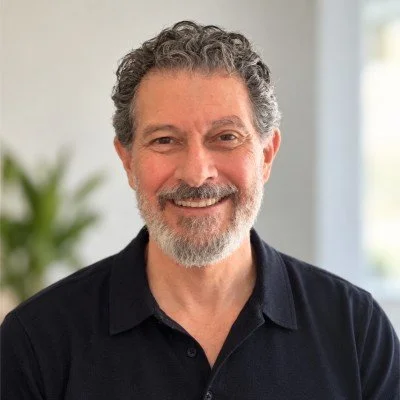
Aneace Haddad
Aneace Haddad is an executive coach and author based in Singapore. He started out as a C language programmer in Colorado, then built a payment software company from the south of France that grew to serve banks in 30 countries. He sold it in 2007, at 47, the same year his marriage ended and he moved to Singapore. He spent the following years working out that he liked people more than computers, and retrained as an executive coach. Almost all of his work now is with C-suite teams, a third of it one on one with senior leaders. He runs his firm Aramyss and is a McKinsey senior advisor. He wrote Soaring Beyond Midlife, on the six leadership superpowers of second adulthood, and the novel The Eagle That Drank Hummingbird Nectar. He is 66 and entering what he calls third adulthood. Connect with Aneace Haddad Website LinkedIn Facebook X Books and products Soaring Beyond Midlife (book) The Eagle That Drank Hummingbird Nectar (novel)
-
DLTOMI Aneace Audio Not fixed
[00:00:00] [00:01:00] Anise, welcome to the podcast. So good to see you. Hello pod. Great to see you. Well, I know you're joining us from Singapore today, so glad to have you on the call before we start. What would our [00:02:00] listeners get from our conversation? So why should they say listening to you and me? Wow. Wonderful. I don't know why they should be listening to us.
They should be out doing something fun today. But, uh, so I've loved listening to all your podcasts. I've, I've had a lot of, uh, a lot of fun listening to them. So I, I, I, what I'd love people to take away from our conversation today is kind of a clearer distinctions around these, uh, stages of life. Um, you've spoken a lot about midlife and, uh, there's some distinctions that I have that are a little bit different than other people have, and I think they help to kind of put things into perspective so people can kind of see where they are on their journey through life.
Fantastic. Well, that's a lovely frame. I'm, I'm, I was hoping to talk to you exactly about that, about second adulthood, third adulthood, the distinction. What it means to move [00:03:00] from one to the other. I also wanna talk to you a little bit about the work you do with senior leaders, particularly around legacy and then the way you help people to think about that.
But you know what, I think a good starting point is you as in your context, because that, that helps set the perspectives you bring into this conversation as a, I think it was 42, I think, thereabouts in your, in your early forties, you were very successful tech entrepreneur, you sold your business, you went through a marriage breakdown divorce, and you moved country like all in the same year.
For some people that's like tumultuous change, but I think you think about that as a doorway into something very new and different. Tell us more about that. So, uh, it was a, I was 47 that year. Um. I had built a payment software company in the south of France. Um, my wife at the time, um, was a family of, of, of [00:04:00] people who made wine.
So we lived on the vineyard a few hundred years old, in the middle of the vineyards in CVAs. And my business, I had built an and grew it to 30 countries. With banks around the world. Um, and at 47, it was just, uh, the year before the global financial crisis, so it was 2007. Um, now everybody, they can do a little bit of arithmetic in their heads.
Has figured out how old I am now. So I was 47 when the, when we saw, yeah, right. I was 47 when we sold the company. Um, and we had a big team in Singapore, so I was coming to Singapore very often from France. Anyway, all of my r and d was based here. My AsiaPac sales and marketing was here. Um, so I would travel quite often to Singapore and then travel around the region from here.
Um, so at 47 sold the company. The, the marriage had already kind of broken [00:05:00] down. I lived in, I moved to Singapore from France, uh, got divorced. Um, I didn't look at it as being tumultuous at the time. I looked at it as, uh, I'm just going through stuff. There's change happening. Um, selling the company was a huge, uh, project that had taken a long time.
Um, my founding shareholders were all thrilled to be selling, uh, because they had held on for a long time. We didn't know the global financial crisis was brewing. Um, and within a year, year and a half, it was just kind of, that was falling apart. Um, it was only. Later that I saw that it was a pathway, it was a, it was a transition, a crossing, if you like, a threshold.
That kind of language wasn't anywhere in my thinking at the time. I was just going through stuff. Um, looking back, it's a [00:06:00] classic midlife crisis. I mean, you, you, you start questioning yourself. What is it? You like what? I'm an old programmer. I started my career as a c language programmer in Colorado. Um, and, and then became an entrepreneur.
And then from 47 to 50, there was a lot of introspection. And looking back now, I know that's what happens when we're in that phase as we, we go through a lot of introspection and I, and I discover, I thought I was gonna be a serial entrepreneur, so I started building other companies, but my heart wasn't in it.
And I discovered that what I was really. Excited about what, what I really liked most was seeing my people go on and become CEOs, CTOs, CFOs of other organizations. And I discovered, uh, what I say now, which I would not have been able to say at the time. I discovered I liked people more than computers and that sent me in a spiral.
There was an identity crisis. I've heard a [00:07:00] few of your guests talk about this going from tech, CEO, traveling the world globally to speak at banking conferences around the world, even speaking to boards of banks about innovation way back then. This was 25 something years ago. And uh, and then I started transitioning to executive coaching and mentoring, which is.
You're a beginner again, you're one among tens of thousands of other people, uh, learning new skills. People want you to tell them what to do because you've done it before and you're, you're struggling not to tell them because otherwise that's not really coaching. And it was, it was quite a, that period was far more tumultuous than the first part of the transition.
It was more the, uh, the other side of it. So, yeah, that, that, that was a long answer to your question. It's, oh, it's, it is a great answer. 'cause [00:08:00] it, it sets the context for so many different things we can talk about. Um, I mean the, the, the notion of ending some major part of your life before you can even start exploring anything else.
In itself. That's, that's, that's a huge thing. Um, so before I, before I jump into the exploration, I do wanna ask you, as a founder of a business, and, and I know you work with founders and I've done a lot of work with founders, and there's something magical about entrepreneur who's able to bring a business out the ground.
In your case, many, many countries have shareholders involved and bring it to a sale. I mean, that's, that's so magical to be able to do that. What was the letting go like for you as walking away from that person? And I know you said you thought you wanted to be a serial entrepreneur, but the actual point of letting go of the baby you'd built.
Oh, interestingly, letting go of the baby I built was less of a, less of a challenge. Um, I [00:09:00] had two daughters in the US that were already. Um, late teens, early twenties. My son in France was, uh, 1415 when I sold the company. So I'd already experienced that part. And it's part of what I've worked on since then, or, or written about as well, is the similarity with parenting is, is very strong.
So, and interestingly, you use the term letting go of the baby. So I had already seen kids grow up and, um, you go through the process of having to let go. If you still parent them the way they were when they were 5, 6, 7, you're gonna get smacked really, really hard by them and it just doesn't work. And then when they're 17, 18, 19, you parent them differently.
And then early twenties, it's, it's, it's, it's yet completely different. And, and you go through that phase of, uh, learning that your value is not necessarily. [00:10:00] Having all the answers, being able to tell them what to do. 'cause they don't want that putting a roof over their heads, although they do like that and they'll come back for that until they're quite a bit older and, and all that.
But you, you, you start discovering that your value is, is diff in a different place. I don't think I struggled with that so much. I, I struggled with the identity of, uh, being a, a tech entrepreneur, a CEO, um, and letting go of that and then embracing, uh right, a very different identity that was much less, uh, glamorous and much in the way I was looking at things at the time.
So that, that at the time, that was hard. Yeah. Yeah. That was hard. Flying with colleague, with new colleagues and executive coaching where the senior ones would be flying in business class paid by the organization, I'd be flying in coach because the business is not paying me for, 'cause I'm not one of the founders of the, of the coaching school or whatever the organization.[00:11:00]
Yeah. That was, that was, that was really weird. They go sit in the lounge. I go off and sit with everyone else When I had been flying business class all those years. That's such a great metaphor that you, you've shared there. Uh, and it's, I mean obviously it's overtly about planes and business class, but you're, you're also talking to new beginner.
Yeah. And, and, and the, the opportunity of new beginner isn't always exciting. The opportunity might be bugger, I used to be up there on that side of the plane, now I'm back here, but hey, I'm beginning. Yeah. Uh, which is a forced humility. Yeah. And people saying, uh. Are you really committed to this? When are you gonna give it up and go back to do what you were doing before?
Because that's gonna come. Yeah, yeah, yeah, yeah. Exactly right. Exactly right. So I I I, I do wanna get to, to the books you've written and to second adulthood, but just, just again, to help set the context as you walked through that transition of identity shift the identity of I'm a successful tech entrepreneur.
I've had people work for me all over the world. I've sold [00:12:00] that. I'm not ready to go again. Oops. I don't think I wanna go again. How did you start to try and get comfortable with that? Hmm. Because it's, it's the messy middle of re recognizing where you just have been. Yeah. But not seeing where you're going to go to.
That's the part that's so hard. Yeah. I use a metaphor of, uh. Tarzan, you're holding a vine and you're swinging, and you reach out to the next vine, but then you don't let go of the first, so you kind of fall back in the middle and you're holding these two vines that you're just dangling in the air. So I spent maybe 3, 4, 5 years dangling in the air like that, both arms out on the two vines and pretending to be doing both, but actually it just wasn't moving.
So I had, uh, I had two websites. I, my LinkedIn didn't know what to do with it, how to describe it. And, uh, it was quite interesting until I finally said, okay, gotta I go with that vine? Otherwise, you're not gonna move forward and you gotta really let go of [00:13:00] it. And, and then you start moving. Yeah. Then you start moving.
I'm, I'm glad you did because you, you've moved to some really interesting and, uh, I think very, very helpful for a lot of people coming to the notion of second adulthood. Let me just, um. Carl Young into the conversation, this famous Swiss psychoanalyst student of Freud, and he had a phrase that I've always loved, which he said, the, the, the privilege of a lifetime is to finally become who you'd always truly were.
And that sounds lovely and beautiful and true, but then he also said, and midlife is the hardest part of that journey because your psyche is moving from, you know, being outside of us, as in, Hey, I'm, I'm this person and I'm getting gratification and kudos everywhere else to now moving internally. And he said, that journey is really, really hard.
And I think what you are exploring, what you've written about. After you do the transition is that new phase, that second adulthood, that, that exploration of what [00:14:00] that is. And you've used a word, which I really love, you said, um, midlife crucible. You talk about, you know, midlife is not a crisis, it's a crucible.
And that's a very specific word. So tell me about that idea, what, what you mean by that and how, how you think about it. So there are a lot of beautiful ways of describing that period. Um, midlife crisis, obviously that's the, the most common one. Um, interestingly my mother, when I was, uh. When I was my, in my late twenties, my mother got me a, a barbecue apron, um, for using on the barbecue.
And it says, um, don't interrupt me. I'm having my a, a midlife crisis. And I was like, 28. So I think I've had a few of these things already. And your, your role as a high performer, are you already already a high performer and Chip Conley calls it a midlife chrysalis, which is a beautiful way of describing it.
Um, midlife catalyst I've heard a number of [00:15:00] times. I think it's all of those things. Um, I think partially it's to avoid calling it a crisis, although there is a crisis involved, it's painful. Um, I, I've often, I, I had spoken for quite a while on Crucible because it's kind of a. You're in the heat of transformation and then something different comes out of it.
Mm-hmm. On the other, very much like a chrysalis, it's all the same kinda kind of thing. So for me, midlife is really that passage. It's that crossing from first to second adulthood. It's, um, it's a, it's a phase. Yeah. It's not, uh, decades. Hopefully. It's, um, it's a few years going from first adulthood into second adulthood.
Um, and then going from second to third adulthood, which is at, um, so I define them first adulthood, 25, mid twenties to mid forties, second adulthood, mid forties to mid sixties, third adulthood, mid sixties and mid eighties, fourth adulthood, mid, [00:16:00] mid eighties to early hundreds. Now I'm 66 for those who would've calculated earlier based on the global financial crisis and all that.
So I've, I've, I've begun entering that third adulthood and I'm extremely curious. To watch what unfolds inside me during this period. And what I'm noticing is one of the biggest things is how people look at me. It's like you're supposed to be retired. Um, a few years ago we went on a cruise, uh, this was eight or nine years ago, so it's been a while now.
Uh, and my wife, um, um, had organized that her mother came from Australia. My wife's from Sydney. Her mother came from Australia. Her godmother came from Australia. I was there. We had the, the, my stepchildren, her kids there, and she told me that she, she got [00:17:00] three senior citizen discounts. I said, wait, your mother?
Yes. Your godmother. Yeah. Who's the third? And it was me. I was like, 58 or something. I said, no, let's give it back. I don't wanna sit just as a discount. I'll pay the difference. And it's this realization that the world looks at you differently. And, uh, I think there is, I think there's an, I think there's something similar to the midlife threshold crossing crisis.
Mm-hmm. That goes from first to second adulthood and from second to third. I don't think it's as necessarily, we'll see, it's still early days, but I don't think it's necessarily as, uh, as painful and disruptive. But it's there because, uh, yeah, you're looked at differently. Expectations are different. Um, I'm not, I'm not slowing down.
I'm not retiring. Uh, funny your story [00:18:00] about, um, the, the third pass. Um, I think I mentioned to you when we spoke before that I've recently gone back to university and, and I'm now doing a, a doctorate, but the my student card, uh, arrived in the post the same day that my wife got her bus pass card. And, and we, we, we, we were getting, we were getting the ferry into the city.
Uh, 'cause you know, Sydney, getting the ferry into the city, into the opera house is just a beautiful thing to do. We bought, use our cards. The guy at the gate going, you guys, are you serious? I would, I would use that all the time. That's a good one. So two stories being told the same time,
you could introduce to your friend some time about second t. All of your new friends,
talk to me about the three winds of change, physiological, neurological, and parental. And, and, and what, what you [00:19:00] think about when you talk about those. Yeah, so these are, um, these are, so, I call them winds of change. They're, they're, they're, it's a storm. Blowing through your life at, at midlife during that crossing from first to second adulthood physiological.
As we start noticing, it's one of the first things we notice. Our bodies are changing. Um, we, it's harder to lose the weight. It comes on a lot easier. It leaves a lot harder. Uh, we don't have the energy that we used to have. Um, we can't go out drinking one night and the next day operate properly in front of the board.
Um, it just doesn't work as well as it, as it used to. Um, so all of these things change. Um, menopause start to set in, andropause starts to set in our sleep cycles, get, uh, get shifted. All this stuff comes together pretty quickly at that time. Um, and there are lots of books written now. It's the area that we're really the most familiar [00:20:00] with.
But the interesting thing to me is that, um, it forces us. We absolutely. Every single one of us who has the privilege of living long enough goes through that process and we develop a certain kind of humility because we become aware of how much is out of our hands and how much is due to Yeah. Aging and, and time going by.
Yeah. And that forces us to reckon with that and think differently about things. We also have physiologically, we also know that we will most likely be living much longer than our parents and grandparents did. Um, the idea of living to a hundred now is just really, really commonplace, um, in, in good health.
Yeah. Uh, and being functional. So we're, we're starting to get the feeling, the sense that. Hey, I might not be, like in the last part of the runway of my [00:21:00] career. I might just be coming. I might just be finishing the first third of my active life as opposed to the first half. I might, I might have another whole 40, 50 years ahead of me of, uh, of productive, active time.
So all of that is a physiological neurological. We're, we're always wor, we've, we've always been worried about our brains kind of getting a little mushy, uh, forgetting where we put the car keys, the phone, uh, the kids', our kids' name. You look at 'em, you're shouting at 'em. You say, I know your name. I just can't remember it right now.
And, and all this stuff is going on. Now we know the prefrontal cortex is slowing down at that time. We also know that the two hemispheres are speaking to each other a lot more. Um, so we can connect the dots more easily. Um, I suspect, and I don't know the recent research on this, but I suspect that it's kind of an evolutionary reaction to the, the, the prefrontal cortex slowing down, is that [00:22:00] the two hemispheres talk more and we continue functioning much like we have in the past.
It, it compensates, but along with that compensating, we're able to connect the dots more easily. We can see patterns where we didn't used to see patterns so easily. We can sit with, um. With, uh, ambiguity and paradox much longer than we did before the two hemispheres started talking. So when we are younger, even just 10, 15 years younger, we're, when we're faced with ambiguity, we want clarity, which is it A or B?
Is it work or life? Which one is it? I want balance between the two. After a while, we start looking at it as actually it's not just one knob. I turn it this way for work, that way for Ball for Life. We've got two knobs so we can play with 'em. So poetry comes in at that time because we, poetry is the language of paradox and ambiguity.
So all these things are happening. That's a, [00:23:00] a fascinating thing is, um. Our cognitive empathy starts to decrease because our prefrontal cortex is slowing down, but our emotional empathy stays the same or increases. So we get into these weird situations where we look at someone and we say, I don't have a clue what you're talking about or why you think that way, but I get you emotionally.
And, and, and it's an amazing, it's an amazing thing that, uh, I think the world, uh, really needs. Uh, um, and, and it comes in that, in that second adulthood and, and later parts of second adulthood. And then the, the third one, uh, parental was actually the first one that I stumbled on, is that a lot of people, a lot of executives, um.
In their forties, fifties, uh, their kids tend to be growing up and beginning to leave home. So they are, [00:24:00] these executives are grappling with what's my value as a parent as this is happening? Um, how do I. How do I, how, how do I have value as a parent when they don't wanna hear all the wisdom that I have to give them and all the answers that I have in me?
Because I can solve all their problems if they would only listen to me and they don't wanna listen to me. So then, so then how, then what? And it's at the exact same time they were struggling to learn how to do that with our teams at work and stop telling them what to do and, and really just, uh, say, okay, um, you do it your way.
It's, it's fine. Uh, I, I still think my way's better, but nah, let me sit on that and, and I'm willing to let that go. And after a while we started discovering actually your way is a lot better than anything I would've thought of doing. Those are, those are the wind of change and they, they have a huge, um, yeah.
Impact on how we [00:25:00] evolve, uh, without reading any books and without going through any kind of training program or leadership development courses. It's, it's a, it's a, it's a process in itself that really forces change. Yeah. I'm, I'm fascinated by the third one. Um, 'cause the, it's, it's not generally talked about.
The first two are, are, are widely discussed in different areas, but the parental one, um, really hit me when I, when I first read your stuff and only this morning, literally this morning on my way to work, I was chatting to one of my best friends and we were talking about our respective, um, young adult.
Young adult, meaning mid twenties, um, children. And he reminded me of me telling him maybe. 12 years ago how I was, I was really intent on raising my children to be very independent. And then he's reminded me this morning, you raise very independent children, which is why they don't want your opinion. Yeah.
So be careful of your intention. [00:26:00] That's right. And of course when you step back from that, you realize I've, you know, I've given them the best gift possible. Yeah. But that doesn't mean I like it today. Yeah. I've come up with a term, uh, I call radically empowering presence. Um, so the vast majority of my work is with C-Suite executive teams.
Um, that's almost a hundred percent of my work. And in that process, I've, I've, I've, I've dug deep inside myself and found that my biggest value is an extension of exactly what you're talking about here. My biggest value in those teams is not fixing the problems for them. Obviously not. Teaching them anything, not mentoring or, or anything like that.
It's just having this, um, 10 outta 10, a hundred percent belief in their ability to get through whatever mess that they're in as a group. [00:27:00] And I've, I've checked in with myself and found if I'm lacking, the thing won't move. If I do fully believe they can, there's something in the way I carry myself something in the facial expression stuff.
They figure it out. And, and, and, and that I think comes from, for me, it comes from this thought on, on, on, on parenting, uh, at the origin. Um, and, and, and I think every, I think we all go through that as parents. At our pace. Mm-hmm. Um, at some point or another. And there are all kinds of stories of people that don't and they keep telling their kids what to do, try to get 'em out of a bad relationship into a better relationship and divorce that man or whatever.
Or Yeah. But even those, you can see glimpses, uh, where it is emerging. I'm, I'm glad you raised, um, the, some of the neurological changes. 'cause there's a, there's a bit of fear [00:28:00] around, like as example, my first insight to myself being firmly in second adulthood and there's no way back was realizing I'm starting to forget people's names.
Wow. And it was a complete shock to me. 'cause I, you know, I, I have a reputation for remembering people and remembering conversations and I still haven't forgotten the conversations, but I forget people's names and as you already said, I'm looking at my son and going, no, I, I know I should know your name. I was there when you were born.
But for the life of me right now, I just can't remember your name. I was involved in coming up with your name Indeed. No one was more involved than me, lemme tell you. Um, and maybe one other person, but that's it. Um, and it, but then also realizing you were, and you just said this. The, that cognitive ability is not as sharp as it was, but that combined ability of just knowing what's truly [00:29:00] going on, recognizing patterns, recognizing, um, what's not being said, and being able to feel into that conversation is so much sharper.
Hmm. And which is where I think the wisdom starts emerging. Mm. And, and I don't know whether that's a neurological manifestation in terms of wisdom or is it a, a lifetime of recognizing patterns and therefore going, I've seen this play out before X and y might happen as a result. Um, but leaning into the, um, the kind of, the, the joy of the emerging wisdom and not being worried about the loss of the, uh, cognitive acuity, it's a lovely kind of paradox tension there.
But that's where we are. Hmm. I, I had read a book, uh, years ago, um, by a, uh, neuroscientist. Conan Goldberg, it was called the Wisdom Paradox. And that's how he came at this. And it was, it was at least, it was more, the book dates [00:30:00] more than 20 years, so there was a lot of more recent research that has come in and confirmed a lot of what he was already seeing back then.
But it was a, it's an excellent book on these changes. Um, and we call them wisdom and he just, he boils it down to these kinds of changes that are emerging. The, the connecting the dots and all that. What I've seen with senior executives, it can be very painful, like what you're describing with forgetting a someone's name when you used to be good at it, someone's speaking to the board and they've got a spreadsheet up on the, on the, on the screen.
And they used to know every single cell on the spreadsheet. And now they're looking at, and they're talking. They draw a blank, they can't remember a particular cell, what exactly was in it, and they're talking. And if you're, if you're thinking that you have to continue performing exactly the way you were in first adulthood, it can get quite brittle.[00:31:00]
Um, but if you start embracing second adulthood and you can go, okay. Um, John, you've got the younger brain. What is this cell again, if you got people around you that, that, that are there, and you're fine with it because you know that that's how you're, not, that you can't go run the marathon the way you used to lift as much weight as, as you used to do, but if, if you can be, if you can lean into that and be comfortable with it and make sure you got people around you that have that part and, and, and, and share the load, um, that there's a lot more fluidity, I think a lot more joy and, and, and, and moving forward.
You, you have a loving metaphor in your book. The Eagle that drank, humming. Nectar, um, that kind of talks to this in terms of looking for the joy in the second half as opposed to being concerned about what you're losing from that first adulthood and a shift to, you know, enjoying work life family in, in a new way.
Talk to us about the metaphor, but also [00:32:00] talks about what the metaphor really represents. That's the joyful rejuvenation, uh, idea. I think that you're That's right. Yeah, that's right. There was a period of time when I was giving, uh, keynote talks on resilience and the word resilience started to kind of, uh, great at me because it had a sense of reacting to something and then getting back to normal.
It's like, let's, let's steal ourselves and get through this thing that's resilience. When. That was actually the case younger. And there were many moments running my company, going through that transition when that was the way it worked. You steal yourself, you harden yourself, and you get through it. And then you're at the other side of this tidal wave and, and you breathe again.
And, and then after a while, you start going, actually, that's happening all the time. Things are changing all the time. Um, I figure out what's happening to my body in terms of the [00:33:00] food that put, that goes into it, and I get a good diet and all that stuff under control. And then a few years goes by and boom, you gotta start over again because it doesn't work again.
And so, and so this concept of, uh, all of this means I'm alive. All of this means I've gone through more and I'm, and I'm still here. And wow. What, um. How grateful to be here and to have gone through that and to still have more hopefully to go through. So that's where it became more this sense of, of rejuvenation, um, rather than resilience.
So, uh, I don't use the term resilience anymore. It's really a joyful rejuvenation. So it's not, uh, it's a different thing. You know, there's, um, there's something, um, uplifting about those two words, joyful and [00:34:00] rejuvenation. And you've reminded me of someone who, um, when I first met him. 10 years ago, maybe he would've been 60 then.
So therefore he's in his seventies now. And I, I'd meet him and go, you know, how are you John? He goes, I have another day above ground, so of course I'm happy. Which is automatic ground, you know, every day above ground is a good day. Yeah. And it's, it was became such an automatic response for him. But what I noticed, uh, and I'm, I'm smiling to myself as I'm remembering it, the people around him Yeah.
Felt happier. Yeah. Like it is such a contagious type of thing, you know, another day above ground's a good day. Yeah. Um, so therefore, you know, as you said, I'm grateful I have another chance to do something. 'cause this is life. Yeah. It's not that I'm waiting for life to finish the day before I can go and do X.
Exactly. This is it. Exactly. I mean, I'm in it. Yeah. I knew a CEO once who, um, um, blurted out. So there was some big failure that happened in the organization. They lost money and everything and he blurted [00:35:00] out, uh, nobody died. Let's get pizza. And that's become something of a, of a catchphrase for me. Nobody died.
Let's get pizza. Uh, another CEO I've worked with very recently here in Singapore. Every morning he checks in with himself and in his words he says, do I still have that skip in my step? And, and so he's just, he described to his team that he took the role. Um, he didn't need the role. He had been CEO of other companies.
He had the money and all that. He took the role of this, it was a hard, uh, environment complex. And every morning he checks in with himself. Do I still love what I'm doing? Do I still have a skip in my step? Yep, I do. Let's keep going. Mm-hmm. So it's a, yeah, I think that's a skill that develops, that's something that develops in second adulthood, uh, much more easily.
So he, he, here's hehe. Here's a question for you, gi, given all of those conversations that you're in, given that you are. [00:36:00] Very mindful of entering third adulthood, and then you're, you're aware of what's happening. For those of us who might be a bit younger or the listeners who are listening to this who might be, you know, kind of late forties, early fifties, who are starting, starting to recognize some of the stuff that you're alluding to, what do we need to be mindful of?
What do we need to pay attention to? What do we need to be humble about in order to learn to cultivate what you're talking about? 'cause cultivating joyful rejuvenation is such a delight at the other end. Yeah, yeah, yeah. The other side of that, but yeah, at this side of it's like, Hey, that sounds a little bit kumbaya for me.
I'm not sure what that is. Yeah, yeah. I would, uh, my only thing to them is I, I, I never, I never work on the basis of telling people what to do or how to work things out and move to the other side really fast and all that. It's more, more an awareness of the map, uh, where they are. Um, and we might pretend to be [00:37:00] somewhere else.
Uh, and when we pretend to be somewhere else, the map serves no purpose. If I'm trying to go from, I don't know, Singapore to Bali, um, but I pretend that I'm in la uh, the flights that I book and all that, they're not gonna get me from Singapore to D. They're just, it's not gonna work. Um, so 47, I'll often point out the happiness curve to people 'cause they'll bring up things like, uh, you can feel the hardness on that.
And then you say, have you seen the happiness curve? They go, no. What? What's that? You show them the happiness curve where the bottom part of it is at 47 and it's been done with thousands and thousands of people around the world. And then it goes back up. And it's like, that's where you are. So you've got some period to go through.
Um, and sometimes it's just knowing that I'm in the middle of a storm can, can make it, uh, easier to, you don't, you don't curse the storm, you don't [00:38:00] shout at the sky. You just kind of hunker down and make some hot chocolate and batten down the windows. I, I, I find that conversation is such a great conversation to have with folks who are 38 to 45.
And what I mean by that is that's typically when they are starting to see acceleration Yeah. In their career or their business, whatever it is. And it coincides with second, third, maybe the fourth child arriving. Yeah. Coincides with, Hey, we've moved house to a bigger mortgage. Yeah. And. Everything is tight, everything is hard.
You've got so many pulls on you at home. You wanna be a great dad, you wanna be a great mom, you wanna be a great husband, partner, spouse, whatever it is, and you're tired the whole time. That's exhausting. And you're watching the promotion track, et cetera. Um, and just reminding someone in that space, and this is the life, this is the phase [00:39:00] you're in, and it'll pass.
Yeah. But this is the phase you're in, so that's just no way you are. Yeah. It's fascinating to me that the vast majority of leadership literature, the vast majority of frameworks that we hear about five, uh, levels of Jim Collins, the Five Ways of Thinking of Robert Keegan, five Dysfunctions of Patrick Lencioni.
The vast majority of these things were written by people in their late thirties to early forties. To a t. Yeah. Um, and they all feel like moving up. They all feel like levels. Yeah. It's the gamification of adulthood. I call it. It's like you, you run, you win this prize, you move to the next platform, you take this ladder up, it's all moving up, up, up, up like that.
And then somewhere in second adulthood, that thing just start, you start going, Hey, I, I'm not playing that game anymore. Um, but everything [00:40:00] is written as if that's life, that's adulthood. Here's a, here it is. And you walk past a, you walk past a I walk past a, yeah. Um, a bookstore in a, in a, in an airport, for example.
All the leadership books screaming the same stuff. It's all first adulthood language. So it's fascinating. And so obviously you think that that's life. I'm, I'm struggling, I'm pushing and more and mortgage and all this. And, and of course. What you're recognizing and what you're saying there is for those of us who are past that are coming past that, that used to be important.
Yeah. That used to be important to me. It used to be important to get on the career ladder or start my business or become a really, really great carpenter or plumber or whatever. Our choice of life was used to be, important to get onto their first mortgage, to get to the second mortgage, et cetera. It used to be important to, you know, how do I replace my car every, every three years?
So it's always in, in, in fresh condition. It may no [00:41:00] longer be important. Yeah. In the fact it probably isn't. Yeah. In the second half of life and certainly second adulthood. Can I go back to leadership? Because this, this is the space that you and I share in common in terms of the kind of work that we do outside of our podcasting type of work.
You do loads of work with senior executives, you do loads of work with executives who are in that, um, 45 to 60 age group who are. Now entering or firmly in this second adulthood, and maybe even thinking past a little bit about that, and you talk about the midlife leadership superpowers that they have, and to not lose sight of that, but to maybe reinvent those or re redeploy them in a new way to help them figure out that transition or to be in that transition.
Say more to them. These are, um, these are in my, my second book, soaring Beyond Midlife. Uh, it's a, a manifesto for senior executives, um, where on the one hand you've got the three [00:42:00] winds of change that are causing the emergence of what I call six midlife leadership superpowers. Um, today I'd probably call them six second, half second adulthood, not second half, six second adulthood.
Leadership superpowers. 'cause midlife more and more to me is just that transition period. But anyway, that's semantics. Yeah. Um, there are thing, the first one that I like a lot, and I don't put them as levels, like all the other programs and stuff and frameworks. They're just six superpowers that emerge at different, different ways and different rates.
One of 'em I call humility and iron will, and when you look at Jim Collins, that's his fifth level of leadership. The top level of leadership for him is humility and iron will. Um, and in his book, when he first wrote about that again, late thirties, early forties, he said that it's [00:43:00] exceptionally rare and maybe you're born with it.
He wasn't sure you could develop it. I, I think he probably has shifted that mindset, but that stage that, that, that's baked into, into this, and. The way I look at it is that second adulthood, especially latter part of second adulthood, it's kind of hard not to be at the top levels of an organization if you don't have iron will.
And it's kind of hard not to be at that age if you haven't developed some humility. Um, otherwise you, there are people like that. But it's, it's just, it, it, it, I think it's rare. You, you, you kind of develop humility. Yeah. And the process. Another one I call continual rebirth. On, on, on, on, on. Unfortunately, unfortunately, we're all, we are, we are very, very aware of leaders at the top Yeah.
Who haven't developed the humility, which unfortunately taints everybody else who is Yeah. Especially today with all the news that we've gotten. We know one in per, I think a lot of us have one person in mind [00:44:00] who never, ever made it. You just wish his parents had been nicer to him when he was little. But anyway, um, another, another superpower is continual rebirth, is that we, we start to become aware that, um, our identity isn't as fixed as we thought it was when we were younger.
Uh, there's a lot of things that have shifted. Um, we, we were at one point. Uh, as a father, a father of a toddler, and then later we became a father of a teenager. Completely different identity, completely different person from one to the other. And if you continue being a father of a toddler with your teenager, things get pretty weird.
It just doesn't work. So you've already let go of identities all along and you've moved along and you start realizing it, and it's a continual rebirth. Um, another one is boundless ideation. Is this connecting the dots, the, uh, [00:45:00] noticing patterns, um, the, the, the two hemispheres talking to each other more. Um.
Being able to use, uh, um, clo chat, GPT Gemini, in ways that younger people might not, because you are, you're connecting the dots and using AI to do a lot of the grunt work and stuff that maybe your prefrontal cortex is just not bothered by anymore and doesn't wanna be bothered by. Yeah. Um, and so it, it, it, it, it releases a lot total ownership.
Another of the superpowers is that your sense of, um, responsibility expands. It's not just the KPIs you've been given. You kind of have an extended sense of responsibility over the whole, a larger part of the organization, even the community. So on your podcast, a number of people have gone through stuff like that with soup kitchens and things like that, [00:46:00] community work.
Um, yeah. So these are, yeah, a few of the. Superpowers. What I love about those is they, they've been, though, they've been around forever. Right. It's, it's not like this is new, but what you're doing though is pointing and shining a light on that is this is possible for us to cultivate and in fact lean into it.
Yeah. 'cause the, the rewards, the way of living, the way of being the joyful rejuvenation, to use your earlier phrase, that's all on the other side of this. Yeah. Yeah. And it's a, a natural entry point into eldership, which I'm sure we'll talk about in a second in terms of, of third adulthood. But that notion of how I don't need to focus on my own achievement any longer.
You know, I've, I've hit my KPIs 24 quarters in a row. Yeah. Or whatever I've built my 1600 houses, a builder, whatever. It's, that's, that's no longer important. Um, but the, the simple joy of community or, or other things starts [00:47:00] coming back. And so if, if I go right back to my very first opening piece. Where you sold your business as a tech entrepreneur.
I'm not surprised that you realized after a couple years reflection that the biggest thing that gave you joy was the people and their development in the business. 'cause your business had expanded to so many countries. You already had achieved all of those milestones, hence you were naturally realizing the joy comes from elsewhere.
Yeah. There was a sense that there was something going on beneath the surface when over the years people would call me out of the blue or write me an email or something on LinkedIn out of the blue saying that, uh, their favorite time was that period. Um, the company that I had built went through a private equity.
Acquisition. Acquisition when I, that was the sale in 2007, then that crashed because of the global financial crisis. They were over leveraged, the banks took [00:48:00] hold, and then the banks sold the company to another organization. It was embedded within another organization. And just over the last couple years, it was, it was repu out and bought by another company.
So it's gone through turmoil since then. And then I, and then the, the general manager of that division or, or group or the, the old company wrote to me on LinkedIn. Um, he had joined the company as a, an intern, um, 25 something years ago or whatever it was, and worked his way up. And he is general manager and he was writing to me that there was something in the company that's still there from when I, when I had built it.
And they still have. Identity linked to that. Even though the names have changed, the products have changed. And I find that really fascinating is that there's, there's [00:49:00] external purpose that we describe when we're building a company or building a product or whatever. And then there's the internal inside purpose that we don't really know and it's kinda working its way, and that turns out to be.
That turns out to be bigger and, and, and more lasting. It's fascinating. Oh, that's the whole DNA of organizational culture. Just, just right there in terms of, uh, if you get it right, it takes a long time for it to shift. The DNA is is is so strong. So yeah, I wasn't even trying to do that. I had no idea.
Great thing about culture in, in a small team or a large organizations culture will happen anyway. Yeah. So if you're attuned to what you are as a human being, you can, you can help manipulate, positively manipulate as in shape guide culture 'cause it's going to happen no matter what. So you might as well try and guide it towards a good outcome, which, whether you're conscious of it or not.
Was happening around you. Yeah. Talk to me about legacy and eldership and the, [00:50:00] the subtle transition from second adult till into what might emerge as a third adulthood. Uh, 'cause for me, when I think about the age and stage that you've described, the word elders come to mind for me in eldership and the notion of, of not necessarily old men sitting in the corner.
I don't mean like that at all, but I mean, the wisdom to shape larger conversations or to shape larger understandings or to guide people into doing really good work, that, that sits there for me. Yeah. What about you? I would respond, but don't let the old man in.
For me, that is part of our, our mission is to shape the conversation for me. Uh, elder evokes, um, the latter part of fourth adulthood. Um, it's not evoking anything for me right now. Um, it's, uh, I've pushed that I have my, [00:51:00] my, my mantra kind of, I like questions as mantras, questions that I don't answer questions that are not easily answered.
Mm-hmm. And that I just hold onto loosely. Mm-hmm. Um, and the question right now is, it, it, it is, um, what is it that we create in our sixties and seventies? And I don't ask it in terms of what am I gonna do in my sixties and seventies, or even what is it that I want to create? It is, it is, it is more, I'm, I'm, I'm posing it as a universal question of which I am going to have one manifestation, which is mine.
But that question intrigues me. What is it that we create in our sixties and seventies? 'cause I believe that it's still a very generative period. And when you look at. Artists and musicians and, uh, surgeons and psychologists, psychiatrists and all, some of their biggest work is, is later in life, sixties, seventies, even beyond.
Yeah. [00:52:00] I know what we create in our thirties and forties and fifties, and, and I've seen that and I've worked with tons of people. You know, that really, really well. We don't have a lot of literature and examples of what it is we create in our sixties and seventies because it's, up until recently, it's been a small number of us that have remained creative and generative in that, in that timeframe.
I think we've got a, I think we're entering a period where tens of millions of us are going to be like that. So for me, elder doesn't resonate at all in that space. But, you know, you know what, what strikes me as you're talking here in these, um, listeners to this show will know I'm a huge fan of U2 and I have been since I was, uh, 13, so quite a while ago.
Those guys are now in their sixties and in the last six weeks they've released two new eps of six songs each while they're recording a new album. Right. Uh, they don't, they didn't, don't need to create [00:53:00] anything ever again, but they're still creating. Yeah. And they're still coming together to, you know, the output of them coming together as four friends who've been together since they were like 15 is in some cases great songs.
In other cases, great commentary, in other cases, nudging awareness, but it's still creative and uh, and I suspect for a lot of people it'll be, you know, um, really, really important music for them. Hmm. But I, I, I listened to the new EP that they dropped over, um, over the Easter weekend came out of the blue.
But first thing that struck me is, um, four men being very reflective at this stage of their life. But also to your point, I kept thinking like, these guys have got everything in their life. They don't need to do anything else, but they're still creating, and that's what's keeping them young and healthy and alive is the fact they're still creating.
Yeah. And they're still adding value to the conversation. Yeah. I think that's going to be quite a [00:54:00] universal discovery. Very, very widespread discovery that, uh. It's this shift in mindset in our sixties and seventies and really to lean into the creativity generativity, um, that, uh, kind of emerges at that time.
It fits with the neurological changes that I described earlier. Um, yeah, our, yeah, increasing comfort and even appreciation for paradox and ambiguity. Um, things that can't be reconciled easily and looking at them and going, oh wow, there's another one of those things that just don't, you can't resolve it.
How cool is that? Yeah. Um, as opposed to forcing resolution that we did younger. So we just don't have a lot of examples of it yet. Then we're just at the front end of that. Yeah. Well, that's, uh, that's the extraordinary vision that you've opened up there, that we can lean into and, and, uh, cultivate over the next decade or two.
I, I, I really, really appreciate [00:55:00] that. Let, let me, let me move towards a vision that I know you hold for yourself. I. A lot of folks here will know, will know a Viktor Frankl, uh, famous author of a, a book called Man's Search for Meaning Famous Prisoner, uh, who, uh, helped a lot of his fellow prisoners to paint a picture of themselves in the future.
And, uh, the folks who did it really well were the folks who seemed to survive those, those camps in Germany, world War ii. Yeah. I've heard you say that you hold a vision of yourself at age a hundred. Yeah. Um, sitting on a hill welcoming people to a retreat. Yeah. And when I, when I thought about that, first of all, I thought how, like, I, I got a vivid picture of you doing that, by the way.
Uh oh, cool. Once I, I got that image. Yeah. Really vivid. So, um, I, I, I'll be, I'll be coming up the hill to, to, it's a bar. Your, this retreat in these. Oh, fantastic. I got married in Barron Base. I'm very happy to go back. No problem. [00:56:00] Uh, so happy to go there. I I can pick the hillie if you want, but What, but what struck me is, um, the beautiful image, but also the way it pulls you forward.
Yeah, yeah. In terms of it's, um, there's something gravitational that pulls you, pulls you that way. Talk to me from your perspective why that vision is important for you and, and, and what it does for you when you think about it. It's actually a process that I've used with individual clients when I'm coaching, when I'm coaching senior executives, uh, one-on-one.
So a third of my work is one-on-one. Two-thirds is the team together, the C-suite team, but occasionally working with an executive when they are going through a process of, um. Maybe a bit stuck on the sense of ending their runway, that they're running out of time. Um, this is their last shot. Uh, they gotta get to the corner office, otherwise it's done and all that kind of thing.
Sometimes we'll expand that in a conversation. It just kind of arises [00:57:00] naturally. And I have an exercise, um, to meditate on the question, who will I be at a hundred and it's not a, mm-hmm. You, you can't think your way into an answer because it's, it's too far away for you to extrapolate cognitively. But if you plant it as a question, who will I be at a hundred?
And whatever process you have that is meditative, it might be swimming, bicycle riding, uh, walking in the, in, in, in, in the forest, or actually sitting on a, on a cushion and meditating. Um, whatever process you have that is meditative, planting that as a seed and allowing it to just be, and it does a few things even before having a flash of insight.
It does a few things. The first thing it does is expands your, your sense of, uh, it, it kind [00:58:00] of, uh, um, it's an antidote to what we grew up with, that we go to school, we work real hard, we get to 65, we retire, and then we die. Which for men, that used to be a, a pathological thing. You, you die a few years later because you're, yeah, you feel useless.
Um, and that's kind of programmed. And thus we kind of think that as soon as you start questioning that, your brain can let go. You start looking at roadways longer, um, and all that. And so the first thing it does is it relaxes the mind into this much longer view of potential life ahead. And then at some point, sometimes it might take a few days.
For me, it took two, three weeks. At some point you get a flash that feels like a dream flash, and then you know that it wasn't something you just. Created by, um, um, cognitively structuring an image in your head. It's a dream. It, it flashes like a dream. And that's how, that's how that [00:59:00] appeared to me. Um, it's sitting on a, on a, on a balcony at a, a, something of a resort, um, above the trees above the hill, looking out toward the ocean far away.
I had, I hadn't been to Byron Bay, but I had heard enough about Byron Bay by then, and it was morning and the sun was coming up from that. So it fit the geography and all that. And when I did go to Byron Bay, it was like, yeah, this is what, this is it. So and so, it becomes that vision for me becomes a, um, a North star.
Um, and then I look at anything I do now, does it kind of lead me in that direction or does it take me total opposite direction to that? And that's helped me turn down, say no to some big chunks of business that, uh, were not going in that direction. They were going in the opposite direction, turned down.
And so I, it, it, it, it it's helped a lot in, in terms of, uh, [01:00:00] defining the boundaries of what I do today so that it, it fits the, this future. There's so much I love about that, the, the planting the sea that will just grow naturally and there's nothing for you to do. I don't just plant it and then just sit back and wait for, um, you know, that dream or that flash to emerge.
'cause it will as you, as you said, but it also gives you choices along the way, as in it, it. You know, you, you, you are at a stage in your career where you're not dependent on the money. Therefore, you can choose what it is you want to do. But this allows you to choose. And in fact, it almost forces you to choose because if you are going to be loyal, uh, to that, uh, dream flash vision of yourself, then you choose along the way.
And what, what I, the third thing I love about it is because it's not, when I'm 66 or 71, it's like actually there's a fair bit of runway here. Yeah. I need to make some good choices in terms of my health and in terms of my relationships. Exactly. In terms of how, how, how I stay content, et [01:01:00] cetera. Exactly.
That's really powerful. Exactly. When I hang up for you today, I'm going to, um, go onto your website, book myself in to that retreat and make sure I get there too. That'd be really, really cool. Anise, this has been a, this has been a very fascinating conversation. I really enjoyed it. What questions have I not asked you that you think are worthwhile discussing?
We didn't talk about the communal nature of this type of transition, um, which really fascinates me. It's like the, there's the individual crossing from first to second adulthood and then deepening into second adulthood. We've, we've explored that a lot. We've explored a little bit of the transitioning into third adulthood, but when you have a C-Suite team together and they're all transitioned or transitioning, they've all crossed over.
Um, into that space. There is a, there is something where you have a [01:02:00] group of people that individually have been performing continuing to pretend like they're in first adulthood because that's what their, that's what leadership looks like. And, and watching them together kind of let go of that. I'm, I'm very, very fascinating by that process.
I see that all the time as they grow together in these C-Suite retreats together as a team, they invariably come out. There's so many times they'll come out and someone will say, I feel so much more human. I say, I don't know why I said that, but I've heard that repeated a number of times. And I think it's just a sense of authenticity and, and being real.
What I haven't seen and what I think is the next kind of, uh. Frontier. It's for a group like that to be together. Plotting successful third adulthoods, I haven't seen that yet. And there is this sense HR [01:03:00] doesn't touch it. So leadership development after 50 is let's groom your successor. Uh, we're not gonna do anything about you.
You're on your way out, dude. This is the end for you. And so then you start thinking, well, what am I gonna do afterwards? You think, well, I'll play golf. Yeah, but I don't wanna play golf all the time. I'll mentor people, but yeah, I don't really wanna mentor people. You, your, your, your, your palette of choices is extremely.
Small, small in, in what people will say will offer. So I envision a time not too far ahead where one of these groups will kind of spontaneously start kind of giggling together on what they think they're gonna be doing in third adulthood and plotting these third adulthood. And I think that could give a lot of rejuvenative energy to a very senior executive team running a large company because it, it gets, it gets giggly on what they're gonna do next.[01:04:00]
And, and they suddenly have an extended runway and, and self-created permission Yeah. Around that route. And what I'm doing today might lead into that. So I'm gonna give it even more energy today. It's youthful energy I'm putting into it because I see how it's gonna be leading into that future thing. We we're not there.
That conversation is not happening anywhere. Well, going back to your earlier point about the potential for creativity at this phase of life and how that might hold the polarities of this is true, but this is also very, very true. And therefore, how do we create through that lens? Yeah. I love that. I love, I love the idea that you might, uh, end up having these conversations 'cause they will go to unexplored, but potentially brilliant places for so many people.
Mm-hmm. Anise, you've been a joy to having the show. Really glad you're here. We're, we're gonna leave some links on our website to you and to your books, et cetera, and anyone who's starting to notice forgetting names or starting to know the things. Your book is a, is a book to, to read, to understand [01:05:00] why and to, uh, reach into the joyful rejuvenation that will follow that.
My last question for you is, what are your final words of wisdom for our listeners today? Nobody died. Let's get pizza. On that note. Thank you so much. Thank you, pop. It was a real pleasure.
