



The protein you're already eating is enough to keep you alive. It was never enough to keep you strong. You know the feeling before you can name it: less in the tank by mid-afternoon, recovery that takes days instead of hours, a drop in confidence doing things you never used to think about. You've probably filed that under getting older. It's mostly muscle, and most of it is fixable. Chris Cashman is a dietitian and PhD candidate researching exactly this: how much protein men in midlife need against how much they eat. He does it for Everstrong, the new Sanitarium brand built for midlife, not the gym crowd. His numbers aren't comfortable. Almost every man hits the bare minimum. Almost none hit the amount that actually rebuilds muscle and strength. But the fix isn't a lifestyle overhaul: four sets a week, three basic moves, more protein on your plate. It works starting today, whatever age you're starting from. Start with tonight's plate.
Top Moments
Meet the Guests
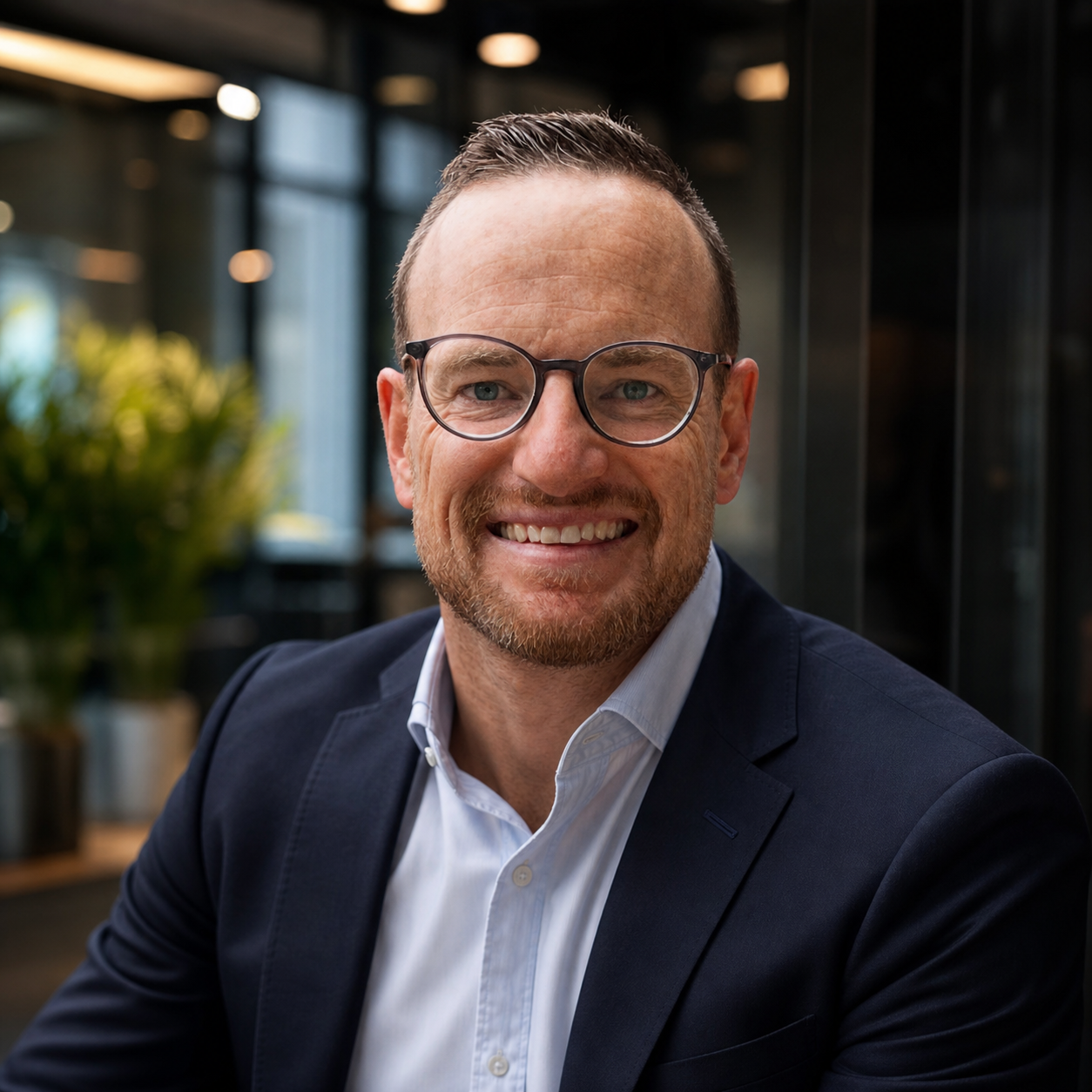
Chris Cashman
Chris Cashman is a dietitian and the Breakthrough Innovation, Nutrition & Regulatory Manager at Sanitarium Health Food Company, where he works on Everstrong, the brand's newer line built for people navigating midlife rather than the gym-and-supplements crowd. He is also a part-time PhD candidate in the School of Health Sciences at UNSW, supervised by Associate Professor Sara Grafenauer and Dr Luke Gemming, researching the nutrition and health needs of midlife and older Australians drawn from national survey data, aimed at supporting healthy ageing and better food choices. He holds a Bachelor of Science (Nutrition, Honours Class 1) and a Bachelor of Applied Science (Exercise & Sports Science), both from the University of Sydney, has spent close to a decade in the food industry as a nutrition and regulatory specialist, and has co-authored several peer-reviewed papers on whole grain and legume intake in Australia. He lives in Terrigal on the Central Coast of New South Wales with his young family. Connect with Chris Cashman
Everstrong - Get 10% off orders of $70+
-
speaker-0 (00:00)
Are you someone who walks into a supermarket and sees all of the labels in the fridge marked protein and you're wondering why there's so much fuss about it? Or maybe you're someone whose friends have started taking supplements now that they're in the second half of life, you've got no idea why. Or you could be someone who used to exercise but now you're wondering how exercise and strength helps you have a great second half of life. Today I'm joined by Chris Cashman, who is an expert on all things nutrition, specifically in midlife.
And he shares with us a range of ideas and insights on how we can optimize our fitness and our nutrition to make sure we have a great second half of life. Strength, macros, micros, proteins, creatine, supplements, what to do, what not to do is such a huge topic. Does creatine have use beyond the gym as we enter midlife?
speaker-1 (00:48)
Yeah, creatine is it's actually a natural compound that's already in our bodies because it's stored in your muscle. It's an energy source for muscle and brain. For us to increase, you really need to be supplementing. If you take it, you can saturate your muscles and it allows you, from a uh muscle perspective, it allows you to essentially work a bit harder. A lot of the low-hanging fruit is starting with, you know, discretionary choices or those unhealthy foods that aren't really adding much nutrition. Uh but when it comes to
speaker-0 (01:13)
You mean hasn't stopped taking them?
speaker-1 (01:15)
Yeah, like so discretionary foods being, you the unhealthy foods like soft drinks and um processed meats or cakes, biscuits, pastries, those types of foods which are, you know, relatively high in saturated fat, added sugars, sodium, uh not really contributing a lot of positive and health health promoting nutrition.
speaker-0 (01:32)
Is it too late or is there is there an age where it's too late to start a strength?
speaker-1 (01:36)
No, absolutely not. The evidence is really clear that with the right stimulus you can build muscle at any age, even well into your
speaker-0 (01:42)
Chris, welcome to Donut the Old Man In. Great to have you here. Thanks, Blood. I was really keen to have you here 'cause the whole notion of midlife body composition, strength, macros, micros, proteins, creatines, supplements, what to do, what not to do is such a huge topic. And you're someone whose whole PhD is specifically in that space. So really keen to have you here to share with us what we should be aware of and what we should avoid. What would our audience get from a conversation?
speaker-1 (02:10)
Yeah, I hope I hope your audience um starts to think about muscle and strength a little bit differently to maybe when they used to think about muscle and strength if they thought about it at all. So I think um what I'm looking at is really how important these factors muscle and strength are for healthy aging and what you can do about it. So from a movement perspective, as well as nutrition and supplements and navigating a lot of that noise in the health and wellness space.
speaker-0 (02:33)
And there is a lot of noise, right? So I'm I'm hoping you can help clear some of that. So you you've alluded to my first question, muscle. Our audience is age forty and above. Many of us were very, very strong. Some of us think we still are. But you've suggested we should think about muscle maybe slightly differently as we start aging, in particular midlife. Talk to us about that.
speaker-1 (02:53)
Yeah, I think I mean in conversations that I'm having with people in midlife and a question that I'm really interested in asking people is what have you noticed in midlife? And I think people don't necessarily connect the dots that what they're noticing is actually related to muscle and strength often because it's really tangible. It's things like, you know, feeling less energy, slower recovery, a little bit less confident in activities that you might have done before, even, you know, withdrawing from some of those. Um and yeah, so that those those types of um things that people are noticing are actually linked
to muscle and strength. And muscle and strength is really, really part of that healthy aging conversation. So yeah, I think that's um, you know, why people should care about muscles and strength, 'cause it's really there's a really positive story there that you can take action. It's a it's a choice that you can prioritize in your health. so you can say yes to more things and, you know, feel less pain. You know, keep up with your kids, keep up with those activities that keep you social as well. So I think it's
speaker-0 (03:44)
I
was in I was in Singapore last week for uh some filming of something they were gonna release uh in a few months' time. But I did an outdoor parkour class with a group of women aged fifty-five to seventy-eight. It was extraordinary. It was thirty degrees Celsius outside in the morning. But A they were it felt like a military boot camp to me, but they were extraordinarily agile and the purpose of the parkour class was to do what you just said too um in fact the motto of the guy was of the coach
stay strong, stay useful, which is really interesting. But talking to some of the participants, what they said to me was um that the reason they're doing it is to keep their knees and their ankles specifically strong. So A they don't fall, but B they can stay agile for a long, long time. Uh which I thought was quite quite extraordinary the the commitment they had to it.
speaker-1 (04:32)
Yeah, and it sounds like it's a bit of a community as well, like which if you can find something like that where, you know, you're enjoying it social, you're really putting impact through the joints for the bone, the muscle, yeah. That's perfect.
speaker-0 (04:41)
So can we go back to basics? What what actually changes in our muscle structure as we hit forty and above? That that then asks of us to be proactive, whereas we didn't have to be proactive when we were younger. Yeah.
speaker-1 (04:53)
It's
a little bit easier when you're younger. I think um what we know at a population level is that you you start to see muscle and strength decline from the you know, your late thirties into your forties. And at at at first it's a slow decline, but when you get into your sixties, seventies, it's it's pretty dramatic. and if you're not thinking about it, um it can really impact your physical capability. Um and the when when you look at those curves, it's your physical activity that seems to predict how fast you lose that muscle mass.
Um, and so that's kind of the trend you see at a population level. And that's related to changes that are happening in our muscles. Um so our muscles becoming less sensitive to the stimulus. So the types of movements, we need be more intentional about doing those to stimulate muscle protein synthesis. And we also need to be more intentional about nutrition because our bodies become slightly less sensitive to protein as well as we get older. So um that means we yeah, it's one of the few nutrients where your intake, your recommendations for
that nutrient increase increase as you get older. So yeah, they're the trends that are happening um at a population level and those losses are related to changes in the muscle type. So we tend to lose the faster, more power generating muscle fibers. Um and yeah, things like, you know, just the process of aging and changes in our metabolic health can influence how our mu our muscles store and utilize energy. And so if we're not physically active, we start to we start to lose that those capabilities.
speaker-0 (06:14)
So I wanna come to protein soon, 'cause that feels like it's a pretty important part of the conversation. But the muscle decline, are you saying that's a that's a normal process as part of aging? Or to what degree is it related to the way we we become more sedentary as we get older, in the sense that, you know, we are in our careers, we're possibly at our office desks longer than we we are when we were twenty, etcetera.
speaker-1 (06:36)
I mean, if when you look at the data, it looks normal, but it is something that you can uh minimise as well. And you picked up on it there. Actually, um, aging muscle looks a lot like sedentary muscle. So if you're sedentary and you become active, your muscles respond really differently. And it's the same with aging that the the more active you are, you can you your muscles can look like younger muscles um in their the quality of the muscle fiber type and their ability to utilize and store nutrients and their impact on your metabolic health as well. So yeah, that's that's part of the story.
speaker-0 (07:04)
And the influence of metabolic health? Um we so we've had a few experts in the past talk to us about insulin, protein, sorry, insulin and glucose and that whole metabolic um connection. How do you think about it from a muscle perspective?
speaker-1 (07:17)
From a muscle perspective, I think um yeah, muscles are really central to metabolism, metabolic rate, met metabolic health. There's different terms there. I think often when I hear people uh in my conversations talking about metabolism, um, usually um, especially five years ago they'd be talking about metabolic rate, so energy expenditure. Uh and one thing they might not necessarily realize is that muscle is our largest metabolically active tissue in our body. So as we age, if we're losing muscle, we're actually
you know, slightly decreasing our metabolic rate and our body's energy burning, um, capability at baseline. So that's something that I think not many people have necessarily joined that dot and making
I think that makes muscle more relevant. but then also from a metabolic health, metabolic health is actually a much broader concept. It's all of the processes. you know, if you had a control panel in your body, how your body's just wanting to stress, sleep, exercise, nutrition, you'd be seeing all th everything changing. and muscle protein synthesis is one of those metabolic health markers. Um yeah, and so that's uh our muscles are involved in that glucose regulation and muscle circulation is central to health as well. So yeah, they're really kind of part of that metabolic health story.
speaker-0 (08:26)
I mentioned I was in Singapore a few weeks ago. Um one of the reasons I was there is to try on an aging suit. An aging suit is it was I think it was designed in MIT originally, but there's there's a few different variations of it. But the the premise behind it is if you're someone I'm fifty six, how do you know what it feels like to be seventy five or eighty, a long time ahead of being seventy five or eighty, so you can proactively uh think about how you want to physically be at that age.
So they they put on a weighted vest, like I think it's like a twenty kilo weighted vest, and then they put on very straps on your wrists, on your elbows, on your knees, and then put on a whole range of weights on your ankles. And the first thing you realize is I feel like really heavier and slower and my my mobility is is restricted. And I said to the person, but I understood that as people age
They often lose weight around and get heavier. But I feel like I'm twenty or thirty kilos heavier just by wearing this suit. And they say, it's not the fact that you're heavier, it's the fact that you've lost your muscle. And therefore your ability to manage your body is decreased because you haven't managed your muscle strength over time and therefore everything else just feels heavier because you're the the the there's less muscle strength to carry your body than there was when you were fifty six or forty or fifty. We just talked to what you were saying.
speaker-1 (09:45)
Yeah, absolutely. And I think that that kind of picks up on the point that we lose muscle, but we lose strength at a greater rate. So I've seen some data where and it's probably more in that older age group, but by the time you're seventy, if you're not really paying attention and being deliberate about muscle and strength, you're probably losing about one percent of your muscle every year. So ten percent a decade. And then strength is being lost at about four percent a year. And then power, which is the speed component of strength, is lost even faster than that. Wow. So they're they're all the changes that you can that I think really
tangibly start to be noticed in midlife but can impact your fa physical capability later in life as well. So
speaker-0 (10:22)
Extraordinary.
'Cause they they they got me to um first of all put on the suit just to experience it. And then they open this l it looks like a a cigar box, right? They open this box and inside it is six pairs of glasses and each each pair each pair of glasses represents an eye disease like cataract or glaucoma or whatever. You put it on and suddenly you go, Oh, I'm restricted even more so. But then they bring you into the kitchen to to do various things and one of them was lift a big heavy jug of water and pour it. And what you realize then, which you've just said, is
the strength needed to lift a two liter jug of water, um, because of all of the muscle loss that the suit is trying to simulate, yeah, is actually really heavy. oh They go, No, y it's it feels a lot heavier 'cause you can't you don't have the strength to hold it. Yeah and imagine
speaker-1 (11:09)
walking up steps or potentially tripping and then you know the the speed and balance are you then required to stabilize yourself and I think that's where you know but you know falling is a big big risk as you get older and it's part of that.
speaker-0 (11:19)
Is it too late or is there is there an age where it's too late to start strength training?
speaker-1 (11:23)
No, absolutely not. And that's something that I I've actually heard quite a few people like say that, you know, I'm I'm in my fifties, I've never really
done anything. I'm not someone who goes to the gym. Maybe it's not for me. Um but I think the yeah the evidence is really clear that with the right stimulus, you can build muscle at any age, even well into your eighties. there's studies that have looked at that. Um yeah, so with the right movement and nutrition, you can absolutely build muscle. And and I think what's a really positive message as well for people who have who aren't familiar with with doing that is that the the greatest benefits you'll get are are from going from
doing nothing to doing something. So for for someone who's advanced, adding more to their, you know, to their routine is gonna have uh much more diminishing returns relative to someone who's just starting out. But obviously, yeah, if you're if you're new to it, you gotta you know take care, don't get injured, um look for support as well. But yeah, I think there's a real there's a real clear story that it's not too late.
speaker-0 (12:16)
So if the guy listening to this is going, I've never wanted to be Thor and I don't have the genetics Chris Hemsworth, but you're asking me to put in all that effort to do so, is is is that what you're saying?
speaker-1 (12:27)
Well I think I mean I'm j just picking up on like all that effort. I think definitely we need to rethink what muscle and strength mean. Because it's not about being Thor and muscle size and lifting really, really heavy weights. Um it's really about your health and your capability. So I think that that's a mind shift mind shift.
mindset shift for a lot of people. Um and yeah, and that that question of do you need to be doing all that work or do you need to be in a gym, I think the the evidence is really clear there as well that you can build strength with body weight. And if you're really coming from doing nothing, even starting to do aerobic exercises can start to build a base of strength. I mean adding movement patterns on top of that. And there's yeah, a number of studies which have asked the question of well what's the minimum amount as well. So um and it's a lot of people are surprised by
You know, what what um that minimum amount of of muscle challenge that you can do in a week that can still build muscle and strength.
speaker-0 (13:23)
What would you recommend someone start with as the minimum amount? Like specifically, what would the exercises be?
speaker-1 (13:28)
Yeah, well I'd I'd refer to a paper that was published and and the title actually said it was asking a question, no time to lift. Um and yeah, for me I was really interested in that because I'm kind of in a life stage where I've got lots of lots of responsibilities and not much time myself. So I was going, Well what what you know, what is that minimum?
speaker-0 (13:44)
So so for those who don't know, you you're you're in a full time job, you're doing a PhD, you're d you're running a brand, you've got young kids. Yep. That sounds like money. Money to Sunday take care of.
speaker-1 (13:54)
Yeah,
yeah. And I think a lot of people are in that. So that question is is a real it's a big barrier, the time commitment, um, and then what to do specifically as well. And this paper, basically they summarized it into that it matters more the volume, um, more than the number of days. And so they landed on as an absolute minimum, they um identified three specific movements. One was an upper body push exercise, so that could be a push up if you're at home. um an upper body pull exercise could be a pull up or some sort of row.
with a band at home, uh and then a leg press squat type exercise. So they landed on those three as working most of the major muscle groups full body and then aiming to do four sets a week. So if you had that in a circuit, you know, that could take twenty, thirty, you know, up to forty minutes max I think to do four sets a week.
speaker-0 (14:45)
And it said it's what, ten reps or fifteen reps or something?
speaker-1 (14:48)
The
the caveat there, and that really depends on what setting you're in, is that the repetitions you do do need to be challenging um in those last few. So if you're doing body weight then you might be doing twenty, thirty or forty reps, depending on, you know, where it gets challenging. If you're in a gym or using machines, you then it's easier to it's safer to go a bit heavier and do fewer reps. Um but yeah, the principle is that you can build muscle with low reps or high reps as long as those last few reps are challenging. So for those four sets you will need to put in, you know,
effort to to to get to that um stage. But yeah, I think for me that's a really positive um message and I've actually incorporated that type of approach too, that being really intentional about, okay, I'm here for this time and um and trying to make it efficient by doing it in a circuit as well. So I think yeah, that for me that that paper really illustrated that it's possible to build strength with low volume training as well.
speaker-0 (15:38)
Can
you talk us about something I think a lot of us find very confusing, something I certainly find very confusing. The number on a weighing scales. You stand on a weighing scale, it gives you a number. Yeah. But what you're alluding to is strength and muscle mass is one of the most important things. And of course as you increase muscle mass that increases that could potentially increase your overall weight on the weighing scales, which there's a lot of stuff, you know, the first thing you do when you go into your GP or you go into a a gym, th they weigh you.
And and the inference is you should be less. Then whatever this number is, you should be less. Yeah. at least that's that's what's I've always said to me at least. But when you talk about increasing muscle mass, there's a there's there's a good risk for the right reason that actually you will either stay the same or you might even go higher. Talk to us about that.
speaker-1 (16:23)
Yeah, I think that question really gets to the to the idea of body composition. So your body's made up of lean mass, which muscle mass is a big part of that, as well as um fat mass. And so the composition of your weight also matters for your health. I mean, your weight does matter, um, for your health as well. But um and and I think that's particularly relevant if you're trying to manage weight or lose weight, um, in that when you're you know, if you're if you're on a calorie restricted diet, um a portion of that weight and if you're just kind of restricting calories, it can be twenty to twenty five percent of that.
can be lean tissue, which you don't necessarily want to lose. Um, but that is something that you can maintain if you're, you know, controlling calories as well. So yeah, I think the the the number on the scales is important because it is related to health risk, but the quality of your weight and the body composition is also something you should be considering. And you can you can measure that. There are some like there's DEXA machines that that measure and they give you a measurement what's called appendicular lean mass, which is the muscle in your um legs and arms, which is a good proxy for skeletal muscle mass.
Um and then you can also do there's some machines in like dietitians or P T gyms where you can get a measurement as well. So that can give you an insight into where you might be sitting relative to the to the population as well.
speaker-0 (17:33)
I did what I did both of those recently. Um and the good news about doing the DEXA scan is for me personally, I'm very, very strong. The bad news is everything else. But that's okay. The the skeletal setup is the the foundations are good. The everything else needs to be worked on. Let's jump to protein. I uh grew up
And my dad loved having a steak once a week. Um, I think I grew up I was a f one of five kids and I think we had two roast chickens between the family uh on a Sunday afternoon. Um and that was my understanding of protein. Now it feels like protein is everywhere and it's become a really important topic. why is why are we not getting enough?
speaker-1 (18:26)
Yeah, I think i definitely protein's having having a moment. Um and I think part of that is because there's there's multiple reasons why people are prioritizing protein. Um that question you've just asked is something that I'm exploring myself in in some research and hopefully contribute to the the evidence around it. But what I first started getting confused by was when I would see on one hand some experts saying, you know, we all get enough protein. And then on the other hand you've got people saying there's a real opportunity for people to get um better health outcomes with more protein.
And so I'll probably in initially I was hearing kind of conflicting messages. Um but actually as I've dug into that, um, yeah, there's they're actually both kind of right in ways, but um, yeah, I can share my perspective. But um where the we've got basic protein requirements, um, and so the recommended dietary intake is one um one way to uh measure whether people are getting that adequate amount to avoid d deficiency. And we don't see men much deficiency and and actually middle aged men
90% are meeting the RDI. So on one hand you could say, look, we're we're meeting our requirements for adequacy. Um, but then when you look at the studies around can people benefit from adopting a higher protein diet, we see a number of benefits with weight, waist circumference, muscle, and strength when you combine it with resistance training with a higher protein diet. And the higher protein diets are typically you know, up to that one point six grams per kilogram in the studies. Um, and that's roughly doubled the RDI, which is 0.85.
speaker-0 (19:53)
So let's just unpack a few things. RDI being recommended dairy uh dietary intake. Yes. Right. And you're saying the recommended dietary intake of protein is uh zero point nine
speaker-1 (20:03)
It's zero point eight five in Australia for for men. Yeah.
speaker-0 (20:06)
grams per kilo of their body weight. So if you're a hundred kilos body weight, that's about eighty five grams of protein per day. Yes. Okay. Um so if I if I'm having a breasted chicken as example, um breasted chicken size of my hand, approximately how much protein would be in that?
speaker-1 (20:21)
It's about twenty percent protein from a raw weight. 200 grams would be four forty grams of protein. Okay. So and saying that's similar with beef and fish. Okay. and I mentioned that higher protein diets are typically 1.6 grams. Um so if you're 100 kilos, it's 160. There's a big difference there. Huge difference. So that's a that's a you know 80 gram difference per day of of protein if you if you value those benefits and want to adopt a high protein diet, which a lot people do, um
There's a big gap and I mentioned that ninety percent of people meet the RDI. It's it's pretty much the opposite around that one point six. Only about ten percent meet that level, so
speaker-0 (20:58)
So so so I I wanna jump to the uh why one point six helps, but be just to make sure everyone understands if I'm having three or four eggs for breakfast, which a lot of us don't, 'cause we you we might have a bagel on the fly or a muffin in the car or whatever, I'm having a breasted chicken for for lunch and I'm having a say a a piece of fish for for dinner, I'm I'm approximately eating the RDI level of protein.
speaker-1 (21:22)
Yeah, I think I'd probably you'd probably just be under one twenty if that was your only protein, um, through that. So that's actually a relatively high protein intake. a lot of people would be having maybe two eggs. Yeah. Or no or or a much lower protein. Okay. Yeah. So yeah, so even for even in that scenario to get to one sixty, that that higher protein um target, you'd still be needing to look at strategies um either between meals or at at those meals to to
speaker-0 (21:46)
Okay, so cool. So so so what what I outlined there would be the optimal version of what someone would be doing without any kind of supplementation. And even then that's it gets you to the RDI but doesn't give you the benefits of a high protein.
speaker-1 (21:59)
Yeah. Okay. Actually in a lot of the studies the lower protein is around the RDI. like I said, most people are already consuming um the RDI. So the benefits are seen when you increase and add that incremental healthy sources of protein to a to a high quality diet.
speaker-0 (22:15)
Fantastic. So, what is the benefits of a high protein diet? I'm assuming it's because of muscle growth, but let's just clarify that.
speaker-1 (22:23)
Yeah, so um the benefits of a high protein diet are that you'll better preserve your muscle mass through midlife. Um if you're doing resistance training, you'll build more and build more muscle and build more strength. it also seems to help with weight management, probably related to satiety and um helping to you know fill you up, manage your appetite and yeah, so they're they're they're the they're the benefits that I've looked at and and that typically people are interested in they're you know really relevant to people at this age.
speaker-0 (22:50)
And and the again just to break it down to really simple, the the stronger or the more muscle mass I have, the body composition is is more geared towards muscle than anything else.
speaker-1 (23:00)
Yes.
speaker-0 (23:01)
The second benefit is strength. As in I I'm helping increase my if I'm doing resistance training and I have a high protein diet, my potential to build strength is increased. Yes. And that mitigate against the aging suit simulation that I went through in terms of you're not losing that four percent of strength per year, you're maintaining it or maybe even increasing it.
speaker-1 (23:19)
Yes. Yeah, that's if you've and especially if you've not been doing or prioritising muscle and strength, you will increase, definitely. And then you'll be able maintain that and maintain your capability. Maintain whatever, you know, things you love doing.
speaker-0 (23:30)
So summary here then so far is for those of us at midlife um and we haven't been doing strength training, start. You can start at home just doing body weight type exercises you said, you do push ups, press ups, but start there. And from a muscle mass perspective, protein helps increase our muscle mass. From a longevity point of view, strength naturally decreases as we get older. And therefore resistance training, i.e. strength training with with degrees of weight.
alongside higher degrees of protein helps to keep us at least as strong as we were and maybe even stronger.
speaker-1 (24:03)
Absolutely. Yep.
speaker-0 (24:04)
So let's let's jump to the confusing part. We walk into a shopping law and a as I did last week just to prepare for our interview I thought let me just go walk inside my local supermarket to see how many variations of packets of protein are here or any kind of protein. So there's loads of protein milks and protein yogurts and packets of protein and of course all of the meat categories is all protein. The word protein is plastered everywhere in the supermarket.
How do I look at something and tell this is good for me versus I'm not sure if it is?
speaker-1 (24:35)
Yeah, I think um I mean I'm a dietitian so I'd always be uh encouraging people to start not in the in the you know grocery store, to be looking at their their d their day and their diet and, you know, identify like yeah, where are the opportunities? A lot of a lot of the low hanging fruit is starting with, you know, discretionary choices or those unhealthy foods that aren't really adding much nutrition. but when it comes to
speaker-0 (24:57)
You mean it hasn't stopped taking them?
speaker-1 (24:58)
Yeah, like so discretionary foods being, you know, the unhealthy foods like soft drinks and um processed meats or
cakes, biscuits, pastries, those types of foods which are, you know, relatively high in saturated fat, added sugars, sodium, uh and not really contributing a lot of positive and health health promoting nutrition. So I think that's probably a starting point before you're kind of going, okay, which protein foods do I choose? Um and then if you're if you're going to the grocery and thinking about protein specifically, uh I mean the easiest place to start is what you already enjoy that's healthy. So yeah, if you already um have a source of protein at lunch
Often lunch is a lot lower protein than dinner. Um, so looking at something that like the what is the protein on your plate or in your if you're having a sandwich or whatever, um and increasing that
proportionally. Um breakfast is of often a big opportunity for people as well. um Breakfast typically is your lowest protein meal. um And yeah, so going to going to things like you mentioned eggs, but two eggs is only 12 grams of protein, which is a lot lower than probably people think. So three or four would get you close to that twenty gram um and making that meal a little bit more substantial. And yeah, so there's that's probably where I'd start taking that food first approach, looking at portion sizes and the overall balance of your diet. And then
then after that are probably you can consider things like protein powders, um, which I personally like I consider them as a food and a health food. Um there's not many products that have been studied as much as protein powders. And actually when you look at the studies on high protein diets, they're not always, but they're often uh food adjustments as well as um a supplement or protein enriched products. So yeah, there's options like that where that are convenient and affordable and they help, you know, they're not adding excess calories too relative to the protein you get.
speaker-0 (26:38)
Yeah.
Hey, how are you? Welcome to Asking for Our Friend. The questions, men our age, don't ask anybody else, but probably should. No names, no judgment, and if I don't know the answer, I will find someone who does. And I'll bring that answer back to you. This question comes from a viewer in Glasgow. And the question is, why is hair growing out of my ears? Well, welcome to the club.
It happens to lots of us, particularly as we get older. Somewhere around forty I discovered my hair was getting less and less on top of my head, in case you hadn't noticed, but it was actually starting to grow out of my right ear specifically, and then later my left ear. And apparently that happens to lots of us. So welcome to the club. Now I did a bit of reading about this. The science is actually not quite confident on the real reason. But most of the science says it's hard to
hormonal specifically testosterone related. And at a certain point of our life, the testosterone that helps our hair follicle grows, moves away from the hair on our head and moves to the hair in our ears, in our nose, and other parts of the body. That's what we think. Now the practical bit, and this guys, this this surprised me. The rule of thumb is trim, don't pluck. As in trim the hair with a trimmer, don't pluck it out. Why?
But specifically our nasal hairs, the hairs in our nose, they're designed to prevent infection. They keep stuff out of our nose. So if we pluck it out, we have the potential to leave in infection. So a trimmer once a week, Saturday morning, zzz, all done. Now this is not vanity, this is servicing. The same way as we would maintain our car. No one's impressed with the guy who doesn't lift the bonnet and therefore the engine rusts.
And therefore no one's impressed with a guy who doesn't trim his ear and a bush of hair arrives. So trim, don't pluck, the rest is normal.
Hey, how are you?
So a lot of our listeners will know that I've I started a a health transformation process about twelve weeks ago and then we're we're um not quite the halfway mark yet. One of my biggest learnings was what you've just alluded to, my biggest learning was how what to stop eating to begin with, and then to change that whole um process of eating towards a lot more protein. So as example, I had five eggs this morning um and some avocado and I had some um protein powder um shake.
in the car on the way in as well. So that's so I've been loaded up this morning before I get here. Um that learning probably took me, I'm guessing, six to eight weeks to r kind of unlearn. Go yeah, I have a habit of doing this, a habit of doing this. hold on. I I said I would stop doing like I would stop getting a coffee and a muffin. Because the muffin always comes with the coffee. So therefore stop for stop the coffee. The muffin will stop by itself. So those kind of habit changes took me, I think, about two months.
What I've been really surprised at is both two things. changing for like an egg-based breakfast is really powerful. But that by itself doesn't give me the huge benefit of extra protein that that you're referring to in terms of muscle strength and and everything else. So having to supplement it is is a choice and it works really, really well. But if I hadn't done the first step, the second step would be a waste of time.
speaker-1 (30:11)
Yes, yeah. You need to I think absolutely be looking at your diet first, food first approach. Yeah. And actually you mentioned two months 'cause that's actually pretty bang on some of the literature around it takes about two months for a health habit to be come ingrained. Yeah. So
speaker-0 (30:25)
I spoke to a great, great dietitian um called Jessica Turton who we had on the show and she said I've got some good news and bad news for you. The good news is you will change your habits. The bad news is I suspect you're impatient and you've got a fresh bite. She was riding both cats. Yeah, yeah, yeah. But we're we're sorry getting there.
speaker-1 (30:42)
I've
got similar one. It's it's it's gonna be simple but not easy.
speaker-0 (30:47)
What is whey? W H E Y Whey protein.
speaker-1 (30:50)
Whey protein is uh it's a fraction of milk protein. Um and so yeah, like whey is a it's a traditional food from you know, being extracted from that when you curdle milk and um yeah, I'm not a food scientist, but you get the components of milk that make cheese and then the whey um is a part of that. And so whey is just a protein from from milk. Okay. And originally it was a waste product from cheese. but now it's, you know, a premium uh protein source because it's it is a high quality.
protein and quality referring to the amino acid composition. Right. Um so it's yeah, it's one of the it's one of the proteins that, you know, can stimulate muscle protein synthesis. But we actually know that um most proteins um can have that effect if you if you have enough of them. Some proteins are considered lower quality in the that they have less of a stimulation of muscle protein synthesis, but that seems to be overcome by if you have more of it.
speaker-0 (31:43)
Okay. And just to clarify, if I was taking I'm I'm like I'm optimizing my my protein intake, I'm getting to that one point six grams per kilo, but I'm not doing muscle training, I'm not doing resi resistance training, what's the overall impact of that?
speaker-1 (31:58)
There there is some effect on preservation of muscle if you're and that's really important for people that are unwell or can't maybe you're injured or you you know you're on bedress or something like that. Protein a high protein diet is often something that can support them to maintain their or preserve muscle as much as possible because you're at a lot of risk of losing muscle in those moments. Um so there is a preservation effect, but you're not gonna really build muscle and you're absolutely not gonna build strength. So with strength, you need to be having the resistance training, the challenging
of the muscles and then the protein can amplify that. So they kind of work hand in hand.
speaker-0 (32:33)
You mentioned the proteins having a moment. I think the other thing that's having a moment or uh it's been evolving over a number of years is creatine. I first came across creatine um when a guy called Bill Phillips had a company called uh EAS, Experimental Applied Science. And it was the first kind of he was the first guy ever to do like a twelve week body transformation competition type thing and he s he revolutionized that whole world. But he was pushing creatine way back then, which was I I'm gonna say fifteen to twenty years ago maybe.
And um he was really on the vanguard of of pioneering science I would suggest, which hence the name EIS. Uh it's now seems to be a very, very well recommended uh supplement. And indeed I heard I was listening to a neuroscientist recently who's talking about creatine from a cognitive improvement perspective and there was some evidence to suggest that taking creatine just for that was useful. Does creatine have use beyond the gym as we enter midlife?
speaker-1 (33:29)
Yeah, creatine is it's actually a natural compound that's already in our bodies and our body produces small amounts of it and it's in some animal foods. But for us to increase our own creatine stores, because it's stored in your muscle, it's an energy source for muscle and brain, for us to increase, you really need to be supplementing. So yeah, about twenty, thirty, maybe even forty years ago now, um, they developed creatine that you could take. Creatine monohydrate is the form that has been typically used in research. And basically if you take it, it has to be a daily habit.
If you take it, you can saturate your muscles and it allows you from a muscle perspective, it allows you to essentially work a bit harder, especially for against resistance and um high intensity or explosive or sprints, that type of work. So you can see why it w you know it was so phenomenal for a sport and athletic context. But now with, you know, the recognition of muscle and strength for healthy aging, I think it's its appeal and relevance is much more broader than that. And that's where it's coming into the conversation about, you know, it is it is a supplement that
is, you know, in that top tier of evidence, particularly for that muscle and strength and body composition benefits, when you pair it with an active lifestyle doing resistance training. Um and like you said, there are some emerging evidence around cognition because it is a it's a s source of energy for our brain as well.
speaker-0 (34:46)
So do you recommend uh people take it before a workout or after a workout or w wh what's the process for that?
speaker-1 (34:52)
It it actually doesn't matter when you take it. It matters that you take it daily. Right. So that's where, you know, if if that's a if you're interested in it, it's choosing a form that fits into your routine. So, you know, you can get forms that are really uh smooth, you can get forms that are, you know, unflavored. Um others that can be gritty and not as pleasant. But yeah, the with creatine it needs to be as part of that active lifestyle, um and and daily to really get the benefit, or most days. So yeah, that's more important than when it when it's taken. So
some people might say you need to have it before or after workouts, but the evidence doesn't really support that. It's just as long as you take it during the day, it'll get into the muscles and then it'll be there for when you when you um, you know, are active.
speaker-0 (35:32)
So I started taking creatine. I've taken it often over the years, but I've I've been very proactive as part of this health journey I'm on. I'm taking five milligrams a day, which is effectively a teaspoon. I think the loading dose is twenty milligrams for a week just to get into your body and then um and I I personally take it um either right before or right after my six AM workout that I go to. Um
I I I w I can't attest to whether there's a a cognitive improvement or not. I'll let I'll let other people decide that around me, but I certainly noticed over time I'm just getting stronger. So I think it's clearly I'm going to the gym. But I'm I I I have no doubt that creatine is helping to um to amplify that workout.
speaker-1 (36:12)
Yeah, I that and that's exactly what the science shows that it does it's a it's an amplifier of those good habits. Um and so from a muscle mass perspective, I've read that it can it can increase um it can accelerate your gains by about a third of muscle mass. Um and for for strength it can be, you know, maybe one or two reps, but those add up. If you're doing that every set, it's you know, your your body will adapt to to the more volume and work that you can get in. So yeah, your experience is exactly what, you know, you would expect.
speaker-0 (36:38)
Any side effects of creatine that we know of?
speaker-1 (36:40)
Not that I know of. It's it's actually really safe. Um yeah.
speaker-0 (36:43)
Because it's naturally produced as you sense. I
speaker-1 (36:46)
Yeah.
speaker-0 (36:46)
mean there is w when you go online and read stuff there is there's all the conspiracy type concerns like hair loss, but I figured in my case that's not a concern so I I I won't go on that route.
speaker-1 (36:57)
Yeah, yeah. I think I mean I I've watched there's been a lot of myth busting around that. Um, and there there hasn't been a study that has actually shown creatine contributes to hair loss. So it was one probably possibly a red herring type study where there was a biomarker that possibly is related to hair loss, but that hasn't really been replicated, so I don't think it's a good reason not to not to consider it.
speaker-0 (37:16)
One
red herring, every paper refers to it as a potential. In my case I'll go, too late. There you go, no worries. Um you mentioned you're a dietitian and and I thought while you're here, you can you might either blow up some other myths or just help us understand stuff. And that is um I've had to r really st I've s I've struggled to learn how to read the information on the back of a packet to see what's useful, what's relevant, etcetera. And
I I I mentioned the l a name of a lady called Jessica Turton, who's a dietitian. She has helped me go, no, no, that you're reading that all wrong. Um my experience is the front of a packet is the marketing message going, This is brilliant for you, whatever it is, and the back of the package is where all the details really are, you've got to get good at trying to decipher them. What do you do as a as a as a certified dietitian, like when you're looking at something, what information are you looking for to help you decide, is this good for me?
speaker-1 (38:13)
Yeah, I think I think for me when I look at the back of the pack, I think the ingredients list is probably the most information rich. I mean everything is derived from the formulation, the recipe. Um and so yeah, for me, like obviously I'm a nutritionist, so I've I've got that food literacy and kinda and understand. Um so almost starting to predict, okay, well what nutrition here, the the the food ingredients that are in there. Um I think uh that's that's how I approach it.
Yeah, and I know um probably a caveat there is that not not every like long ingredient list is necessarily unhealthy, but that is something that like you know, it's an indicator. Like clean the c clean label is a bit of a trend as well, which I think, you know, if you're looking at ingredient lists and it's more familiar type of ingredients, you know, that's probably that's probably a positive thing. So yeah, I think the ingredient list is um is the most information rich, but it does take a bit of food literacy to be able to navigate as well.
speaker-0 (39:04)
So when someone says, you know, design for men over forty and this will help you live stronger th on the front of the pack, the ingredient lists may or may not be true at the back of it.
speaker-1 (39:12)
Well I think I'd be looking at the ingredient list and going, Okay, well yeah, is there high quality sources of protein in here? Is it the first ingredient or is it the tenth ingredient? And then from that, yeah, you can obviously look at the nutrition information panel and look at the amount of protein as well.
speaker-0 (39:24)
'Cause
the the biggest component of the ingredients is the first one. Right.
speaker-1 (39:29)
Yes, it's in descending order.
speaker-0 (39:31)
Yeah. So whatever percentage is the biggest one, start there and then work down.
speaker-1 (39:35)
And
it's it's often not sometimes there's a percentage on it, but sometimes it's not, but it's always in that descending order. That that has to be the case. So you can see what yeah, what's the food mostly made of.
speaker-0 (39:45)
Can you talk about ultra precise food? Like you you work for a food company and you said a few minutes ago if someone was trying to change their their eating habits, start with what are you currently having and see what you should take out of that. Um there's a as well as there's been a lot of noise about protein and creatine, there's lot of noise about UHPs, ultra ultra processed sorry, UPFs, ultra-processed foods. Why are they bad for us?
speaker-1 (40:10)
Yeah, it's I mean this is this topic of ultra processed food is definitely a live debate and it's actually something the Australian dietary guidelines are looking like at the moment. Um and I mean my perspective is that in general ultra processed foods are the same foods that we've been telling people to limit forever. Um so it's the soft drinks, cakes, paper biscuits, processed meats, um, those types of foods which we already had really good nutritional reasons to be telling people to limit those foods because they're
Negative for our health, not contributing much nutrition. But and and actually with what's interesting is that like a third of people's dietary intake of energy is coming from those foods. And that's including men in midlife. So I think for me that's that's the lowest hanging fruit for a lot of people. Is that they're consuming um energy-rich, nutrient-poor, discretionary foods that they're also ultra-processed.
speaker-0 (40:57)
And we say they're they're nutrient poor is because they're high in sugars or high in carbohydrate type ingredients. Is that is that what you mean by nutrient?
speaker-1 (41:05)
Well, nutrient poor, so they're low in lower in the nutrients that are good for us protein, fibre, vitamins, minerals, bioactives, uh, and they're high in the nutrients that are negative, the added saturated fat, added sugars, sodium, and and and and energy as well. So and and like I said, a large proportion of people's energy is coming from those foods. Uh and that's across the whole population. So that's the biggest, I think, lowest hanging fruit. But um one one of the limitations with the ultra processed food concept is that
Processing and the healthfulness of food don't don't like fully overlap. So if you imagine it as a Venn diagram, ultra processed foods and unhealthy foods, like there's a lot of overlap, like like just mentioned. But there are ultra processed foods which actually can contribute important nutrition and are health healthful foods,
speaker-0 (41:49)
Such as
speaker-1 (41:50)
such as um whole grain breads, whole grain cereals, low sugar, yogurts, nuts breads, and I would put protein powders in that too, because often they're seen as ultra processed. So we know all those foods um are affordable, accessible.
can be included as part of a healthy diet, deliver important nutrition, and yet um some of those are considered ultra processed. And so that's that's the limitation with the ultra processed food concept when you're trying to apply it to policy, is that um yeah, you can be starting to rule out foods which are, yeah, affordable, accessible, nutritious, uh and um and yet yeah. And that's that's probably the limitation that those health authorities in other in other jurisdictions around the world have identified as a a challenge when you're trying to apply that concept to food policy. So yeah, I I think
mean for the general population, you know, most of the time if you're the ultra processed food concept is is accurate if you're mapping it onto that unhealthy food, um, and starting with those and then looking for minimally processed whole foods. Um, but there are some processed foods you can have that are gonna contribute important nutrition and health benefits as well.
speaker-0 (42:49)
How do you think about that when you think of breakfast?
speaker-1 (42:52)
Breakfast. So um yeah, I think like the whole grain cereals are a group that if you're um you know, I know some people adopt a low carbohydrate diet and they might be avoiding those foods. Um, but the whole grain cereals have a number of health benefits, deliver fiber, um and there's a lot of, you know, positive benefits from whole grains delivered through whole grain cereals that are lower in sugar as well. So uh yeah, if you're trying to prioritize protein, then adding a smoothie to your cereal
Um or you know, going for like we've talked about eggs, there's different ways, different um breakfast combinations that you can go to where you can boost the protein.
speaker-0 (43:26)
My wife has a simple philosophy if it tastes like dessert at breakfast, it's probably dessert at breakfast and then don't don't have it. Which goes to I think the comment about what's nutrient wise versus not nutrient wise.
speaker-1 (43:35)
Yeah, and I think in that breakfast style you've got products that are ninety seven percent whole grain, wheat. So if you look at the ingredient list, it's it's wheat, it's a whole grain wheat product. but then you've also got products that are, you know, much higher in added sugars and all different colours and and like you said, sweet. So I think um yeah, there's there's that as well.
speaker-0 (43:54)
I think that comment you've made is really helpful is go to the ingredient list, see what is the number, what's the biggest percentage product ingredient. And uh if there's anything like glucose, fructose, uh anything like those kind of terms if they're high percentages, then it might be worth putting back on the shelf. Whereas if it's whole grain ninety seven percent, then okay, well, there's a that's a pretty high percentage.
speaker-1 (44:15)
percentage.
Yeah, and you might be surprised that there is quite a lot of products where the first three ingredients are either added fat, added sugar.
speaker-0 (44:22)
Can I pause you for a second? I hope you're enjoying this conversation. I want to make sure that you have full access to all the great content and episodes coming your way over the next couple of weeks. So can you press subscribe or follow depending on what platform you're watching or listening to this podcast? I also have an international expert coming up on all things sleep. So if you're wondering why you wake up at 3 a.m. and how to get back to sleep, or what protocols help you have a deep sleep through the night.
Or whether CPAP machines are right for you, this is an episode to not to be missed. So one last favor. Can I ask you to press like if you're watching on YouTube and to leave a five-star review if you're listening on Apple? Because that's what helps us create quality content for you. Back to the show. Why is it so hard, do you think, for us to to um avoid the temptation or to give up um foods that are ultra high processed that are not good for us?
And I suppose the same question applies to why it's it hard to take up new habits like exercising and changing your e the way you eat.
speaker-1 (45:27)
Yeah, I mean that is that is the challenge of of behaviour change. I think uh I think a big part of it is our environment. so from a food environment, you know, these foods are just so accessible to us everywhere we look. You know, you talked about the coffee and the muffin. Um, you know, y couldn't you just get a coffee but the muffin's always there with it. Um so yeah, I think there's there's a food environment piece and your home is a food environment as well. So I think, you know, if you're bringing, you know, foods that are higher in those added fats, added sugars
sodium that are unhealthy into your f into your house, you've already almost lost the battle, I think, to some extent in turn in trying to limit those. Um yeah, so I I think there is there are there are, you know, nudges you can do in your own personal environment that can make that easier. but it does take does take effort. And then yeah, from a um from a broader health change and and behavior change, I think uh as a health professional, I remember when I first started like left uni and I was actually seeing people and educating, I quickly found out that everyone kinda
Everyone I speaking to already knew. They already had the knowledge. Um so it wasn't necessarily a knowing issue. It was a how do I support them through behavior change? And that was like, okay, I didn't necessarily feel equipped with the skills to do that. Um so and and a model for me, I'm not sure if it's data, you'd probably be a better um expert or not, is that stages of change model. So that was for something pre Yep,
speaker-0 (46:46)
Contemplation into contemplation.
speaker-1 (46:48)
preparation, action. Um and that's probably what, you know, eat depending on what stage of change you're at, there's there's a different
There's a different kind of um approach for that person. So if they're if they're pre-contemplation, they don't even know. Um so you know, someone who's probably not thinking about muscle and strength, hopefully they're thinking about it now. Um, and then that's pushing them around that towards preparation and action. So I think I think the importance of getting support and finding someone who can support you through that journey and this and some social support as well, um, can really be part of that journey.
speaker-0 (47:22)
That's certainly one of the whole premise of this whole podcast is um well first of all the second half life can be the best half of life and and we I really believe that and we we believe that. Um and the underlying premise of that is you have to get some foundations, strength being one of those foundations, right? Um but the second premise is trying to do it by yourself is really hard. So the community processes that we're trying to build around this podcast and and indeed around all of the various guests who come onto this podcast are saying the same thing. Get into a community and it just makes it easier for you to do it.
speaker-1 (47:52)
Yeah, absolutely.
speaker-0 (47:53)
Going back to your first comment about noise, there's a lot of noise about lifespan and health span and and and longevity. Um something we've discussed in terms of nutrition, protein, creatine, macros, etcetera. Stuff like fasting, stuff like um saunas, uh, coal plunges, those kind of areas. What's what's your sense of that in terms of how helpful they are versus not helpful?
speaker-1 (48:16)
Yeah, I mean it's it's almost a case by case. Um but and I'm I'm I'm probably like way too into this space too. I find it like interesting and like what's what are people doing, where's the evidence? Often what people are doing is well ahead of the evidence and the the evidence catches up and can then inform that. I mean fasting's an interesting one. I think it's a really good it's a really good way to manage your calories. Um and that's probably how it's benefiting people and that approach seems to work. Um but the the interest in fasting definitely was before that science caught up. and so
I think, yeah, it's there there's definitely that eighty twenty rule. Um, actually the the foundations are are fairly simple and you're gonna get most of the benefit from those. Um and so just be a bit cautious about those biohackers and 'cause often you'll find they're doing something and then six months later they've said, that that was actually negative. Um and then this you know, the science comes two or three years later saying, Yes, that's probably not a good idea to be doing.
speaker-0 (49:09)
Yes, what's the famous hacker? B Brian Johnson
speaker-1 (49:11)
Braun Johnson.
speaker-0 (49:12)
I I loved his latest piece. So this is a guy who's made a whole life out by hacking, charges you a million dollars a year for him to be your coach and to join his group. Um and his uh his summary of all of his learning is sleep well, heal more brutally Wow, I can do all of this by myself without it.
speaker-1 (49:32)
Bit
of that you the tortoise in the hair story. 'Cause he seems every time I see him he's like, Yeah, I was doing this and then now I'm not doing it because it was negative.
speaker-0 (49:38)
Yeah, we told you. You are in the middle of a PhD looking at midlife and and and protein specifically, and the research is not finished yet, so you've got a little bit to go. But other than what we've already talked about, what is it you'd all love our listeners to really get their head around in terms of the importance of protein and and specifically at midlife? Because as I said our listeners are 14 about.
speaker-1 (50:00)
Yeah, I think um I think that well, I guess that message that midlife is a really um distinct age from a health perspective and there's really unique changes that are happening in midlife. And we know that protein requirements increase with age and you can get a benefit from higher protein intake. and so yeah, I think that's that's that's the message that there's there's these benefits that I believe are relevant to most of the population around body composition, muscle strength, less fat mass that that can be
derived from adopting a higher protein diet that's within a healthy diet and doing resistance training. So I think for me that's the that's the and that's, you know, it's it's it's pretty simple and it's and it's you know consistent with what we already knew, but it's very true in midlife as well. And that's what my research is is trying to draw out and identify, you know, how many people are in those groups that are at risk of not getting even the basic requirements for protein. But then also informing the messages around
Where where are people's protein intake out and how much more might people have to have to get to that high protein? Because that that type of research hasn't really been done. And then the final um piece of work that I'll do is to then speak with um everyday people to understand what are their barriers and motivations and and hopefully that informs some strategies as well. That how do we how do we make products or approaches that, you know, takes down some barriers or better inform people and move people through those stages towards action.
speaker-0 (51:23)
You've got Everstrong on your t-shirt. Everstrong is a a new brand out of Sanitarium, the huge Australian food company, not just Australian food company. Um it's huge in Australia, I should say. Um one of the reasons why I was really interested in chatting to you was was your focus on midlife. Uh and 'cause as you said, protein is freely available and there's loads and loads of providers out there. A lot of the protein companies and um
and providers are aiming towards kind of almost that um Jim Bro type audience. That's not your audience. What is it about Everstrong and Sanitarium that has allowed you guys or encouraged you to focus on this audience?
speaker-1 (51:57)
Yeah, I mean it really started with just having conversations with people in midlife and and kind of identifying that there's not many brands and solutions that are talking specifically to to that age. And I think that's where, you know, we've got a lot of shared interest there in in in our audience. And uh I think off the back of that we we looked at, you know, there's there's not many um brands in in this protein, creatine space that are sharing those stories. Uh and there's plenty, there's really, really inspirational motivation
stories, motivate motivating stories, sorry, in in midlife that we can bring bring to life. Uh and um yeah, it's not about uh, you know, showing people in midlife being in the gym and lifting heavy weights where there are, you know, that's what you often see online with influencers. You know, we really want to um provide practical strength support, make this relevant nutrition, um, and bringing that to people in midlife in a mainstream way to, you know, so they can get those benefits.
speaker-0 (52:51)
Love that. Is there anything I haven't asked you that you think our listeners should know?
speaker-1 (52:56)
I think I'm I I'm I watch a lot of podcasts and I'm always interested to like I guess dig into what motivates people uh and and how it kind of looks and a dad. So I'm happy to share like I guess my how I approach things. Um just to, you know, be transparent to Yeah. I think um I I'm I'm fortunate enough to live in Terregal, which is a like beachside suburb on the central coast of New South Wales. And yeah, I I think something that really like motivates me is when I see the morning swimmers that are out there even before the sun's up, which was pretty scary to me, but they're doing it.
Uh and then there's
speaker-0 (53:27)
Of our team is one of them. Lauren Joyce is there regularly in that in that water.
speaker-1 (53:30)
And the you know, the runners, you know, kayakers, surfers. it's it it's just a real hub of ac like physical activity and social connection. Like there's cafes and you they'll do the activity and have a and I mean that's that's something that really kind of inspires me and is aspirational for me. Like that's the kind of life that I want to to live, you know, when I get to that age. And and I know that it that's really to get on that trajectory it, you know, takes takes, you know, being deliberate with what you do. Um and so for me, like, yeah, I've got, you know, a lot on young family.
Um and I I've actually recently probably shifted my approach to like lower the expectations of myself in terms of what I'm doing. Um and I used to have this fitness tracker where I would uh my goal was four a week and I would never get there. I'd never get into the gym or do strength training, like strength exercises four times a week. And I just at one point I just reduced it to two. You know, it's the guidelines, get in there twice a week. Um and for me that was a huge shift because I've been so much more consistent um and I've felt so much more positive about
getting in two and even if it's just twenty minutes, like it's still a like that's one of the two. Um and so for me, yeah, that that's my approach at the moment. It's about, um, you know, I've had some injuries, so it's about managing those. It's about keeping up with the kids, being able to, you know, maintain the activities and the, you know, all of the responsibilities I've got. So yeah, and and and it is that like it's that minimum effective amount, but it still has really tangible benefits. Um and it's putting me on that, you know, trajectory so I can maintain my muscle and strength and have that capability later in life. So
speaker-0 (54:58)
I I I I love that you said that Chris 'cause it's y you you're cut right. A l a lot of our listeners and a lot of people will listen to multiple uh podcasts and on and T V shows and whatever else. And uh I l I love listening to Andrew Huberman, 'cause 'cause of his scientific approach.
But I also listen to what he says and go, I'm not sure I can do seven days a week training that that you do to level it, you do it. Yes. Um and and and I've watched them on T V recently where people came to visit his home and go, I don't have my fridge fully stocked beatily like you do by somebody else. And and so it feels like it feels out of reach. Yeah. And what you're describing is it's not out of reach if you do the the minimum requirement.
And minimum requirement is two, maybe three times a week and one of those is a twenty minute session. And you can do that at home if you want to. And it's not out of reach if you look at the way you're you look the uh at the food you're taking in and if you adjust your protein upwards, that's not out of reach. In fact, if you want to be healthy at seventy in the water, this is this is the process. So it's that that makes it very real.
speaker-1 (56:00)
And I think there's times where yeah, you'll have less time, but if you can fit it in and be consistent, that's much better than, you know, trying to be perfect but never actually doing it. Yeah. And I think yeah, you can definitely get overwhelmed by the optimization culture online, um, which you you know you can find interesting, but you know, there's there's benefits there and most of the benefits are from those first four sets. Yeah.
speaker-0 (56:21)
Yeah. And the the other thing that you said there, which is is cannot be underestimated, uh whether you're on the water interrogal or whether you're on a bike or whether you're in a walking group, you're with other people. And what I have found the huge benefit of that is yes, there's a social interaction that happens when you're with other people. That's that's for someone like me, I I get that every single day, so that's less of a benefit per se. For me the benefit was um I had ear surgery a while ago, so I didn't get to the gym for three weeks.
They rang me every week to see how was. Now, the undeclared benefit was we're making sure you're coming back.
speaker-1 (56:56)
Yeah.
speaker-0 (56:56)
And when I came back into the gym about f maybe ten of the other class girls, hey, great to have you back, heard you had surgery. I would have gone back if if there wasn't a social connection piece. Yeah. And so whether you're under water interrogator like like like your your colleagues, the social piece is is really poor mm or r really really powerful rather than putting you.
speaker-1 (57:16)
Yes, absolutely. And I think I know you've had Dr. Gordon Spence on. And he's I think he's Central Coast based. Um but I and I've actually read his books and I'm really influenced by his idea around um that community and reconnecting with sports or activities that you've done in the past or just sampling new ones that and particularly ones that have that community. Because it can become you know, it can become a a way that keeps you active, keeps you social, but I've also seen time after time it's also a motivator to then
strength go and do some more strength so can maintain and keep going, avoid injury. Um and yeah, I think that's yeah, it's a big part of it.
speaker-0 (57:51)
Fantastic. I've got one more question for you. you're a young man, but imagine uh this seventy five year old version of you was uh was able to talk to you. What what would he be asking of you?
speaker-1 (58:03)
Yeah, I think I think just you know, I've got a lot on, so you know, be be present, enjoy this time, you know, with young kids. I'm very aware of how fast that time goes. So when, you there's a lot of balls in the air. Um I've you know, I'm trying to, but probably he'd probably just saying, do more of that. You know, focus on your family, focus on like those moments 'cause you only get those once. So No. Absolutely. Thanks, Pod. Appreciate it.
speaker-0 (58:27)
You won't regret it. Chris Cashman, thank you for joining us.
Hey, I hope you enjoyed that episode and you got some value from it. New listeners keep telling me that they found our show because someone like you shared an episode with them. So if you think this was helpful for you, can I ask you just to think about one or two of your friends or someone in your family that might enjoy it and share it with them?
If you haven't been onto our website, don't lettheoldmanin.com, please go there because there's some free resources that might be useful for you. And you can subscribe to our weekly newsletter so you never miss out on what's coming next. And lastly, if you haven't subscribed, one more time can I ask you? Press the button to subscribe on whatever video or audio platform you're on. Until next time, don't let the old.
