
You Don't Need Rock Bottom to Quit Drinking | Sarah Rusbatch



Sarah Rusbatch planned one last big, boozy night out before she quit drinking for good, and she went home after three drinks.
If you have ever told yourself you do not have a problem because you are not the one falling over, just the one who cannot quite explain why five o'clock keeps arriving earlier, this one is for you.
Sarah is a grey area drinking coach and the author of Beyond Booze. She quit in April 2019, after years of a wine habit she governed with rules she kept breaking, and has since supported thousands of people through the same unravelling.
She will not tell you that you are an alcoholic, or that you have to stop forever. She calls it outgrowing something that used to work and does not anymore, and she is honest that changing the habit takes real effort, not one clean decision.
Listen for the moment she stopped fighting to keep it.
Top Moments
Meet the Guests
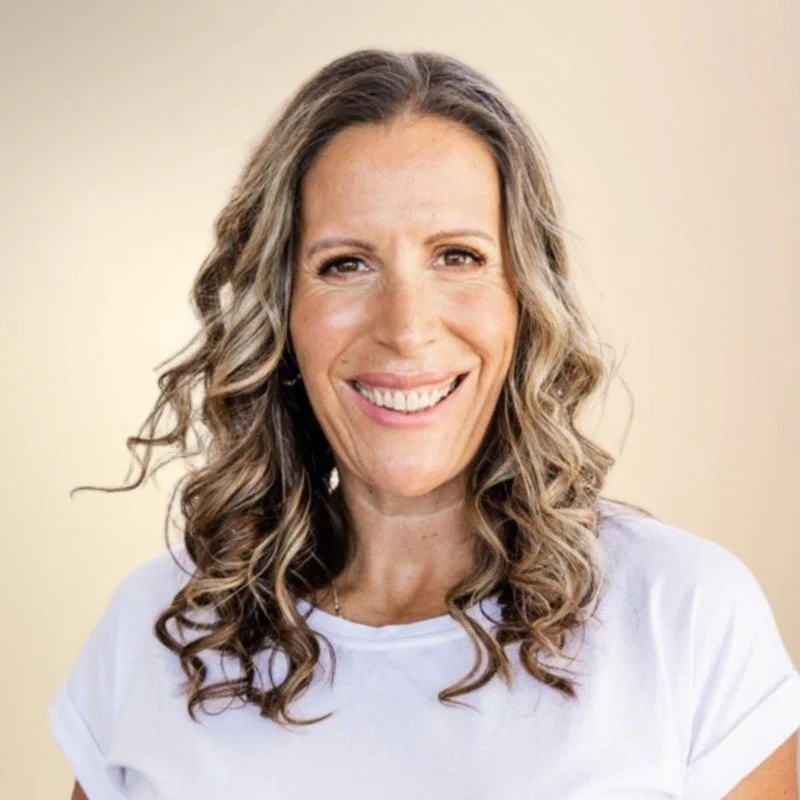
Sarah Rusbatch
Sarah Rusbatch is a multi award-winning grey area drinking and menopause coach, and the author of the bestselling book Beyond Booze: How to Create a Life You Love Alcohol Free. Based in Perth, she trained as one of Australia's first accredited grey area drinking coaches and now runs The Women's Wellbeing Collective, an online community supporting women through their relationship with alcohol. She quit drinking in April 2019 after years of what she calls grey area drinking, and has since coached thousands of people through the same change. She has appeared on ABC News and other outlets discussing alcohol-free living.
-
speaker-0 (00:00.078)
And I had a couple of incidents where I drank very heavily. There was one where I fell over, I smashed my face and had to get taken and put to bed. And my daughter was next to me the next morning. She was five, and she was saying to me, Mummy, what happened to your face? It's because I didn't know how to make those feelings go away. No one had ever taught me.
When you feel loneliness, it feels like this, and here's some really good things that you can do. When you're homesick, when you've lost your identity, when you don't know who you are in this world anymore, no one gives you a playbook for that. You don't even know that's how you're feeling. All you know is that you feel really shit and really bad and really wrong. And that evening glass of wine makes those feelings go away. And I actually think being a grey area drinker is one of the hardest places to be, because it's not bad enough that you think you need to stop.
But it's also got to the point where it's taking more from you than you realize because the way you feel has become your new sense of normal. What starts to happen is you start your whole life starts to open up because you grow in confidence, you grow in self-belief. Like the pride you have as a person when you've overcome something like I don't drink anymore, you feel invincible. You can go and do anything. You have more times, you start having more hobbies and more interests, you start doing more things with your life.
speaker-1 (01:20.682)
Sarah, welcome to Donity Old Manning. I'm so glad you're here.
speaker-0 (01:23.988)
I am so glad to be here. Thank you for having me.
speaker-1 (01:26.04)
You're very welcome. I feel like I've known you, even though we've we haven't met until recently. I feel like I've known I live I've known of you for a number of years. Someone very close to me gave up alcohol in twenty twenty one and and you helped them on one of your programs and she has never drank since and she feels good because of that. And some of my other guests have recommended you and I to meet because of the work that you do and and the audience that listens to this show.
we've just come out of Dry July in in Australia. For those folks who are listening to this show who are not in Australia, Dry July is when thousands of people give up alcohol and raise money for different charities. And my very good friend Sinead raised seven thousand dollars for her charity. And I was thinking about that when I reached out to you that many of our listeners may have personal issues with alcohol, but they certainly will know someone else.
who might be struggling with alcohol. So I thought I really wanted to chat to you about the work that you do helping people to manage that addiction and and maybe overcome that addiction. So that's why I reached out to you. For folks who don't know you, what are they gonna get from our conversation today that sh they should keep listening?
speaker-0 (02:33.526)
Yeah. I think the biggest thing is I specialise in grey area drinking. So a lot of people might listen initially and go, well, I don't have a problem with alcohol. I don't consider myself to be addicted to alcohol. I'm not an alcoholic. And I certainly was in that category as well. I didn't drink every day. I didn't drink wake up in the morning needing to have a drink. I wasn't in physical addiction with alcohol, but I was a grey area drinker. And I would say that millions, if not billions, of people would fit into the category of grey area drinking.
drinking and it's never quite bad enough that you think you have to do something about it. But it's also in that category where it's taking more from your mental, physical, and emotional well-being than you realize. And when you take a break, you discover this whole new version of you that you didn't even know existed. And so I'm not here to say whether someone should or shouldn't drink, but I am here to talk about gray area drinking, to talk about what changes when we change our drinking, what gray area drinking actually is, because that might be something that your listeners have never heard before.
and to talk about what my the the what's opened up in my life as a result of changing that relationship with alcohol.
speaker-1 (03:40.834)
Fantastic. I really want to jump to all of those points that you raised, because I didn't know what gray area drinking was till a couple of years ago, when when someone closed me to your program. Can I go back to the beginning? And what I mean by that is, in full disclosure to you, I am the son of an alcoholic. I regularly went to Ala Teen. and you you may know what that is, but our listeners may not know. Alcoholics Anonymous is where alcoholics go to for support. A lotine is where the key the kids of alcoholics
can go to for support. So I I've been to those meetings and growing up and I grew up in a very strong drinking culture in Ireland, which I suspect is not that different to Manchester where where where where you grew up. My first drink, I think, was age fifteen. I suspect, around fourteen or fifteen. Ma may maybe younger actually, but around that age. I think you also started drinking at fourteen.
speaker-0 (04:33.74)
Yeah, I would say my first drink was probably before that. I grew up in a house where alcohol was very present all the time, not in a negative, sinister way, but that was the eighties, right? Where, you know, alcohol was how parents had a good time, and I think I would quite regularly have a sip of wine, have a sip of my dad's beer, but started actually drinking on a regular basis at fourteen. And that was pretty standard back then in the north of England. You would rave your parents' drinks cabinet, you'd fill up a bottle with like a bit of cinzano.
bit Southern Comfort, bit of martini, you'd take it down the local park, you'd all put whatever you'd been able to like pilfer from your parents' cabinet in the middle, you'd all drink it, you'd puke up in the bushes, you'd be a bit of a make a fool of yourself, go home and do it all again the following weekend. And that was just kind of a rite of passage back in those days.
speaker-1 (05:21.27)
And so it w it was seen to be very normal for you then?
speaker-0 (05:24.27)
Totally. Like it was just like that was what everyone was doing. It was never a case of if I would drink. It was a case of when I would drink and when I discovered alcohol, I bloody loved it.
speaker-1 (05:37.082)
So for for me growing up in in the south west of Ireland it was less about the bushes and the Cinzano, and more about which pubs would allow us in. And of course in Ireland most pubs had music, so th that that was that was the access point. You that you got in to listen to a band, or indeed your friends might be playing in the band in that pub at age fourteen. But the question always was which bartender will allow you to just sneak in the pint or whatever. so the the Cinzano in the in the in the playground or in the park ground rather is not where I remember, but I do remember
having big conversations with do you know what? That guy Jim over in that bar, he will give it to you if you ask him. or indeed he'll say to you, Your father's just walked in, do you want to walk out the back door? Right. So a conspiracy to help young people drink.
speaker-0 (06:21.068)
Yeah. Yeah, I'd say that that was probably us from about sixteen onwards. We were definitely getting hold of fake ID anywhere you wanted. You know, you could just find it off a guy at a local pub was selling fake ID for ten quid and you'd get one of those and then you'd be able to get into every pub in Manchester. So we were probably doing that from about sixteen, I'd say.
speaker-1 (06:39.288)
What happened when you came into the workforce in terms of drinking? Did d did that in in change or increase or how did it impact you?
speaker-0 (06:46.862)
I'll tell you a funny story. When I moved from university in Hull down to London, my first job was working in recruitment. And this was in the kind of mid-90s. And the fourth stage of the interview process was going to the pub to do shots of sambuka to see how well you handled your booze, which was how they decided whether you would get offered the job or not. So like that was the industry. It was in investment banking in the city. You had to be able to wine and dine clients.
It was work hard, play hard, Monday was the new Friday, and so you pretty much only hired people that you were gonna love getting pissed with. And needless to say, I passed with flying colours and so alcohol then went from something that I did socially to something that I did
a to further my career to fit in with this whole new workforce Sarah. This you know, I'd never met this career Sarah before. and she just, you know, quickly adapted to the rooftop bars of London with a cosmopolitan in hand or a bottle of champagne. And so it just went from Snake Bite and Black at uni to the cocktails and champagne in in London in the nineties.
speaker-1 (07:54.77)
And you're affected being being paid to drink. I mean that wasn't the only part of your job, but it was a key part of the recruitment cook part of your job. So we when you moved to Australia and I have to ask you in a second why you chose Perth, but when you moved to Australia you came with two young children and y you you've said and I've listened to you in other interviews and you wrote about in your book, which I can see behind your hair there beyond booze, you talked about you know, moving to a new country, the you know, a lot of a lot of life shifts happened, a quieter pace, some loneliness.
speaker-0 (08:01.198)
Exactly. Exactly.
speaker-1 (08:24.546)
Boredom maybe, alcohol helped fill that void. Now you you obviously came from a h very fast moving, very party moving p scene in London to Perth. First of all describe the the the change from London to Perth, but then talk to me about how alcohol helped you through those initial days and months.
speaker-0 (08:43.246)
Yeah, I think there's a few components to that. And as you say, you know, that my drinking up until that point had been social. I didn't ever think my drinking was a problem. I was I had a high capacity for alcohol. I wasn't someone that got pissed and then had to spend the next two days in bed vomiting. I was the one that got pissed, had three hours sleep, was at work the next day and go into the pub for hair of the dog at lunchtime. So and I wore that as a badge of honour. You know, that was kind of like who I was, Sarah the drinking girl, Sarah the party girl, Sarah that could handle her booze, and I thought that was great about me.
And then we moved to Australia and no one quite prepares you for the shift of going from being a very successful career woman to making really great money to wining and dining clients in the best Michelin-starred restaurants around London, having complete freedom and autonomy in your life to the shift that happens of not working.
raising children, being at home all day, changing nappies, pureeing carrot, going to monkey music, and like I was so lucky to have these two beautiful children. I had a boy and a girl very, very close together. But inside my whole identity had gone. I had no idea who I was. And then I mean don't even ask me why. I don't really know what was going through my head, but we had also
left our home. So th the one shift anyway of becoming a mum and not working is big enough for anyone. But we had also moved to the other side of the world where I had no friends, no family, no support. My husband was starting his own business, so was working all the hours that you could imagine. We were in a very fortunate position where I didn't have to work financially. I'd made very good money in London, so we'd saved quite a bit. So we had this bulk of money that that meant I didn't have to work. But
I didn't know who I was. Like I was I'd always been a girl's girl. I was surrounded by girlfriends in London. And all of a sudden I was on my own trying to make friends, not knowing where I fitted in. And I was very homesick. I was very lonely. Then I looking back, I think there was some postnatal depression. And so I drank. Because that was when alcohol
speaker-0 (10:54.614)
In my book, I talk about the stages of alcohol as being magic, medicine, misery. And all through my twenties, alcohol was magic. It was ch I was Sarah the party girl. I got lit up like a bloody Christmas tree. I was the life and soul of the party. And then alcohol became medicine because then it became the thing that stopped those feelings. Because I didn't know how to make those feelings go away. No one had ever taught me
When you feel loneliness, it feels like this, and here's some really good things that you can do. When you're homesick, when you've lost your identity, when you don't know who you are in this world anymore. No one gives you a playbook for that. You don't even know that's how you're feeling. All you know is that you feel really shit and really bad and really wrong. And that evening glass of wine
makes those feelings go away. And we're not dumb, we're not stupid. We're gonna do the thing that works if it means that we don't have to feel. And alcohol stops us from feeling.
speaker-1 (11:48.258)
And then even that's a wine doesn't necessarily start at seven PM. It gets earlier and earlier or or the glass gets bigger or or the the bottle gets full, etcetera. A hundred percent right. And like I think you p you pointed out some really important things here. Y you went through multiple transitions at the same time. Like just go as you said, going from a high flying career role to being a parent at home is an extraordinary transition in itself. But you added on more and more and more transitions.
into a place where you had less and less support. And so you I I'm imagining y you had to reach out into mothers' groups to try and have some sort of connection. But those conversations become about my one year old and my toileting process and those kind of conversations, which are very different from Highlight London.
speaker-0 (12:33.61)
Exactly. And the other thing that was really hard about that stage was
I started drinking at 14. I'd moved from Scotland to England and I discovered alcohol as being the way to connect. So alcohol for me became that's how you make friends. You know, like how when you get pissed with someone, and then really quickly it's like, you're my best friend, I love you. And like that, I just discovered at 14, that's how you fit in. That's how you get people to like you. That's what happened at university, that's what happened when I moved to London. Alcohol had been the segue to fitting in, feeling connected, making friends. All of a sudden I'm in Perth, going to mother's.
groups and there's no alcohol there because everyone's standing there with you know babies hanging off their boobs, they're not drinking. And I'm kind of going, Anyone want to go to the pub tonight? And they're looking at me like I'm a weirdo. Like, why would you want to go to the pub? We've all just had babies.
But I didn't know any other way to create connection because since 14 years old, alcohol had been the way that I felt like I fitted in and I got accepted and I got people to like me. So it was a really weird time because it was also the first time I realized, I don't have alcohol anymore as that crutch to make new friends because people aren't drinking at this stage in our life. So that was when I started doing it more and more on my own.
speaker-1 (13:49.186)
You finished as I understand in April twenty nineteen. But tell me what happened between the moment of mothers groups and you having to drink by yourself to April nineteenth as in w w wh wh what was that experience? What was that I won't say a slide 'cause that's that's not that may not be fair, but either way, you you you used as you said, you moved from magic to medicine very, very quickly and you probably moved into misery faster than you were realizing. Tell me about that experience.
speaker-0 (14:17.9)
Yeah, and it's really subtle. And I have you know supported thousands and thousands of men and women to change their relationship with alcohol. And if you don't reach that point of full-on addiction, physical addiction and dependency, you don't always realize what it's got to. Because the thing about alcohol is you build tolerance. So what used to be one glass or two glasses then becomes the bottle. I could easily drink a bottle of wine and get up the next day, go to the gym, fully function. I was running my own recruitment business. And so because you can still get up
Do those things, you therefore don't think that alcohol is a problem because you're not, you know, in bed and you're not hungover and you're not vomiting and all the rest of it. But what happened for me was a really, really slow and steady decline in my mental health and anxiety. And I'd never had anxiety in my life. I remember going to my GP one day and saying, I feel like a shell of myself. I feel like a shell of the woman that I have been all my life. And she said to me,
You've just got some anxiety, it might be that you're coming into perimenopause, take some anti anxiety medication. And at no point did a conversation come up around alcohol.
If it had, then I think that there would have been some realization that I was drinking at a level that was causing me to have anxiety. Now a lot of people listening might be going, So how much were you drinking? What were the numbers? Because people want to know that. And it wasn't fixed. It wasn't like it was a bottle of wine every day. I had rules around my drinking. I didn't drink on a Monday and Tuesday. I did I tried not to drink before five o'clock. I didn't drink white wine on an empty stomach. And so I was I I had these like
It was like I was living in this cage of these were the parameters that made my drinking okay. But then sometimes I would want to break that that rule. So then I would have a a justification in my mind as to why it was okay to break it. So, it's Tuesday, I'm not meant to drink on a Tuesday, but hey, maybe I'll have a drink tonight and I won't drink tomorrow.
speaker-0 (16:15.97)
And then if I have Tuesday, if I have Wednesdays, drink on Tuesday, I won't drink Wednesday, and then I can drink again Thursday. Like that is not a normal, healthy relationship with alcohol, right? That is gray area drinking, where we've got to the point where we're thinking about our drinking, we're justifying our drinking, we're making rules around our drinking, but then we're finding reasons to justify breaking those rules. And all of a sudden it's starting to take up more headspace. Now, on the outside, no one thinks you've got a problem.
Like it doesn't look like you have got any kind of issue with alcohol. Everyone thought I just drank like everybody else. But on the inside it was eroding my confidence, it was increasing my anxiety. I'd got to the point where it was wrecking my sleep. Whenever I drank, I would wake at three AM, I'd be tossing and turning, I couldn't get back to sleep. My self talk was becoming more and more negative. The way that I would talk to myself in the morning, like, God, you're a loser, you're shit, you said you weren't gonna drink last night. Look at you. You know, there was just this slow
And steady over a number of years, that just realization that alcohol was taking more and more center stage in my life. And I was going to the gym, I was drinking the kale smoothies, I was taking the supplements, I was doing all the things to try and counter the alcohol. But there comes a point where you realize.
You you can't keep doing that anymore. And I had a couple of incidents where I drank very heavily. There was one where I fell over, I smashed my face and had to get taken and put to bed and my daughter was next to me the next morning, she was five, and she was saying to me
Mummy, what happened to your face? Like she there there were just a couple of these kind of moments and then twenty nineteen I I twenty seventeen I took a break from alcohol, went back to drinking, did two years of dabbling with sobriety and then twenty nineteen had my last drink.
speaker-1 (18:06.402)
I wanna come to that moment in terms of when you decided and and more importantly the next day, right? And how how you overcame that. But but what strikes me is your induction into alcohol is exactly what most of us experience, particularly in the Western actually I I won't say the Western world, in in many parts of the world. yeah, mine is the exact same as yours. You went into the recruitment industry, so did I, by the way. I I I d I didn't have to pass an alcohol test, but it was part of the industry.
norm. my Irish background lends itself to he's gonna come and drink. I remember saying to my wife once, I've just got twenty five bottles of whiskey as Christmas presents from various people. They just assume because I was Irish and because I liked going out to the pub that therefore that's what I wanted. I actually hated whiskey. It was relevant. But it was just there's a whole part of society built up where alcohol is on such a pedestal and it's
To my knowledge, it's the only drug that we tolerate very openly and encourage people very openly. In fact, we even celebrate people very openly to drink. And we we we d I think we really misunderstand the other side which you went into, which is that over time it can take over. It is center stage.
speaker-0 (19:25.612)
Yeah, exactly. And I think that that's the problem. And I you know, I talk a lot about this in my book, that alcohol around thirty years ago, the alcohol industry realized they were not making enough money from sales of alcohol to women. So that was when they started to segment their marketing, create drinks that were specifically aimed at women, and created advertising and marketing campaigns directly aimed at women. So we had this real kind of like moment as well back thirty years ago where alcohol started
Started to be produced and promoted and advertised and marketed as a solution to parenting, as a solution to you've had a hard day, this is the perfect way to relax. And so the marketing became to men, it was all about you need it for the sports game, you need it to go out with your mates to the barbecue, have a beer, and to women it became
you've had a really hard day. You're juggling so much, but you just need to have a glass of this beautiful rose wine with bubbles and butterflies. You deserve it. Like even today, in at Mother's Day, go into I won't name them, but the famous pajama shop in Australia. Every single Mother's Day, I guarantee you, they have pajamas covered in wine bottles that say time to relax. Like we are enforcing this message constantly to women that alcohol is the solution.
To the busyness, the stress, the overwhelm. And no one talks about the fact that alcohol increases your anxiety, destroys your mental health, destroys your gut health, which impacts your serotonin production that makes you feel more depressed. No one talks about any of that. It's still being marketed as the solution to every problem that that women have. And that's something that that I find incredibly difficult in today's day and age, that that's still allowed to be done.
speaker-1 (21:12.078)
Take me to April twenty nineteen. you quit. You you had quit before, but this time you quit and you've you've never looked back, as I understand it. What catalyzed the decision and what was different about this decision relative to other ones?
speaker-0 (21:30.094)
So I actually had made the decision a month earlier, and I had taken several hundred-day breaks from alcohol, and I'd made a friend on my sobriety kind of sober curious journey, who was a beautiful lady called Kate who lived in the UK. And we'd met in a sober group. And I sent her a message, and she had been sober since 2018, and it was 2019. And I sent her a message and I said, and I was drinking at this point.
I'd gone back to alcohol and I said, Right, I know what I'm gonna do. I've never I've done a hundred days twice, but I've never done six months. So next time I'm gonna do six months and that's what I need to do.
And she was like, but then what? You do six months and then you go back to drinking and then you go back to the way that you are, because moderation for people like you and me is not an option. Once you've become a grey area drinker, it's very, very unlikely that you're gonna be someone that just enjoys a glass of wine every now and then. And she said to me, Every time you take a break from alcohol, you tell me that your life is better. You tell me that you're happier, you're more positive.
You feel good, you have more energy, you sleep better, you lose weight, you're a better mum, you're more productive at work, you have more motivation, you feel more hopeful, your self-talk becomes more positive. She's like, So why are you fighting to keep alcohol in your life? Why are you saying, All right, I need to do six months, that's what I'll do, and then I'll be fixed, and then I'll be able to be a normal, moderate drinker if such a thing exists. And I sat there and I thought about it and I was like, She's right.
Everything in my life is better when I don't drink. So why am I fighting to keep alcohol in my life? Whereas if I just go, Right, I've done my time. I've had a great year of drinking. It was great fun until it wasn't. Now it's time for me to move into the next season of my life, which is me without alcohol. And just I and what I did in that moment was I said, I've outgrown alcohol.
speaker-0 (23:28.812)
Like you you don't have to say I'm an alcoholic, you don't have to say I'm physically addicted. I've outgrown it. It doesn't work for me anymore. It's starting to make me feel shit. It's starting to impact my sleep, my energy, my mood, my motivation. So I set the date for it was a friend's fortieth in in the April and I said, I'm gonna go to that fortieth, I'm gonna go and get absolutely hammered, that's gonna be it, and then the next day that will be the start of my new life. And I went to that party intending to have this huge
And I had like three drinks and went home because I was just done. I just knew the rest the next stage of my life was about to start.
speaker-1 (24:07.872)
He talked to me about moderation, because the amount of people that have said to me who who like you grew up in in alcohol environments and genuinely loved their experience with alcohol. They came to a conclusion that I'm speaking in their voice now, I can't do moderation. I'm just unable to. And that's a massive one that's a massive realization to come to. And I think it takes a long time to come to it. explain to me.
Two things. One is why can you not do moderation? And then w once you realize that you can't, what is I've outgrown alcohol suddenly like that that that sudden realization, what what's that like?
speaker-0 (24:48.366)
Yeah, so
Moderation I think is a really interesting one because and I think that even the fact that we think that we should be able to comes from the alcohol industry because all they do is constantly say drink in moderation and drink responsibly, as if it's something that we should be able to drink in moderation and drink responsibly. But no one talks about the fact that actually alcohol is the fifth most addictive substance in the world. And that for a lot of people, moderation is not going to be an option, particularly
Once we've got to the point where we've started using alcohol as a solution to anything. So I remember interviewing a neuroscientist in one of my alcohol programs, and he said: if you've ever created a neural pathway that when you're stressed or when you're experiencing any kind of emotional discomfort, you use alcohol in that moment.
It works. There is no denying it because alcohol is a central is a depressive to the central nervous system. It shuts off your feelings. So it makes those uncomfortable feelings, whether it's stress, anger, sadness, misery, loneliness, disappointment, it makes them go away. Now the brain's number one job is survival. So if you've ever created a a neural pathway that that sees alcohol as a solution to that discomfort, you're in trouble.
Because your brain never forgets the f the quick solution to get you out of that discomfort. So that's one thing, and you know, that happened for me from quite a young age was I realized that alcohol was a solution. But also there's a number of risk factors that determine if someone is likely to develop a dysfunctional relationship with alcohol. And they are how alcohol was modeled to you growing up.
speaker-0 (26:36.332)
They are what age you start drinking. We know the younger you are, the more likely you are to develop a dysfunctional relationship with alcohol. They are even just genetics, whether there's alcohol addiction in in your in your family, your personal brain, everyone's response to alcohol from a dopamine perspective is different. So my friend Christine, she'll have a glass of wine and she'll be like, yeah, I'm gonna have a cup of tea.
I'd just be like, What? I am just getting s like I got lit up by alcohol. There's a brilliant podcast that Andrew Huberman has on alcohol and he said he could put a group of twenty year olds in a room and
And watch them drink. And he could probably go round and pinpoint who are the ones that are likely to develop alcohol use disorder. Because it's the ones that start to get more animated and more lit up the more that they drink. Because my dopamine reward center gets lit up like a bloody Christmas tree when I have a drink. Like I am the one that can't stop at one. I want more, I want more, I want more. I am not Christine that goes, I've had two drinks, now I'm gonna have a cup of tea and go and have a piece of chocolate and
watch curry. Like that that was never me. So there's definitely factors. And I would say that nearly all of the grey area drinkers that I've worked with would tick off a number of those risk factors. But they've also gone into the category where they've used alcohol as a solution to something. And we the job that we have as adults is to start being able to learn what is in my toolbox outside of alcohol.
to be able to deal with life's adversity because the the hard things that happen in life are not going anywhere. But we have to build another toolbox if we want to change our drinking.
speaker-1 (28:16.27)
You said something that you just reminded me of something that I I had forgotten. Matt Talbot is a a saint in the Irish Catholic Church tradition who who was way, way past grey drinking. He he was full on physically addicted. And he there's this the story told about him is that he used to go into I think it was St. Patrick's church, whatever church was in Dublin, and literally hold on to the church pews
And literally hang on it 'cause he's felt like he's been pulled out of it by his addiction to the pub. And his his phrase is, one is too many, a hundred is not enough. And 'cause he knew that once I get started, that notion of that I I'm just got more animated, I keep going, I keep going, I just can't stop. and I th and my my observation is, for myself personally, I I have certainly leaned into that more than once and and I've I've had to work really hard.
aga against that because I I knew over time, given my as you said, family background, genetics, how old I was, all of those risk factors you talk about and going tick tick tick tick. I am the guy who had outdoor kitchen with Guinness on tap in my garden. and wow and according to Guinness, I'm one of two people in the world who had Guinness on tap in their back garden. Wow. So w when when we s when we sold our house in Sydney the Daily Telegraph came to do a an interview with us and we it was on the front page of the paper 'cause it was like
Who has Guinness in the back garden? I do. So I do I do understand that whole notion completely. what is it like or what was it like for you? Because my my experience of watching people give up alcohol and who quit and who decide to quit, there's something tangible about what do I do with my hands. What I mean by that is the person who I'm very close to who did a program with you, what they found most difficult was.
When they were cooking, they always had a glass of red wine in their hands. And over time there became two or three glasses of wine in their hands 'cause they're so the first major change for them was what do I do with my hands? I'm used to having this. And for them they struggle with the non alcoholic wines as a substitute, it just didn't work for them that in terms of the taste and whatever else. What what was your experience or indeed the thousands of people you've worked with? What's what what did they go through?
speaker-1 (30:34.498)
in terms of substituting the l physical lived experience of using alcohol as they're doing something else.
speaker-0 (30:41.314)
Yeah. And it's a really good point and it's different for everyone. I find alcohol free drinks have definitely helped so many of my clients. I always say keep the ritual, change the ingredient. So if you normally have a drink at five o'clock, and it doesn't have to be a replica alcohol free red wine, because the alcohol free reds are pretty disgusting. I think the the beers and the gins and the champagnes are great. The red wines they have not nailed that yet. But even just the ritual of having a nice glass and pouring a drink and having that there can be great.
We also say that how hard it is at the start is not how hard it is forever. So at the start it is literally like you're kind of going for most of my ladies from three o'clock onwards, we call her the wine witch. It's this little voice that starts coming into your head, starts whispering, you're not that bad. Of course you could have a drink today. You've had a hard day. You could just have one, you're not gonna have more than one. And so you start being able to, you have to shut down that voice when it starts. But it's changing up your routine. What else can I do in the evening?
I used to get up early. I just didn't like being in the kitchen at five o'clock. That was like my dainter time. So I would go take the dog around the block. I would have a bath. I would make dinner that morning in the slow cooker so that I knew that that night I wasn't going to be in the kitchen for 45 minutes cooking. But it's just you you've got a plan. It's not a and and this is what I think gets so many people caught short. Because they go, I'm not an alcoholic, I don't need medical rehab to stop drinking, I'll just be able to stop.
They don't realise how deeply embedded the habitual side of it is in terms of having that drink. And that you do actually need to put more effort in than you think you're going to in order to change those rituals, those habits, those behaviours that have become very ingrained.
speaker-1 (32:26.68)
Do many people substitute alcohol with sugar in the in the form of desserts?
speaker-0 (32:32.718)
loads. Absolutely loads. And that and that's twofold because alcohol has a high amount of sugar in it. But secondly it's dopamine. So your brain is just looking for something. And it does subside. I always say at the start, eat the sugar. If you need to have the sugar, eat the sugar. We'll work on the sugar later. But just right now your only goal is not to drink.
speaker-1 (32:50.296)
Okay. So you've mentioned grey drinking a few times. So let's jump to post twenty nineteen, you've now given up. You've decided to train as a sobriety coach. I didn't know there was such a thing until 2021. and then and and now you're working with people who are are in that category of grey drinking. So first of all, tell us about define to us what grey drinking is, and then tell us about the work that you and other sobriety coaches actually do.
speaker-0 (33:17.464)
So gray area drinking just defines the place between end stage physical dependency, so someone who needs to have medical support to safely withdraw from alcohol. And at the other end of the spectrum is someone who's a take-it or leave it drinker, my friend Christine, that has a glass of wine and then a cup of tea. So let's think of it as being a scale of one to ten, with one being someone who doesn't drink or maybe has a glass of champagne at a wedding once a year, ten being someone who's physically dependent on alcohol, who wakes up with the shakes and who needs
needs to have medical support to safely withdraw from alcohol because we have to remember that alcohol is one of only three substances that the human body can die from withdrawal from. So that's a one and a ten on that scale. Grey area drinking would probably describe, I put the number as being four to eight.
So you've got to the point where you're not a take it or leave it drinker. You're not just someone that has a glass every now and then, but you're not physically dependent. And I actually think being a gray area drinker is one of the hardest places to be because it's not bad enough that you think you need to stop, but it's also got to the point where it's taking more from you than you realize because the way you feel has become your new sense of normal.
that you just think it's normal to feel a bit shit, a bit anxious, a bit tired, a bit lethargic, a bit unmotivated. That's just aging. That's just midlife. And then you remove alcohol and go, my God, I've got the energy of a thirty year old. Well probably more than a thirty year old and I'm feeling great.
speaker-1 (34:45.76)
I l I l I love that idea, that visualization of of one to ten, but that that four to eight, like you can start at four and and and probably do okay, but going up and down to eight, that's that's that's where the real impacts can be over time. And as you quite rightly said, this doesn't s this doesn't begin and finish at twenty, this happens over time. So by the time you hit your forties or fifties, or maybe in sixties, you are aging. You are physically slowing down. But you could blame that for all the symptoms that are actually nothing to do with aging, to do with the alcohol impact
Or the i the alcohol accelerated impact of that.
speaker-0 (35:19.5)
Yeah.
speaker-1 (35:20.588)
You were you've worked with thousands of people, men and women. Talk to me about the first couple of people that you met, their stories, how you lean in to help them and how that is how that has impacted all the other work that you've done in terms of what what have you learned from those early men and women that have a catapulture you want to work with thousands?
speaker-0 (35:42.284)
Yeah. I think that the story is different for everyone and yet the underlying reason is the same. And I always start with why do you drink? Like what what do you get from it? Because most people are not
You know, w a and for men and women it's quite different. So the research shows men are more likely to drink to make to enhance a good time or in social settings or to make themselves have more confidence socially and things like that. Whereas women are more likely to drink to escape and to switch off. And the number of women who have said to me, I drink to escape my life. And I mean that just makes me feel very sad, even just saying that. One woman said to me, Oblivion.
I just seek oblivion. And
I think that there's a lot that is going on. Gabor Mate says it's never been a more difficult time to be a mother than it is today since the Second World War, just in terms of the the demands on women, particularly in terms of juggling, you know, we have the same now financial burden, working the same hours, but also carry way more of the emotional load of children and aging parents and and and all of those things that you're going through in midlife. And if you've created some kind of neural pathway in your twenties, that alcohol is the thing
That makes you feel better, you're going to be leaning into that more and more and more in your 40s and 50s. So the number one thing I do is find out what
speaker-0 (37:09.558)
What does someone get from alcohol? Why are they drinking? And then we build a toolkit of what are you going to do instead? So because we've got to have a few different options there. And so we sit down and together we will go, okay, so when you're feeling really stressed and like it's the only thing that's going to make you feel better, what else do you know makes you feel better? We also get them to write down a real list of what are the positives of drinking, what are the consequences of drinking, and what are the positives of being alcohol free? Like really, you know, getting clear on on on
Writing that down. So we start to get the the logic, the understanding, the rational experience. And then it's a case of
Leaning into it and digging deep and knowing that how hard it is at the start is not how hard it will be forever. The process of change is gonna be gritty. You can't fast track it, you can't go around it. You've you've got to kind of go through it to come out the other side. But my job and the job of any gray area drinking coach or sobriety coach is to make it smoother.
to make it more successful and to give you the tools and resources that actually help. And that's why I run programs that where people are doing it all together, because there's so much in being seen and heard and validated with a group of others that are going on that journey with
speaker-1 (38:27.23)
It's it's it's not just me. So so given what you said there about men and women have different reasons for leaning into alcohol, th w th that would have been suggesting the tactics to manage your outcome of it have to be different. So I got one things I was thinking about ahead of our call today was the how difficult social in environments can be. But if you're drinking to escape your life, you can you can avoid a social environment
And drink at home and no no one knows the difference. You're still drinking. Whereas if if you're a man and your social life is where I actually tend to drink, that can be a real test. Is is is is that a fair a fair understanding of the differences?
speaker-0 (39:08.416)
Yeah, and it's really interesting because I read the other day that Heineken Zero on tap is the fastest growing beer in the UK at the moment because the beauty of it is no one knows it's alcohol free because it's being poured in a pint glass. It's not like you're drinking a Heineken Zero that says zero on the bottle. and so a lot of men that I've worked with, they don't want to talk about it. They don't want to tell anyone why they're not drinking. And so if you've got a
Heineken Zero in a pint glass, no one knows. And that can be a great thing just while you are finding your feet and getting used to to how it feels for you to be alcohol free.
speaker-1 (39:48.846)
Can I interrupt you for a second? I hope you're enjoying that episode. I really am. I want to give you a heads up on some upcoming conversations just to make sure you do not miss them because they are really, really good. One conversation is with an international sports broadcaster who is now an ambassador for the Butterfly Foundation, and he shares with us some insights on body image for young men and older men and a really under-discussed important topic.
Another guest is a psychologist who specializes in the workplace. And she shares with us an idea called a third space, which just might be the best idea you did not even know existed. I love my conversation with these guests, and I'm sure you will too. So make sure you subscribe so you don't miss out on them. Alright, back to the episode. Well, I was in Scotland last year and up in the northern part of Scotland. I went into this fabulous pub.
And near Ile and asked the barman and I was pointing to the various whiskeys on the shelf, 'cause I was interested given that you know that part of of Scotland was a huge distilleries part of Scotland. I'm going, so wh what's your fastest or highest selling drink? And I didn't say s I didn't say whiskey, I said what's your but I was pointing to the shelf. And he said, have a guess. I said, is it Highland or my Calum? He No, no, no. He said it's we have two Guinea Zero and Heineken Zero. I said, You seriously?
Because yeah, so look around you. And around us was about, I gotta say, maybe a hundred people, between thirty and fifty, all of them hikers. So they want to enjoy themselves in the pub. They want to feel like they're in the pub, but they don't want to have the hangover tomorrow morning because they're hiking. So I can't keep up with these two drinks. I I was I was astounded. Like that's like how different is that?
speaker-0 (41:37.518)
Yeah. I've and the thing about Guinness Zero, I don't drink Guinness, but I know from the people in my life that do, they've said it's brilliant. They've said Guinness Zero tastes like so good, particularly on tap, compared to like some of the others can be a bit me. But yeah, and I think it's great and I think that the younger generation are setting the scene now as well. We know that they're drinking less.
speaker-1 (42:02.552)
Yeah, that's for sure. Yeah, I've got five kids and four of those five kids rarely drink. rarely. and I'm not I'm not suggesting the fifth does, but rarely it's it's those four. The per I'm I'm interested in the people listening to this. some people will be listening to this and their s your your your descriptions will start hitting them. this sounds like me. This this this is this is too close to the bone. this it really feels like me. What
should they start doing next? What's what's the first thought process for themselves or what's the first action for themselves if this story is sounding this is very close to home?
speaker-0 (42:41.728)
Yeah, and I think, you know, the first thing I would say is, of course, it sounds like you. We are kids of a generation that grew up where alcohol was modeled to us in a certain way. We haven't had it modeled to us like our kids are, where the dangers of alcohol are being, you know, way more talked about. So of course our drinking has become what it has. And so I don't want there to be shame around it. There's nothing wrong with noticing that you're relying on alcohol a little bit too heavily because most of us have been
That was just very clever marketing. and very, very cle you know, a lot of money has been spent making sure we drink at the level that we are. So first of all it would be that there's no shame. I think the first thing to do is to recognise, okay, how much am I drinking?
Right, so just start to maybe keep a tally. And in what circumstances do I find myself wanting to have a drink? So do I start to notice when I feel a certain way? Is it with a certain person? Is it after spending time with a certain person? I had one client who was going brilliantly with ditching booze, but then every time she spoke to her mother, she had a very difficult relationship with her mum, she would go and pick up a drink because she didn't have anything else to help her navigate that. So just start to be curious.
I think the main word here is curiosity and being curious about your drinking, why you drink, and then how it's making you feel. So really noticing, do you notice that it impacts your sleep? Like we know now, the evidence is out there that even just one drink can disrupt sleep quality by up to 40%. So there is no shame in noticing as we get older that alcohol's not working like it once did, because as we get older, our body becomes less affected.
At processing and metabolizing alcohol. So the impact of it lingers on a little bit longer than it used to. And that's what I mean about outgrowing alcohol. Our liver volume starts shrinking as we get older. The production of ALDH, which is alcohol dehydrogenase, which is what helps to metabolize and remove alcohol from the body, our production of that declines as we get older. So we've just become less good at being able to process alcohol. So we're going to have more anxiety, worse sleep.
speaker-0 (44:57.4)
Less energy, feel more sluggish, like all of those things. We don't have to be in bed vomiting. We don't have to be drinking out of a brown paper bag for alcohol to be impacting us, but we've got to start being honest. And am I someone that can stick to my rules around drinking, or do I break them a lot? Do I find when I have one drink, that's it, the wheels come off and I pretty much always want more? Like just be curious and start to have self-awareness around your relationship with alcohol.
And then the next thing would be take a break. Like give yourself the opportunity and see it as an experiment of taking 30 days off booze. Now, if someone says to me, my god, I can't do 30 days, well, you need to do 30 days, right? Because if if you can't actually say of all of your years and the number of days that you have on planet Earth that you can't do 30 days without alcohol, then there's definitely gray area drinking, if not more, going on there. So give yourself an experiment.
And just track during that. See it as like a proper science experiment. What's my sleep like at the start? What's my energy, my mood, my relationships, my productivity, my motivation? And then monitor that. So score all of those out of ten.
And then do it again at the end. And then you've got data, then you've got information to be able to go, okay, as the person I am today, man or woman, at the age that I am, is my life better or not with alcohol in it or without it? Do I feel better? Is my day-to-day experience of me and of my life better with or without alcohol? We just got to ask ourselves the right questions and then we can move towards discovering and and am I someone who can moderate?
And if I'm not, you've got a decision to make, and that is I carry on drinking like I am, or I remove it.
speaker-1 (46:47.086)
So you you you you've said a whole lot of great stuff there, but the the starting point is number one, don't feel ashamed because we we we those of us who are in midlife or indeed younger in midlife, we've grown up in a system where very, very clever and highly paid for marketing has encouraged us to do this for a whole range of different reasons. And if you grew up in in places like Ireland, England or Australia you grew up in an environment where drinking was normal when we were kids. So
Don't don't feel shame in any way. Two, recognize that alcohol is the fifth most addictive substance in the world. So you might be someone who just is naturally addicted to alcohol. Number three, measure how often or how much you're drinking, just so you know. So just observe yourself in terms so you so you you have some sort of baseline measurement. Four, commit to a 30-day trial experiment, if you want, where you go, I'm just gonna go off it for 30 days. But what I love what you said was
start with some baseline measurements on day one in terms of how do I feel, how am I sleeping, what's my energy like, what's my sense of optimism like, what's my mood like? And track that and re-measure in thirty days. And there should be difference. Particularly if you haven't touched alcohol in thirty days. And what what what you're challenging the listener is, if you're getting benefit at the end of thirty days, why would you want to go back? Like you have to ask yourself the question, why would you want to go back?
And particularly if you're someone who's unable to moderate, which many of us are not. If we're all in or we're all out. There's nothing in between. That's when the real choice point comes.
speaker-0 (48:24.578)
Yeah, and I think about it in terms of life is about trade offs. We're always having to make trade offs in every part of our life, right? And so it's not about saying there's nothing positive from drinking. Like w very few people that who are gray area drinkers get to the point where it's all negative and there's no good. Like we get something from it, whether it's that summer evening where you're having a rose at the beach with your friends or whatever. Like there's still some positives that you might get from alcohol, but it's about trade offs. Is it worth
And I think most of the people I work with, if I give them the opportunity to to give it a percentage score, what percentage of your drinking is good versus what percentage of your drinking is negative in terms of the next day or how it's making you feel. And most people that work with me would say it's twenty to thirty percent good and seventy to eighty percent negative. So there's some good there and there's some but like
We're not stupid, we're intelligent human beings. If something is eighty percent negative and twenty percent good, the the we've got a decision to make, right?
speaker-1 (49:30.348)
And come back to your metaphor of of magic, medicine and misery, that twenty percent, it might all be medicine. Like it may not even be magic. So you really are moving towards all misery, right? The the memory of the magic might be there, but the actual impact may not be that magical at all.
speaker-0 (49:48.68)
Yeah, and I think that's another thing as well. I think for both men and women, particularly of our era where we might have grown up as being quite hedonistic, there's a part of us that doesn't want to grow up. Like I was like that, and I just loved getting pissed because it made me feel no responsibilities. I didn't have to think about the mortgage, about parenting, about working. I was just fun party girl Sarah, like I was in my twenties when I was backpacking around Thailand, going to the full moon parties, and I just wanted to access that part of me again.
You know, like and I think that for a lot of us we grieve that that part of our life might be over and and we don't want to accept it. We don't want to grow up. We wanna be Peter Pan. But at some point we've gotta also recognise I can still access that part of me now without alcohol. I can do it when I go to a concert and I'm dancing outside to music from that time. I can still feel like hedonistic free Sarah. It just it's not as easy to access, but it is still there.
speaker-1 (50:46.422)
I I I love that idea. You're up to your eye. It's such a formative part of our life. And of course a lot of that time was at at live concerts and there for alcohol. And I have never met someone who goes Do you remember when we did X, Y, and Z and they're looking sad? They're always excited about it. Remember when we did I and there's always a sense of joy in accessing that memory. So yeah, I I really love what you just said. That's that's really, really important.
There's a there's another group of listeners I'm I'm thinking of who are listening to this today and and they might be more part are more alike to your friend Christina in terms of they have a drink and a cup of tea, but they know their partner, their husband, their wife, their brother, their mother, their father might be somebody else. And and in full disclosure to you, Sarah, on my twelfth birthday
My mom organized a confrontation meeting for my dad, who who was at the time an alcoholic. And so he was in the police force, the sergeant he reported to was there, his detective partner was there, my mom was there and my dad was brought in and he didn't know we were all there. He he was he was ambushed basically into this meeting. But I'm the eldest of five kids, so I was asked to come into it and talk to him from the perspective of children. Now
When I look back now, I kinda go, that was a silly thing to do for a twelve year old. And on my birthday as well. Right. So put those little details aside. Yeah. But what what I have said to people since then, it taught me a lot. In hindsight, it taught me a lot about the importance of truth telling. Now I'm not sure I did a good job of it as a twelve year old, but I think it did. My dad has taught me since then that that my my commentary to him then
helped him to realize he'd gone too far and he actually went into rehab after that meeting. I'm not suggesting that anyone listening to this needs to go that far. But for someone listening to this who who's who's listened to you going, you're you remind me of X person and I'd like to help them understand a concern I have for them. What are some of the words or sentences or or conversations that you have heard or you've recommended
speaker-1 (53:01.944)
people to lean into to ha to start that conversation.
speaker-0 (53:05.58)
It's such a hard one. I get so many emails from men telling me they're worried about their wife's drinking and they want me to help her. And I'm like, I'd love to help her, but she has to come to me herself because she has to want to change. And if someone is not ready to change or they haven't even recognised there's a problem, a lot of people who are gray area drinkers are in denial that their alcohol use is problematic. They have to be ready. So I always suggest start with those
I statements. I love you. I'm worried about you. I've noticed you've been drinking a little bit more. Is there anything I can do to help you? I am here for you. What can I do to support you? Have you noticed that? You know, just coming from a place of not accusation but curiosity and compassion. I've had several people buy my book that they have given to because I'm very honest in my book. I'm very vulnerable. I'm very real and very raw. And I've had thousands of messages from.
Women saying that the book was bought for them, and they reluctantly picked it up, and it changed everything for them. And so that can be a great place to start. I heard this woman on a podcast, I thought she sounded interesting, her book sounded great. Maybe we could read it together, maybe you could read it and I could read it and we could talk about it. But I just want you to know that you know I'm coming at this from a place of love. I have got a couple of podcast episodes, even this one now could be one that they should.
share with a partner. but it's just really important that it comes from a place of I have noticed and I'm worried about you and I love you. How can I support you? Is there anything you need help with?
speaker-1 (54:51.5)
Yeah, great sage advice. I appreciate that. The work that you do obviously helps the individual, be it the man or woman, but has a ripple effect on their family and it has a ripple effect on their children. And you you s you said to us a while ago that one of the incidences that happened before April nineteen was you fell and and and your your daughter said to you what happened to your face, mom. What's the impact your the new version or the evolving version of Sarah?
What's the impact that has had on your children?
speaker-0 (55:22.442)
it's honestly I can't even begin to tell you. Like I the other day my daughter, she's now almost fifteen. I was having a really stressful day and I was on a Zoom call and it wasn't finished until late at night. I came out and she had run me a bath, she had put some of my favourite candles and essential oils and stuff in there, and she was like, Yeah, like I know you've had a hard day. Now a few years ago she would have gone to the fridge and poured me a glass of wine. Like there is so
Much evidence that shows daughters of mothers with alcohol use disorder are something like seven times more likely to develop it themselves because they've never had real self-care modeled to them. So if every time they hear mum go, I need a drink, I'm so stressed, I need a drink. Our kids are picking up on that. Like our kids are directly impacted by their parents' drinking. So I'm so proud now that my kids see me go to concerts, they see me go to parties, they see me go to weddings and holidays. We've just been on an all inclusive holiday.
Where people were drinking from 10 in the morning, and my son, who's 16, was like, How is it for you, mum? Like, do you think it's weird? And I'm like, but everyone's entitled to do their own thing. Like, we have very open conversations around alcohol. And I think the biggest thing is as a result of me not drinking, I've had to go and learn all the tools to help manage shit things in life because life is always going to be hard, hard things are always going to happen. But I've had to learn these tools, and so now I get to teach those tools to myself.
My kids. Like, what a gift that is to be able to go into my daughter if she's had a hard day and sit on the bed and go, sounds like you've had a really hard day. Can I sit with you for a bit? Like, I don't have to fix her. I don't have to try and like all of these things that I can do as a result of what I've learned and my ongoing journey of self-development that has come as a result of not drinking, the impact that that has on my kids.
every single day is enough to make me go I will never drink again.
speaker-1 (57:26.876)
So outgrowing alcohol means you're growing into being a better parent, by the sounds of it.
speaker-0 (57:31.222)
Totally. And the research now shows that from the age of two, this is a study that came out of I think it was Denmark or Sweden. From the age of two, a toddler can tell whether their parents' drink is alcoholic or not, and in what circumstances they are more likely to consume alcohol. So even when they might be nonverbal, they are recognizing, dad drinks beer when he's watching sport, mum drinks wine when she's in the bath. Like they are starting to create associations from a very, very young age of
in what circumstances alcohol is consumed. And we are creating belief systems from naught to seven is when we create all of our belief systems. And I know for me, all of my belief systems were alcohol is what parents do to have fun. Alcohol is what adults do when they socialise. Alcohol is what adults do when they're angry, when they've had an argument with each other. I would watch my dad go straight to the drinks cabinet after an argument with my mum and pour himself a whiskey. First ever boyfriend that I had, we had an
argument I went straight to that same drinks cabinet and poured myself a whiskey.
speaker-1 (58:35.916)
Wow. Wow. That's extraordinary. Extraordinary. This has been a fascinating conversation and you've shared so many insights and great ideas. I really appreciate it. What have I not asked you that you think is worthwhile disclosing or opening up to here?
speaker-0 (58:55.182)
I think what I would share is
There are so many benefits that you just can't even begin to imagine. It's not just about the benefits of, I feel better, I've got more energy, I'm sleeping better, I've lost weight. What starts to happen is you start your whole life starts to open up because you grow in confidence, you grow in self belief. Like the pride you have as a person when you've overcome something like I don't drink anymore, you feel invincible. You can go and do anything. You have more time, so you start having more hobbies and more interests, you start doing more things with your life.
Watched women take up horse riding, amateur dramatics, go on solo holidays, set up businesses, go back to university, leave marriages that they were really unhappy in. Like I think alcohol helps us tolerate shitness in our lives because it just keeps us quiet and we just have a drink instead of speaking up. Whereas when we remove alcohol, we don't do that anymore. So then we start actually going and creating change. We have more confidence, we have this inner pride that you just don't get when you're drinking a bottle.
Of wine most nights. And so it's not just yes, there's all the physical benefits, but don't underestimate what will go on to change in your life as a result of making this one change. Because I have seen so many people go and change their entire lives, not overnight, but over a course of period of time as a result of making that one change.
speaker-1 (01:00:19.778)
You know what's extraordinary about that statement is the the the core thesis of this whole this podcast, the whole reason why we're here is I really believe the second half of life can be the best half of life. And you you you just gotta choose it. What you're adding to that story is one of the most significant choices might be stopping something to allow you to start a lot of other things. So stop alcohol and that allows you to do lots of other things.
speaker-0 (01:00:46.028)
Yeah, like I am a firm believer that we need to audit our lives on a regular basis. And that's just asking yourself three questions. What's working, what's not working, what do I need to change? And if alcohol has stopped working, like I would argue that it does for most people in our 40s and 50s, because we can't metabolize it as well. So we're going to start to have the impact of it physically. If it stopped working, then change it. And I ask myself a question all the time. I just turned 50 and I always ask myself the question, how can I age in a way that excites me?
And I feel like I am just at the beginning of this next season of my life. I have got so much planned. I don't feel like I'm slowing down. I feel like I'm just getting started. And all of that is as a result of ditching booze.
speaker-1 (01:01:30.262)
That that's a story. well you're certainly beyond booze now to to play off the title of your book. I got one last question for you, Sarah, and I really appreciate you joining here. Given that you are just turning fifty and you're about to get started by the sounds of it, given what you've just said, if she could, what would the seventy five year old version of you say to you today in terms of if she could speak to you from twenty five years from now? What what would she want to say to you?
speaker-0 (01:01:55.758)
She would say thank you. Thank you for being brave enough to recognise what wasn't working and to change it because you have given us a wonderful life.
speaker-1 (01:02:05.646)
Sarah Rospatch, author of Beyond Booze and I'm Sarah Rospatch dot com. Appreciate you being here. Thank you for all the wisdom. Thank you for the thousands of people that you've helped and particularly thank you for the person very close to me who you helped.
speaker-0 (01:02:18.05)
Thank you for having me.
speaker-1 (01:02:19.778)
Hey, I hope enjoyed that episode and you got some value from it. New listeners keep telling me that they found our show because someone like you shared an episode with them. So if you think this was helpful for you, can I ask you just to think about one or two of your friends or someone in your family that might enjoy it and share it with them? If you haven't been onto our website, don't athewmanin.com, please go there because there's some free resources that might be useful for you.
And you can subscribe to our weekly newsletter so you never miss out on what's coming next. And lastly, if you haven't subscribed, one more time can I ask you, press the button to subscribe on whatever video or audio platform you're on. Until next time, don't let the old man in.
