



Mark Beretta spent thirty years as the steady, capable one on your screen every morning, and admits that when life got hard at home, he pushed away the people trying to help him.
If you have ever gone short with the people trying to help you the moment things got too heavy, you already know this feeling.
Mark spent twenty-two years as the sports presenter on Sunrise, after ten Australian water-skiing titles as a young man. He is a Major in the Army Reserve, a Butterfly Foundation ambassador, and right now his mother's main support through cancer, a year after losing his father.
He is honest that he still catches himself shutting down under pressure, and that noticing it fast is what has changed. Toughness got him through thirty years of early starts and hard news. It was never built for sitting beside someone you love while they are dying.
If the people trying to help you are the ones you keep shutting out, start here.
Top Moments
Meet the Guests
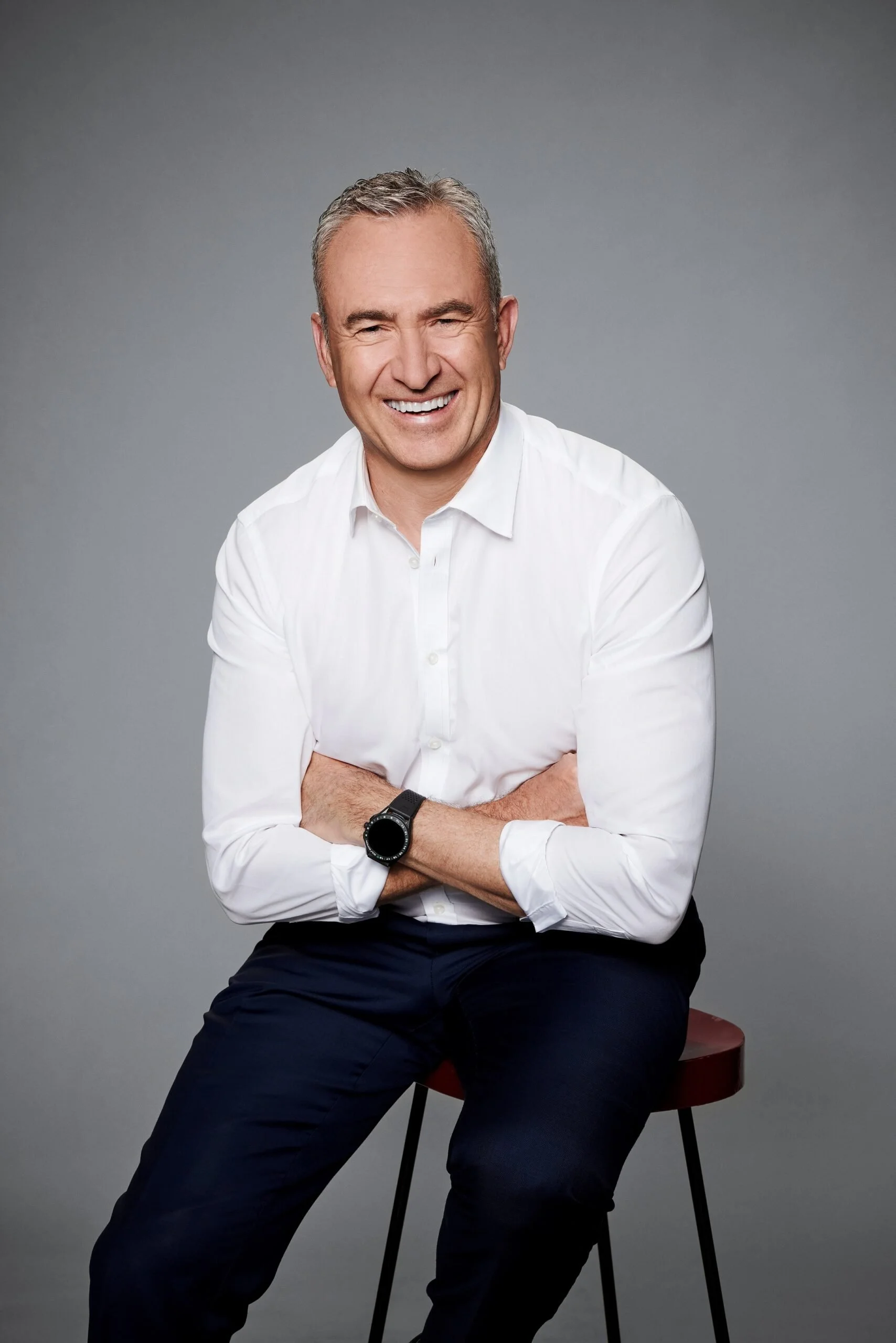
Mark Beretta
Mark Beretta OAM spent thirty years on air at Channel Seven, the last twenty-two of them as the sports presenter on Sunrise. He is a ten-time Australian water-skiing champion and a Major in the Australian Army Reserve, where his work now includes ceremonial duties for Army Headquarters in Canberra.
He was one of the original riders on Tour de Cure's first fundraising ride eighteen years ago, and by his own count the cycling charity has since raised more than $165 million for cancer research and funded 221 breakthroughs. He is an ambassador for the Butterfly Foundation, focused on lifting awareness of eating disorders and body image pressure among young men.
Mark stepped away from Sunrise in 2026 after thirty years with the network, and is currently his mother's main support through her cancer treatment, a year after losing his father. He now works as a public speaker, media trainer, and podcast host of Beretts' Best.
-
00:00:00:05 - 00:00:10:18
Unknown
The background of sunrise is the extraordinary sunrise was never expected to work by channel seven. It was a filling just to fill in some time, really. Within a year or so we'd got to number one in breakfast. We've been there 22 years since.
00:00:10:20 - 00:00:15:00
Unknown
You are someone who has reinvented yourself several times within your career.
00:00:15:02 - 00:00:29:07
Unknown
Someone had checked me a long time ago about saying yes instead of saying no. Sometimes our natural reaction is to oh no, I'm busy. No, I can't do that. If you can get in the habit of more often saying, yes, yes, I will. Yes I can. It really changes your outcome.
00:00:29:09 - 00:00:37:02
Unknown
You've become the ambassador for the Butterfly Foundation. I think when most people think eating disorders, we probably think about young girls. And that is that is definitely a big area.
00:00:37:02 - 00:00:51:08
Unknown
But the big area that I think is untapped is in young guys. As parents, sometimes we are in denial about the big issues with our kids because we don't think it could be our kids who are going through this better to talk about it and raise the prospect. At least have a discussion and put it on the radar.
00:00:51:08 - 00:01:07:13
Unknown
Mark, welcome to Donald Manning. Thanks, Mike. Great to be here. I'm delighted to have you here. I was keen to have you here for many, many reasons. You bring such a wealth of experience to this conversation, to this table and to our listeners. What do you think they're going to get from our conversation today? I think you're right.
00:01:07:14 - 00:01:23:20
Unknown
I think I have had some life experience, so hopefully, hopefully I can share some of my experience. I think that's all it ever is. We we share our experience and hopefully we learn a little bit from each other. And I think that's that's the best way we get along in life. You know, is looking at we can learn from other people and what they've been through.
00:01:23:21 - 00:01:42:07
Unknown
So if I can share something I asked you because you have you've had a huge career in mainstream television, so our audience will know you from that. You've also been recently appointed an ambassador for the Butterfly Foundation, which is really interesting. I want to talk to you about that. You're a guy who's gone through, has gone through a lot of transitions and midlife, like most of us and our listeners.
00:01:42:07 - 00:01:54:22
Unknown
And you've shared a little bit about that, and you have a huge orientation to service. And in this show, we often talk about the second half of life is a great time to plan and oriented differently. So I want to talk to you about that.
00:01:54:22 - 00:02:00:08
Unknown
Some people may not notice you were a ten time Australian champion for water skiing.
00:02:00:14 - 00:02:15:04
Unknown
And I think it's true that your dad puts you into water before you could even swim. That's right. You did. I was four years of age. Yeah, and dad decided that I should learn to ski, which was great. So he was very clever. He was an innovator, my dad. So he put a life jacket on me. One on the front and one on the back.
00:02:15:04 - 00:02:30:22
Unknown
He figured with two, I couldn't sink, so. But yeah. Then I learned to ski and just loved it. I mean, the water, the speed, you know, just that whole feeling of being out in the sun was great, which we didn't have a lot of sun in Geelong at the time, but but it was, it was it was a great experience and I'm hugely grateful.
00:02:30:23 - 00:02:47:13
Unknown
You know, my, my dad was just a really special man. And yeah, we lost him in September last year and I really miss him. I think about him every day. And I think everyone who's been through that experience, when you lose your dad, that's just what you're doing. The thing I found bizarre is I think about him regularly every day.
00:02:47:13 - 00:03:04:15
Unknown
And when he was alive, I didn't do that. But now I find that I think about the good times. I'll just smile for no reason in the middle of the day, because I think about the great things that we've had, and the amount of memories that have come back since September has just been incredible. So yeah, so I always think very fondly of dad.
00:03:04:16 - 00:03:25:14
Unknown
My business partner Steven and I decided to honor our fathers, and we painted this huge 12ft, eight meter high, 12ft high mural on our war downstairs, which you saw in your magnificent. Yeah. And I look past it every day, and sometimes I go, you can I boys. Yeah, yeah. And I have just just paused to go, actually, I mean, I can't talk about Steven's dead, but he'd be the same as me.
00:03:25:15 - 00:03:48:17
Unknown
It's such a huge impact it had on me. Yeah. And I think when we look at this particular project in terms of casting, he'd be in or going, what? People come in and just talk to you, just talk to you. But I do. I think you'd be very proud. But it's great because I think you probably the thing that's harder you you respect the more and you understand the more when they're gone.
00:03:48:18 - 00:04:04:12
Unknown
You know, which is hard. But I always had a great relationship with my dad. And, you know, we we were probably very different. He hired me. I worked for him for two weeks. When I left school, I was going to go into the plumbing business. After two weeks, he fired me two and he said, I think your skills might be used somewhere else.
00:04:04:12 - 00:04:19:09
Unknown
And he was right, which was great. So he sent me on the road. Did you talk to him at the time? Yeah. Yeah, yeah, yeah, he was he was great. He was right. And I knew he was right. So what did that early experience in sport teach you in terms of your body? It limits and all that stuff that you have capitalized on ever since?
00:04:19:09 - 00:04:37:13
Unknown
Yeah, I think I think you learn a lot about yourself. You learn a lot about other people to sports. Wonderful. Like sport just teaches so many skills. It's interaction. It's winning. It's losing. Things don't always go your way. Sometimes they do. And when they did, what did I do to get to that point? How did I get myself there?
00:04:37:13 - 00:04:54:05
Unknown
What was I thinking? You know what? How did I train you? Just teaches you a great discipline. I love driving past sports fields on a Saturday and seeing young kids out there playing sport because I know it's good for them, you know, it's good for their mental health. It's good for their physical health. It's good for their social interaction.
00:04:54:07 - 00:05:10:10
Unknown
Sport just gives us so much. I've always been such a big advocate of kids sport, and watching your own kids play is just, you know, it's just great to see them out there and and having that experience and learning that, you know, life gives you ups and downs. Now life is tough. We don't always win. Sometimes you do.
00:05:10:12 - 00:05:26:14
Unknown
But you know, you walk off at the end of the day with your arms around your mates and you know you have. You've had a good time. Do you have any view on the modern evolution of awarding everybody, every child on the pitch for. I'm probably not the biggest fan. Yeah. I don't think it was probably not my thing.
00:05:26:16 - 00:05:42:11
Unknown
No, I think I mean, it's life. I think sport has always got a mirror life and it always has. And I think that's what we like about it as spectators too, because a game starts, we don't really know what the outcome really is going to be. And during the course of that event, you go through all the highs and lows in front.
00:05:42:11 - 00:06:00:16
Unknown
You're behind, you know, there's injuries, there's disaster. At the end of the day, there's a result and a finish. And you know, a lot of it is like life, you know. And I think that's that's part of the attraction of sport. It gives us all those emotions. But no, I don't like the idea of handing every kid a medal for participating.
00:06:00:18 - 00:06:10:14
Unknown
You know, you you have a jumper, you wear a uniform, you participated. But I think we reward good results and we will reward those who've worked hard and achieved a result. You know, that's life.
00:06:10:14 - 00:06:17:07
Unknown
And it doesn't happen at the top level. And I don't know why it should happen at junior level. Just I don't know. It doesn't.
00:06:17:09 - 00:06:27:13
Unknown
I think when you when you give everyone a medal just for turning up you, you award mediocrity, you know, and you know, we appreciate people who work a bit harder. And if you have a skill in that area.
00:06:27:14 - 00:06:33:14
Unknown
Good luck to you. You know that's great. And I think we all have we all have a talent somewhere. We've just got to find where
00:06:33:14 - 00:06:34:06
Unknown
it is.
00:06:34:08 - 00:06:43:24
Unknown
You had 30 years in front of a camera, 30 years at seven year 22 at sunrise. Yeah. It's extraordinary. And so 3 a.m. starts at 4 a.m., starts international flights. You said a lot.
00:06:44:00 - 00:07:06:01
Unknown
You worked really, really hard. And how did that. How did all of that, shape you into who you are now? I think it was. I think it was really good for me. I think it showed me a much bigger world than what I knew and what I had in Geelong. I've met some extraordinary people, and I've learned that extraordinary people are pretty much ordinary people, you know?
00:07:06:02 - 00:07:29:21
Unknown
So which is a beautiful thing. My favorite, some of my favorite interviews were Roger Federer, you know, just a just a wonderful, gentle, normal person. Lewis Hamilton I really admired. And I got to, you know, I got to talk to all these people and discover really who they are and to have that experience and to see that they're not these superstars, that that position is never attainable.
00:07:29:23 - 00:07:48:07
Unknown
They're just the right people who worked hard and got to the place they got to and are really good at what they do. So but extraordinary experiences in places we visited, things we did, camaraderie of our team, particularly sunrise, to get up. And it's like going to war at 3:00 in the morning. It really is. It's not easy.
00:07:48:07 - 00:07:58:19
Unknown
And you know, the years that we worked through with, you know, with Koshi and Nat and Sam Armitage and Melissa Doyle before that, they were just just great fun years. You know, we were
00:07:58:21 - 00:08:04:18
Unknown
the background of sunrises. The extraordinary sunrise was never expected to work by channel seven. It was a fill in just to fill in some time.
00:08:04:19 - 00:08:19:14
Unknown
I don't know that. So much so that when we when we started to work as a sunrise team, they didn't give us office space at Epping at the studios. They got demountable then, because it'd be easier to just get rid of the amount of us when we went, you know. So. And the skunks rock in the corner. That's right.
00:08:19:15 - 00:08:37:09
Unknown
Yeah, yeah. So we couldn't even get office space. So they had. Yeah. There was very little faith, which was great because they left the show alone to do its thing. And and largely guided by Koshi, we found a direction that was that was revolutionary at the time because the show we we talked to our viewers, which was groundbreaking.
00:08:37:10 - 00:08:54:07
Unknown
You don't talk to your viewers, you just give them stuff, you know? And of course, you started this interaction with people and it just started this chain reaction. So within really within a year or so, we'd got to number one in breakfast. We've been there 22 years since, you know, and just built this extraordinary relationship with the audience just by
00:08:54:09 - 00:08:55:22
Unknown
being pretty normal people.
00:08:55:23 - 00:09:15:21
Unknown
So but you also like, you obviously had your show and the show was planned, etc., but then you reacted to live events, I think back to the mining disaster in Tasmania. Yeah, Bakersfield, the the reaction of the team to go straight there, but then stay there for a number of days and keep the whole country alert to what was happening.
00:09:15:22 - 00:09:35:13
Unknown
It was it was it not? Was it still is. But it's a huge part of Australians life show. Yeah. Even the fact that this is what made this is what made sunrise really different. That news event finished. We went back the week after and took a whole bunch of great Australian bands and did a big concert for the people of Beaconsfield and all the emergency workers.
00:09:35:13 - 00:09:59:16
Unknown
And that was, I think there was another defining moment for sunrise is that we we didn't just come in and do the news event and, you know, and I think we did it in a different way that was compassionate and cared for people. But we we came back after we didn't just walk away, you know. And I liked that when the cyclone Cyclone Yasi hit up in northern Australia, Koshy came up with the idea of putting a call out to get tradies and loading them on.
00:09:59:16 - 00:10:14:12
Unknown
I think we had to deal with it. That might have been Jetstar or Virgin at the time, but they gave us a plane so Koshi got. I think it was 150 traders. They gave up their time. He put him on a plane, he and Peter Cosgrove took them up there and they worked for a week and just rebuilt around North Queensland.
00:10:14:13 - 00:10:32:12
Unknown
And it was things like that that just made the show so much more than just a TV show and so rewarding to be a part of. Yeah. Well done. You said that one of the reasons you left sunrise was to care of your mountain. Yeah. And and she has since passed. No, she's she's still with us. Thank goodness.
00:10:32:12 - 00:10:53:13
Unknown
But she's she stayed for ovarian cancer. We've mum's the her oncologist calls it the miracle because we think. We think you don't think mum's got much longer and then she'll come. Good. And it's just. Which is beautiful. Yeah. It's really good. I spoke to it last night and she sounds $1 million, you know. And, you know, I could talk to her today and she'll be a bit knocked around.
00:10:53:13 - 00:11:15:19
Unknown
Yeah, but she's she's now at the stage where there's nothing more they can do for her. And she's just she's hanging there and still punching. She's as tough as nails, you know, she's a she's a good Scott and yeah, she's an amazing mum. She's been awesome for us. Nothing really trains men to take care of their mums. And is there a real coincidence?
00:11:15:19 - 00:11:46:00
Unknown
But you're the third gentleman I've talked in the last two months who have overtly taken time away from work to do just that, and I find that fascinating and fantastic, because our society doesn't suggest we do that as men. Yet you are doing that. Yeah. It's it's it's great. It's really nice. And I just, I, I'm trying to reconcile all the things that my mum has done for me, not just in my childhood or my teenage years or my 20s, but through my whole life.
00:11:46:01 - 00:12:06:08
Unknown
You know, your mum, I don't know what everyone else experience is like, but my mum has been the rock, you know, she's always been there and she would drop anything to help you if you needed it. And, you know, in these. I just thought these last couple of years it's time to pay that back. And I don't know how I will ever pay her back for all that time.
00:12:06:12 - 00:12:22:16
Unknown
But, you know, if I can give her more time and be there more for her. Yeah, that's a really nice thing for us. And and it's beautiful time and I think even more so because, you know, the clock is ticking and you don't know exactly how long you've got, but, you know, you haven't got a lot of time.
00:12:22:18 - 00:12:41:23
Unknown
So you really want to make the most of it. Yeah. So we, we talk every day. I get down there as often as I can. I like to stay down there for a while so I can have consecutive days down there with her. But it's just beautiful time. Her, her short term memory, short term memory is failing. Her long time memory is pristine.
00:12:42:00 - 00:12:56:19
Unknown
So we talk about the good times, you know, which is kind of nice. You know, she doesn't remember which is good for her. She doesn't remember a lot about her treatment or where, you know, where she's at with that. But gosh, she'll tell you how she wrote a horse to school and you know how she fell off the front of her bike and lost her teeth.
00:12:56:20 - 00:13:19:13
Unknown
And they're just beautiful. Have you ever seen or read or heard about the work of Ellen Langer from from Harvard? No, I have no. So she's done this extraordinary piece of work where she's taken, people like your mom, maybe a little bit younger and built a residential center where they move into. But it's set up in a way that would have been 30 years earlier.
00:13:19:19 - 00:13:39:19
Unknown
So the same esthetics, same color, same music playing. And because we know that, like we just said, our long term memories are far better than our short term memories as we get older. And but the surprising impact of it was they started physically getting more agile and more, more cognitively sharp because the long term memory is now in real life.
00:13:39:24 - 00:14:01:04
Unknown
Right? So it became the short term memory as if it was. Yeah, that wouldn't surprise me at all. It's Yeah, it's incredible how just how sharp that long term memory still isn't. I think it's like I said, your hard drive is full. You know, she got no more capacity to store what happened yesterday. But all of that back there is there ready to to to grab back and restore and.
00:14:01:08 - 00:14:21:24
Unknown
Yeah, like I said, it's an incredible time. I'm going to use that phrase for my kids to tell me I've forgotten something. My heart right here you are. I think going through what a lot of folks in midlife go through that is multiple stuff at the same time. And, you know, your dad past your mom's ill. You went you went through a separation.
00:14:21:24 - 00:14:25:20
Unknown
You went through a new love of your life, a whole lot of stuff at the same time.
00:14:25:22 - 00:14:39:09
Unknown
and for some of us, the compounding sense of loss or change is exciting and more for more of us, it's actually really, really scary. And we kind of manage to decline rather than positivity. You look like someone who's managing it really, really positive and moving into it.
00:14:39:10 - 00:14:46:06
Unknown
There are days. Yeah, it was hard. I found it last year. I found I felt like I was in a scenario, like it was just it was wild, you know,
00:14:46:06 - 00:14:55:11
Unknown
mum was sick and we thought mum was going to go first. Dad probably hadn't given us the full scope of his situation and his hit very hard and quickly.
00:14:55:14 - 00:15:05:18
Unknown
So I've lost Dad in September, the whole, you know, the worst thing I'm thinking in my head, where am I at, what's happening here? And that's an issue. And of course,
00:15:05:18 - 00:15:14:22
Unknown
a couple of years before I'd been through separations, working through divorce and that sort of thing, and it was all just wild. Like, I just I'm moving to a period now where things are settling and it's really nice.
00:15:14:22 - 00:15:30:03
Unknown
And, and you also appreciate much more the good times. You know, what to think back to maybe, you know, ten years ago, 20 years ago and everything seems like it was a lot calmer. That was good. But that's life, isn't it? I mean, you just you don't know when and how things are going to come at you, and you just do your best day by day.
00:15:30:03 - 00:15:53:04
Unknown
You know, there's a lot of people have just given me good advice to just breathe, you know, just when it really gets hard, just breathe minute by minute and work through it day by day. And that's that's really all you can do. And having, I think having good people around you talking to people and also just just being aware of how you're feeling, not trying to fight it, the fact that it is hard, it is traumatic and it can be really tough.
00:15:53:06 - 00:16:08:19
Unknown
And, you know, just facing up to that and being aware of what a toll it can take on you to and, and those around you. I think you've got to be really careful not to take it out on the people around you. I'm not necessarily that good at that. Sometimes I do take it out on people around me.
00:16:08:19 - 00:16:19:20
Unknown
I need to be very aware that, you know, this is my thing to sort out and don't let it affect, you know, the kids or, you know, partners or people around you. You know, you've got to keep them close.
00:16:19:20 - 00:16:24:01
Unknown
can I ask you, how does that show up? But more importantly, how do you how do you learn to manage it?
00:16:24:02 - 00:16:52:02
Unknown
Yeah, I can, I apparently become snappy short. I don't talk so much those things and I am aware of doing it now. And as soon as I noticed that, I shut it down. Because the last thing you need when you're going through a bit of a battle is the people who want to help you in close to you, to be pushing them away, you know, and you really need to accept that help.
00:16:52:04 - 00:17:12:07
Unknown
And with open arms, you know, because if someone is prepared to stand by your side and be there with you. Gosh, the last thing you want to do is push them away, because they're the people who you really know. They're the good people in life. You know what's how fun interesting about this? I mean, I completely agree with you, by the way, and I'm still learning all that myself to Sport Australia International.
00:17:12:08 - 00:17:38:15
Unknown
There's a whole kind of mythology of being tough. Yeah. And there's, there's a physical toughness that's absolutely important. And there's a testosterone level that drives that physical toughness. And but it's not just in sport, it's in lots of masculine type industries, etc.. And then you come to this stage of life where actually that's no longer useful. And in fact, it gets in the way of and what you've just explained is really important is you have to breathe, you have to capture yourself in the moment.
00:17:38:21 - 00:17:55:20
Unknown
I think we men, I think we have to either unlearn some stuff or relearn some stuff that we've long forgotten. And otherwise we come into the second phase of life, which I think it could be the best phase of life with, you know, we're carrying armor we don't need to carry, and we're hitting the people closest to us who are trying to help us.
00:17:55:21 - 00:18:15:19
Unknown
Yeah, I think my experience would be that the realization comes to you at the right time. You know, I think I think there is a stage of life where, you know, you do need to be armored up, but you need to fight your way through. But I think you reach a maturity and I'm a grandad now and that's, you know, that's I just speak to my grandson on the way here and, you know, that's just a just a beautiful, enlightening experience.
00:18:15:20 - 00:18:37:03
Unknown
You know, it's it's just, again, just another level of life. And I feel very fortunate to have experienced it at this stage. But yeah, I think we do you know, we, we, we do put our defenses up and we do fight when we need to fight. But I think you learn that there are other ways to do it as time goes on to.
00:18:37:05 - 00:18:39:13
Unknown
Can I segway to a different type of fight?
00:18:39:15 - 00:18:41:23
Unknown
You've become the ambassador for the Butterfly Foundation.
00:18:42:01 - 00:18:50:11
Unknown
Yeah. And the media. Social media particularly is full of looks magazine and particularly young men. Yeah,
00:18:50:13 - 00:19:00:18
Unknown
I read some stats before I reached out to you. 4% of the population would have a disordered eating condition at some stage in their life, and 9% of us will have it.
00:19:00:19 - 00:19:28:08
Unknown
Sorry for at any one time and 9% at some stage in their life. And what shocked me was people with eating disorders are six times more likely to die than folks who don't. And I have seen this up close. I know how complex this is, how difficult it is, how insidious it is, and it's really mind blowing. And it's not often talked about what attracted you to being involved with this and what's your role in the Butterfly Foundation?
00:19:28:09 - 00:19:51:00
Unknown
I think I'd seen Butterfly Foundation for a long time, and like most people, we'd called on number four to, you know, read the material, learn from their experience, and they're just do fantastic work. I have seen many levels in many places, the the impacts of eating disorders and the whole concept of of young men being involved in eating disorders.
00:19:51:01 - 00:19:51:21
Unknown
Now, I think,
00:19:51:21 - 00:20:08:18
Unknown
you know, for a long time, I think when most people think eating disorders, we probably think about young girls. And that is that is definitely a big area and it needs attention and it's getting good attention. Hopefully we're making some headway. The thing I have learned is that we don't speak about it enough as a community.
00:20:08:19 - 00:20:29:20
Unknown
We don't. I think a discussion will really help us all understand the concept of what it is a little bit better, but the big area that I think is untapped is in young guys. And, you know, I have a 19 year old son now and, you know, and everyone who has kids of that era you're very aware of.
00:20:29:21 - 00:20:50:02
Unknown
You know, the images are being thrown at them, the talk amongst their mates, they talk about their girlfriends, all that sort of thing. And the feeling young guys at that stage are so malleable, you know, they're so they're so influenced by what's around them and they want to fit in and, you know, they they want to live up to the image that's being presented to them.
00:20:50:04 - 00:21:03:19
Unknown
And that can be taken in the extreme, really unhealthy, you know, and they can lead them down the path of taking things in their body that are not long term the best for them. It can lead to, you know, excessive over exercising. And and don't get me
00:21:03:23 - 00:21:13:23
Unknown
wrong, being healthy and exercising is fantastic. But I think we all recognize that there is a point where you go over the edge and it's dangerous and we just need to.
00:21:14:00 - 00:21:21:06
Unknown
Part of my role with Butterfly Foundation is I would love to just highlight that a little bit more and hopefully just carry that message to young guys
00:21:21:12 - 00:21:31:21
Unknown
that great, you know, be healthy, be fit, but also be aware that you can get caught up in this whole image thing, and it can push you down a road that you shouldn't go down.
00:21:32:02 - 00:21:51:15
Unknown
I came across this notion of looks magazine, the idea of having surgery to make your face the most angular, perfect looking thing as well as everything you've just said. But be it managing what you eat or calorie deficit, etc.. Yeah, and it shocked me when I first came across because in my world, like, that's not in my world at all.
00:21:51:16 - 00:22:14:20
Unknown
And I was thinking back to when I grew up, like I grew up in Ireland, and I remember going to England at, like moving to England at age 23, I think it was, and being shocked that my cousins and their mates were really interested in hair gel. That's just not what I grew up with. We grew up with music and alcohol and sport and and, you know, just really having fun.
00:22:14:21 - 00:22:34:19
Unknown
And so when I look at where what I discovered today, I just find it a very, very different world to what I understood. Yeah. Yeah. The body image thing for young guys is it's probably never been like it is at the moment. I think there's such a pressure of the images they're seeing on social media, what they think they need to look like to be attractive.
00:22:34:19 - 00:22:55:01
Unknown
Yeah. You know, and just that whole concept of it and sport is the other issue too. You know, and this is probably an area that, that I have some experience in is the notion that to be picked in the team, I need to look like this. You know, I need to have this sort of build or coach wants me to, to to lose five kilograms, whatever, you know, which is just not the case.
00:22:55:01 - 00:23:00:18
Unknown
I think the good thing about sport is sport is for all body shapes and body size, everyone finds their way. Yeah.
00:23:00:18 - 00:23:15:21
Unknown
So yeah, that that pressure within sport as well has been big and they've been some really high level documented cases of eating disorders amongst athletes. I remember the first one I came across as a young girl was Mark Harvey at the Essendon Football Club, was anorexic.
00:23:15:21 - 00:23:43:17
Unknown
And that was just a shock to people, you know, to have an elite athlete who felt that he needed to be more and needed to look different and needed to do this, to hold his place in the team. But yeah, it was you know, it's out there is the bottom line. And I think where it's a problem that we see the tip of the iceberg on because we don't talk about delight, we don't talk to our kids about it a lot because it's, you know, it's hard to talk to someone in that age group anyway, let alone confront them about an issue.
00:23:43:18 - 00:24:07:00
Unknown
So living in the media industry like you did, did you see or feel any pressure to look a certain way, particularly as you got older and as your crew got older with you? Yeah, I think so, yeah. I think and particularly a lot of the women I worked with to particularly if I were sort of 15, 20 years and beyond that, when times are different, there was enormous pressure, particularly on the, on the girls.
00:24:07:00 - 00:24:28:19
Unknown
And, and I think on the guys as well. You know, I was I've had I was probably putting on a couple of kilos at the time, but I have had it coming to buy a new director that, you know, that I was putting on weight and I should have a look at that. So, but I yes, we, I worked in the industry where you, you know, how you looked on camera was seen to be important.
00:24:28:21 - 00:24:51:22
Unknown
That's probably changed a little bit now, but it's still there and it will always be there. But certainly when I started out it was it was a big thing. Yeah. You've said that there's a grew to this. There's a an increasing and important highlight on young women. There's less so on young men. And that's why you're here is to raise that that that question mark and just shine the light.
00:24:52:02 - 00:25:14:16
Unknown
There's a lot of research out there that says men are far less likely to ask for help, particularly that age group, that kind of 20 age group, and particularly at our age. And I'm doing a whole doctrine in this whole space in terms of why do some men flourish and some men don't. What's been your experience as to why men may not raise a flag and say, hey, I need some help, or I'm concerned about this or I'm in trouble?
00:25:14:17 - 00:25:33:09
Unknown
Yeah, I think it's seen as a sign of weakness. And when you ask for help, you know, you've you've failed, you know, why can't you do it on your own? Why can't I get through this when he has and he has. And, you know, I think guys just find it hard to put their hand up and ask for help.
00:25:33:09 - 00:25:56:18
Unknown
And I don't know how that changes. Hopefully over time it will. I think it's getting better, but I think it's that that whole feeling of not being able to manage it yourself, you know, I think it's guys we have that instinctive maybe provide a feeling that that the buck stops with us. You know, that if we can't do it, the whole world is going to fall apart, you know?
00:25:56:19 - 00:26:16:23
Unknown
So there's an enormous weight that we put on our own shoulders to try and get things done or to be successful. And, you know, that's actually not really the reality. We learn in time that, you know, we're actually not that essential. And it is good to ask your mates for a hand. So if there's someone in your circle, there's a guy or someone's son who you're I think there's something going on here.
00:26:16:24 - 00:26:52:20
Unknown
Or indeed they said something and they they wouldn't use their words. I have a disorder. They wouldn't use those words. But they say something else. How would you reach out to them or how would you encourage them to help them? Yeah, I think it's a it's a real peer led thing. I think we so much people in that age group, you're so adherent to your your peer group, it's a great thing if a peer can talk to someone, but I think anyone can can talk to a young person in the right tone, you know, in the right place at the right time and just say, hey, I just noticed that you're doing this or, you
00:26:52:20 - 00:27:15:14
Unknown
know, every day you're here or there's some something unusual in your room and you know what? How are you feeling? And the key, I think it's have a really open conversation, you know, closed questioning is tends to be really confronting, just guiding a discussion and letting them bring it out in their own time and way, I think is the most helpful way.
00:27:15:14 - 00:27:17:00
Unknown
But look,
00:27:17:06 - 00:27:29:22
Unknown
it's easy. And as parents, sometimes we are in denial about the big issues with our kids because we don't think it could be our kids who are going through this. Better to talk about it early and raise the prospect. At least have a discussion and put it on the radar.
00:27:29:24 - 00:27:32:23
Unknown
You know that. Look, I know that this is a problem.
00:27:32:24 - 00:27:54:04
Unknown
This you know, this can be unhealthy for you. Just be aware of it, you know? Great. You've had that discussion. But but to wait until it's too late. And I spoke to a family recently who lost their son through an eating disorder. And it was just, you know, the whole story was just heartbreaking. And it brings home the the great unseen problem.
00:27:54:04 - 00:28:13:24
Unknown
I'd describe it as, you know, I don't think many people would be aware that a young man and young Australian males are dying through eating disorders. It's happening and we don't talk about it. There's not much there's nothing in the media about it. We tend to sort of sweep it under the carpet, but it's something we have to have a discussion about and we have to be aware of.
00:28:14:00 - 00:28:31:23
Unknown
And if we see signs we have to address. Yeah. And some of those signs are really simple. But it's only in hindsight you realize is a pattern there. And from my, my, my understanding can be as simple as starting to skip a meal or starting to have not eat the meal or starting to go. I don't want to eat with you.
00:28:31:23 - 00:28:53:20
Unknown
I don't want to be seen to eat with other people. Or indeed the opposite, of course, which is is it more and more and more and more, is there is there any other signs or symptoms that you're aware of or you know of? Yeah, I think I think the build up of supplements, you'll notice to substitutes for meals, other supplements that just don't quite look right as well.
00:28:53:22 - 00:29:12:13
Unknown
And just to change your body shape, you know, I must change a body shape I've always found hard over time because it is such a slow thing. Yeah, but photos are a good way, you know, you look at the photo a few months ago in the photo and it just doesn't look quite right. Something really drastically changed. Yeah, you mentioned family.
00:29:12:15 - 00:29:34:22
Unknown
As I understand it, from what I've read, eating disorders are one of the most insidious of all the mental health disorders, and partly because the person themselves is six times more likely to die. And that's that's huge. But along the way, there's a lot of, there's a lot of carnage along the way for everybody. And for the families and the carers and giving you experience a butterfly.
00:29:34:22 - 00:30:00:01
Unknown
And given the fact that you talk to families, what support are there for the carers of the person having a disorder? Yeah, I'd say a great starting point is about a fly foundation, their website, there's incredible information. Their GP is great. I think going in to have a chat with your GP and just explaining what you're seeing and, and trying to get your young person or whoever it is to, to be there with you.
00:30:00:03 - 00:30:16:11
Unknown
You got to remember to that that person is often in denial as well. Although they know what they're doing, they're not going to admit to it. It is. It is traumatic. From what I've seen on families, it's really it's divisive. And I think for a lot of parents who go through it, they they're looking for a reason, you know.
00:30:16:11 - 00:30:32:20
Unknown
And what have I done? You know, what did I do? And that the reality is it's it's not to do with that. You know, it's a chemical thing. It's a mental thing. It's nothing to do with any of done. And I think that's that's a big moment when you realize that and you can sort of go, okay, right.
00:30:32:20 - 00:30:52:11
Unknown
So now what do we do to fix that? But the main thing for me is, and from what I've seen is just early recognition because it's it's easy and we probably find it most comfortable to be in denial and say, no, that can't be, you know, surely not. I would give it another few weeks and things will change and best addressed ASAP.
00:30:52:11 - 00:31:13:24
Unknown
Local. Like all things sooner it's dealt with, the better the outcome. And I think the other thing I've learned along the way is it's not a lifestyle choice. Yeah, that's my starter is that. But it moves into something very, very dangerous nature. It's not that at all. Absolutely. Yeah. The other news, though, is people can recover and do recover and make full recoveries and live really healthy lives afterwards.
00:31:13:24 - 00:31:35:13
Unknown
For someone listening to us now who might be a parent watching a child, or it might be a young man that's into this going, oh, this sounds a bit like me, but I'm stuck. Yeah. What would you say to them? Ridge out, you know, get some help. Talk to people. There are a lot of people out there. Again, the people who are experts in this are Butterfly Foundation.
00:31:35:15 - 00:31:54:22
Unknown
And I've been in there. I've met the team. There are big team. They're fantastic at what they do, their expert counselors. There is everything. It's a one stop shop. You know, they've got medical people, they've got psychologists. They've they've got even with under under their roof, different government agencies who work in this area, you know, so you really can get some good, good help in there.
00:31:54:22 - 00:32:14:14
Unknown
And they proven they've got a great track record in helping people. And but yeah, I think that, you know, that discussion has got to be had under the the home roof. Yeah. You know and it's got to be it's got to be a team approach you know, and just getting the whole family to, to recognize that something's going on and something's not right.
00:32:14:14 - 00:32:36:06
Unknown
And together we have to pull together and work through it. Okay. We'll put links onto our website to the Butterfly Nation and also for our listeners and viewers in the UK and the US for the or the equivalent, because it's it's the good news is as a society, we're getting better and understanding this and we're getting better putting resources around families and the people who have gone through this orders.
00:32:36:06 - 00:32:43:03
Unknown
we mentioned recovery recovers. Another word for reinvention. So let me use that as a secretary. Invention.
00:32:43:03 - 00:32:49:02
Unknown
You are someone who has reinvented yourself several times within your career in
00:32:49:06 - 00:33:00:18
Unknown
terms of all the various types, like like you weren't a one sports person, you are multiple things. And then you went to breakfast TV and all of other stuff and you are reinventing yourself again.
00:33:00:18 - 00:33:19:23
Unknown
Now talk to me about that skill of reinvention, of what is it from a mindset point of view, or what is it from an activity point of view that you're leaning into? There's someone listening to this was going, I'm stuck in my life. I want to do something different, but don't know how to do that. Yeah. Yeah. Look, I would say it's actually this is crazy, but it's actually really simple.
00:33:19:23 - 00:33:39:05
Unknown
And all I've ever done is followed things I like to do. And is that like a changes I head down that road. I started life as an engineer rolling steel at BHP in Western Port and I enjoyed that. I went to a company called Honeywell after that, and I was selling fire systems and security systems, and I enjoyed that.
00:33:39:05 - 00:33:57:02
Unknown
That was great. But at the same time I had this burning thing for media. I loved sport, you know, I didn't want everyone to get out of sport, and I'd watch the Australian Open tennis and see guys like Bruce McIlvanney and Sandy Roberts and Peter Landy, all these commentators. And I thought, what a great thing, you know, to be able to go to the best sport in the world and talk about it.
00:33:57:02 - 00:34:17:21
Unknown
And I just managed to to work my way with it. A lot of help and friends and probably hard work into that area. And I had the most wonderful career, and I'll just roll on with that, but now redirected into areas that I'm really enjoying. I do now the things that come to me that I decide that I would, I'd really like to do that.
00:34:17:22 - 00:34:47:19
Unknown
It's a great experience, right? It gives me travel, which I love. I really enjoy travel. This lets me travel and do this job that I like to do, and that's got to be pretty much perfect. So for me, I think it's just about honing in on what gives you enjoyment and following that. And, you know, I think I think my dad said to me early on, if you find the thing that you enjoy to do, that old story where you'll never work a day in the life of that, but you also naturally you become good at it because you enjoy doing it.
00:34:47:20 - 00:35:04:21
Unknown
You know you're not fighting against. It's not it's not a chore, you know, it's Yeah. And I think I feel very lucky that I was able to find my thing. And it worked. And for somewhere, someone along the way thought I wasn't bad at it. And I should keep doing it. And, you know, it's just been it's been great.
00:35:05:02 - 00:35:23:07
Unknown
We had a guest on here a while ago who talked about leaving corporate career, but three years earlier gone through a process where he literally wrote down his perfect average day. So not his perfect day because he got fantasy. His average day is like, well, that's boring, but what's my perfect? Like, if I was to do this every single day, I'd be satisfied at nighttime.
00:35:23:08 - 00:35:44:08
Unknown
Yeah, it sounds like you're living a pretty cool, perfect average day. My average days come up for arch. Yeah. I mean, look, there are hard days. Like anything else, it's not always perfect, but on on average, I like I have an incredibly short attention span. So I find that I need things. I need things to be coming at me all the time, you know?
00:35:44:10 - 00:36:01:17
Unknown
And I need short term projects. It's the thing I found hard about engineering, because we'd start something and finish at 2 or 3 years later and I was like, I can't wait for that. You know? I just haven't got the patience. But I found that, again, you work yourself into the person you are. So I knew that I had a short attention span.
00:36:01:17 - 00:36:15:08
Unknown
So I need to work on things that I go and do the job for a couple of days. I look back at it. Yes, it was fulfilling. Everyone's happy. It was a good result. And then I moved to the next one. You know, that just works for me. Is that how you set up your life now? Pretty much.
00:36:15:09 - 00:36:35:05
Unknown
Right. Yeah. Yeah, yeah. So I'm doing I guess that's what I'm thinking about at the moment is, you know, I enjoy I'm getting every day sort of 2 or 3 inquiries and I work through them and I picked the ones I like to do. This morning I had a call about going to do some a couple of days work in Malaysia, and I'm like, well, that's great, tick, tick.
00:36:35:05 - 00:36:56:11
Unknown
That's a work I like. It's travel to Malaysia. I've been there for a long time, so that'd be great. You know, I'll go back and do a little project for channel seven in Europe for a few weeks, and, you know, that's a dream as well. So I've just I didn't expect this, but I seem to have just landed in a place where I think because I enjoy what I do and hopefully I do a reasonable job at it.
00:36:56:13 - 00:37:18:18
Unknown
Things. Things come your way, which is nice. I have a hypothesis, please, because a lot of people. Sorry, there's a there's a group of people who have been on television for a long time who have left, who are not getting two calls a day. I don't know who they are, but I'm sure they're there. But my hypothesis and you references earlier you said led by Koshy.
00:37:18:18 - 00:37:39:11
Unknown
But you as a team did this. It wasn't. It wasn't just where a breakfast show. We are in Australian community and we're here to serve the community. We do a lot of that from a television set. We do a lot of it in the community. So the idea of flying 150 trainees to help recover a town, it's service.
00:37:39:13 - 00:37:56:16
Unknown
You're dedicating a lot of your life to service. And I and I really believe in there's a type cycle here. You know, the more he gave people, they just either notice you or see or you just you just pop up in their radar and think, oh yeah, yeah, I remember him, but but you did pop up. Yeah, yeah.
00:37:56:18 - 00:38:16:00
Unknown
Talk to me about your service orientation, particularly at this stage of your life. Yeah. The most rewarding part of what I do. So to to cure, I got involved with a cycling charity for cancer research. They finished outside of the Sunrise Studios, Martin Place, 20 years ago, and I saw them finish. And I thought, that's incredible. You know, these people have ridden their bikes.
00:38:16:00 - 00:38:35:08
Unknown
They come from Brisbane to Sydney. Yeah. Wow. How long is that? They do that. It's 1400, about 1500 kHz taking them ten days. And I just thought that, you know, that was mind blowing. What an adventure. And my little brother had bought a bike shop not long before. So I had a bike and sold me a bike at full retail.
00:38:35:11 - 00:38:41:05
Unknown
And thank you, bro, double the price. Yeah, yeah, extras as well.
00:38:41:08 - 00:38:53:09
Unknown
And yeah, I just thought that was remarkable. So I rang a maid of mine, Gareth Jones. I said, Jonesy, look, what do you think about coming to do this? And, and I rang my brother Paul as well. And they both said, yeah, let's have a crack. And were you cyclists at that stage?
00:38:53:11 - 00:39:11:16
Unknown
I bizarrely, I had ridden to school all our, all our school lives, primary and secondary. We rode to school every day, so I knew my way around a bike and I really I enjoyed being on the bike, and I still do, because the thing about it is it makes me feel 12 years old again. You know, I go ripping down a hill with the wind in my hair and I'm just hanging on to this bike and it's just great.
00:39:11:17 - 00:39:30:05
Unknown
Yeah. So yeah, so we got involved in that and we survived the first ten day ride, which was we left Martin Place sunrise. And what I'd done was I convinced my boss at sunrise, Adam Bolan, that I could go and do a different stop every morning, do sport live on the road, and it'd be good for sunrise.
00:39:30:09 - 00:39:45:06
Unknown
And he thought that wasn't a bad idea. Then I had to go to tour to queue and say, listen, we could change the way you do things because we're going to come and do sunrise and get this whole audience behind what you do. Yeah. Bottom line, let's fast forward 18 years from that first one. I've done one every year since I remember the first time you did it.
00:39:45:06 - 00:40:13:11
Unknown
I remember it was incredible 2010. And so two to queue now has raised $165 million for cancer research funded. I think we're about 1500 major projects by Australian researchers. So the upside of that is we have these researchers who are focused on on cancer cures and cancer treatments, which is great. The side effect of that is we've kept our most some of our most brilliant minds here in Australia engaged rather than going overseas to find work.
00:40:13:13 - 00:40:36:14
Unknown
And the end result is, I think as of today, we funded 221 major breakthroughs in cancer research. It's extraordinary. We always thought at the start, if we could get one breakthrough, like, how could that be if we changed the course of research and we've now got 221, which they're written up in medical journals sent around the world, and they changed the course of treatments and cures and many of producing credible cures.
00:40:36:15 - 00:41:02:09
Unknown
And this is all a bunch of middle aged men in life in Lycra. It's like, yeah, it's incredible. And now we're, you know, we're tens of thousands of people as a community across Australia doing these, these rides and raising funds for cancer research. Recently we lost a good mate, Professor Richard Scholar, who I met probably about we'd funded his work the last ten years, and I met him probably six years ago on a on a bike ride.
00:41:02:10 - 00:41:21:00
Unknown
Richard was awesome because he was a researcher, but he wanted he wanted more. So he came to ride with us to help fund research not just for him, but for other researchers as well. And he rode with us for, gosh, probably 5 or 6 years. And it was just the most remarkable, wonderful man. And, you know, his loss is massive.
00:41:21:00 - 00:41:40:05
Unknown
And I must have when he was named Australian of the year or cooperating with Georgina, I just punched the air. I thought, we really got it right. This is the right man. And yeah. So to to lose him has been really hard. But I take great heart in in the way Richard approach people. I learned from people all the time, every day.
00:41:40:05 - 00:42:02:12
Unknown
And from Richard I learned the value of of really being invested in other people. So Richard, even in his late stages, he rode with us through Tassie in March this year, you know, and that was what, just a few months from when he passed away. So, you know, he was not in great shape, but for some reason, some part of his brain would still let him get on the bike and ride like he used to.
00:42:02:16 - 00:42:21:17
Unknown
It was the unaffected part of his brain, but his ability to engage with people and really listen and talk to people was remarkable. And he was a guy who had had so much going on in his head and so much brilliance, but he would just take and it would probably back to his good Tasmanian heritage. He would just take the time and everyone he spoke to felt really special.
00:42:21:18 - 00:42:44:23
Unknown
I know that that's a marvelous skill to have. You're also involved in the Australian reserves. Yeah, yeah yeah, yeah. What does that mean? It was something I'd always wanted to do out of school and I took a different path. Never got back there. About eight years ago, I was in a pub in Brisbane at 2:00 in the morning with some people who were Army recruiters, and I told my story that I'd always wanted to join, but never had the time, and I was too old now because I was late 40s.
00:42:44:23 - 00:43:01:24
Unknown
And they said, as a matter of fact, you're not too old, let's talk on Monday. So yeah, I thought, well, it's one of those things and I do this a lot. I am one for if I haven't done it, I want to do it, you know, and I don't put off till tomorrow what I could do today. That's one of my golden rules.
00:43:01:24 - 00:43:24:10
Unknown
So I thought, yeah, I've always wanted to do this. Looks like incredible adventure service to the country. And I signed up and went through all the testing, which was rigorous, got through all the physicals, and I've now been through I've done my initial training, I've done my captain's course, my major's course. I'm now a few years into being a major and I just love it.
00:43:24:10 - 00:43:52:18
Unknown
I love I love the people I love. One thing I highly underestimated was the notion of service to nation, which even the youngest soldier can tell you all about. And that's why they're there. And it's just the most remarkable group of energetic, focused, brilliant young Australians who have made a commitment, a serious commitment. They're well aware that should the need arise, they will put everything on the line for their country and their families and the rest of us.
00:43:52:18 - 00:44:08:23
Unknown
And I think that's happening for the reserves. I mean, you're not active duty, but you are brought into if the need is there is is the theory. Yes. But a lot of reserves like me get involved in the day to day. So I work for Army headquarters in Canberra and I virtually work as a part time role there.
00:44:08:23 - 00:44:31:24
Unknown
So I'm working with everyone I work with is full time army. So just recently I've, I end up doing a lot of ceremonial work because that's where my skill is. So I've just recently helped with the change of command from Chief of Army Lieutenant General Simon Stewart to Lieutenant General Susan Coyle. And it's great I get access to these incredible people.
00:44:32:00 - 00:44:56:00
Unknown
You know, they're just amazing leaders and incredible people. And, you know, through my work with Army, I've just met, as I say, the most incredible Australians. And it brings me great satisfaction. That whole service side of life now gives me back. So more than I put into it, you know, I just I hope we all find that time to, to come to that realization that I can help with something.
00:44:56:05 - 00:45:14:12
Unknown
And that's just the most remarkable feeling when you're going to something, not wanting something back. Because I think we spend so much of our career investing in our jobs. And the next step and if I do this, I can do that, and then I'll get this, you know, that'll be the result for me and my family. And yeah, but when you put your hand up for service, I probably got that from my dad.
00:45:14:13 - 00:45:36:04
Unknown
You know, he was he was remarkable at that. Every weekend we'd be at a working be somewhere else or helping to improve something. And you know, he was he was rotary. He was water ski associations. He was everything. So for the listener who has never had that heritage, has never really got involved in volunteering or whatever, and they're listening to you going, you sound like you're pretty happy with all this.
00:45:36:05 - 00:46:00:24
Unknown
Yeah. Where would they start? Find something you like. So if you like to do things to service the community, work on, on projects, rotary lines is a good one. If you have skills that may help in a critical situation. SES is great. The reserves, Army, Navy, Air force fantastic as well. There are a million different opportunities, but I would say don't put it off, you know, do it.
00:46:01:00 - 00:46:17:04
Unknown
It's it's hugely satisfying. And I just find every time you open a door in life, a whole new world opens up and a whole new world of opportunity and new connections, new bunch of people. I just find that day by day. And so I never
00:46:17:06 - 00:46:21:12
Unknown
someone had a chat to me a long time ago about saying yes instead of saying no.
00:46:21:13 - 00:46:32:01
Unknown
You know, sometimes our natural reaction is to, oh no, I'm busy. No, I can't do that. But if you can get in the habit of more often saying, yes, yes, I will. Yes I can. It really changes your your outcome.
00:46:32:04 - 00:46:42:17
Unknown
Fantastic. I just had a flashback. You just reminded me being in a youth club when I was 17, 18 and trying to encourage my my dad to get involved, and he was hesitant to get involved.
00:46:42:18 - 00:47:01:16
Unknown
He was also in the police force at the time, so he he wanted a boundary, but he also he couldn't figure out where he would lean into or where he would help relatives. Some of the other men get involved, and a few months later there was a drive for the youth clubs to go and chop wood and sell the wood and or give the wood to old folks, etc..
00:47:01:18 - 00:47:23:00
Unknown
Well, that's why I said my dad got involved because he grew up as a forester. Yeah. So suddenly he found, oh, I can teach all these young guys how to use a chainsaw. And he had a bull, right? Because he found something that he could do this. Right? And therefore he was a service to the young folks. I often think back to just like Saturday afternoons where he was just teaching guys, here's how you use a chainsaw.
00:47:23:00 - 00:47:46:11
Unknown
He saw you don't use it. Yeah, and I'm sure we've all been use it ever since. Yeah. So there's always a place and every charity needs volunteers. There's a nice thing. There are a lot of the big corporations built in charity days into the workforce, which is just great and makes a massive difference. And I just know from us at two to Cure, we are always looking for volunteers, and we can use volunteers to do a million different things at our at our events and our rides.
00:47:46:15 - 00:48:06:05
Unknown
We need drivers. We need people who can stack the truck, people who can help with food preparation, the million different things. You'll find something that that uses your skills. And sometimes people don't don't want to use their own skills. They want to develop skills. You wouldn't believe the amount of solicitors who are out driving trucks in Army Reserve on weekends, is that right?
00:48:06:06 - 00:48:24:11
Unknown
Yeah. It's fantastic. Yeah. Doctors, solicitors, a whole lot because it's so different and it's just a mental flush. You know, I get out there and I drive this whopping big truck over the hills and down through the valleys and. Yeah. And they love it. Fantasy is coming true. Yeah. That's right. Yeah. I've always wanted to do this. Yeah.
00:48:24:13 - 00:48:45:06
Unknown
Okay. Just change a topic quickly. You strike me as someone and I don't know this to be true. So you telling me you strike me as someone who has, you know, you've had a hugely busy life, as you said, getting with 3 or 4 in the morning, flying internationally for all these things. But you strike me as someone who's probably good at maintaining friendships as well.
00:48:45:08 - 00:49:09:05
Unknown
And if that's true. How is that? Yeah, I, I could be better, I think I think my friends would, would say that as well. I am not very good at calling very often, but I love that my my friends appreciate that they understand. The good thing my mom always used to love was that she could turn on the TV in the morning and know where I was, so we kept in contact via that.
00:49:09:05 - 00:49:49:12
Unknown
Yeah, but I've become aware and I work harder now at maintaining friendships because I think to as as time goes on, you realize how valuable they are. And as as time goes on to they become more invested, you become more invested in each other. And a recently celebrated a birthday. And we had a party and had a couple of people speak, and I found that it was mates who I've known for a long time able to tell the room about me, probably most honestly, you know, they just they've seen all the the nooks and crannies and the ups and downs and the good and bad and, you know, and it's all part of the tapestry
00:49:49:12 - 00:50:18:19
Unknown
of who you are. So of all those comments, which ones were you like smiling the most about my my ability to save a dollar or as one person put it on your three? Yeah, I was like, until a T-Rex. I have very short arms apparently. So yeah, I take that on board, I own that and and it's probably very accurate actually.
00:50:18:20 - 00:50:38:16
Unknown
So they did my last birthday. They presented me in a frame with the $1 note, which was supposed to be the first dollar I ever earned that I still had. So. So yeah, we've had some good ones, but how good is that? You know, when you when you have that sort of friendship. Because we know know particularly in Australia, taking the piss out of someone is just such a great form of affection.
00:50:38:21 - 00:50:54:13
Unknown
You know, it's like the more you knock them around, the more you love them. And yeah, that's good. But I think that's gosh, that's one piece of advice I give to my kids is really grab keep your friends close. You know, take the time ring check in because of two way street. You know, sometimes they will need you.
00:50:54:14 - 00:51:21:14
Unknown
You know they'll appreciate that. And many times you will need them as well. And to have that just that, that safety net around you is such a precious thing, is that there's a famous story that you just reminded me of, Ronnie Wood from the Rolling Stones, talking about his good friend Rod Stewart, and that for the first ten years of their friendship, every time they walked into a party, realizing that, Roger stepped back to Ronnie by the drink and when he goes, I now know what Scottish means.
00:51:21:16 - 00:51:52:00
Unknown
So I'm playing my Scottish mum, of course. Great. Great conversation. Mark, what have I not asked you? That was that we should be talking about nothing, though I can think. I think we've covered everything. Yeah, I think you've got me pretty well sorted out. But now it's some, I don't know, I think about what? What I try and teach the kids now because I think when, when your parents are coming towards the end and having lost dad, you, you realize that there is a time limit on this game of life.
00:51:52:01 - 00:52:06:08
Unknown
You know that there is a there's an end to it, and it sort of becomes within focus for so much of your life. It's so far away and so unrealistic. And barring a drama, you're going to have plenty of time. But it comes a point we think g all of a sudden I can see an end and I don't have a lot of time.
00:52:06:08 - 00:52:25:24
Unknown
So I now want to impart as much as I can to my kids of what I've learned, the good and the bad, for them to be aware of, what things to avoid, and also just to be to be better humans. And I think to be honest, I'm really proud of them. They're great kids and my grandsons awesome and touch wood.
00:52:26:00 - 00:52:43:12
Unknown
You know, there are ups and downs in life and they'll come and go and but hopefully they'll we'll all work through them. And just to have that time, I think the thing I really appreciate now is family more than anything, you know, and just having family around and you know, that connection that you have for life is pretty important.
00:52:43:14 - 00:53:06:23
Unknown
Last question for you. If the 75 year old version of you could talk to you today and say something to you, or ask me of you or what you reckon that would be, I would like to hear from 75 year old me. You've done okay and you've had a crack. And just have a look back at a few of the good things you've done along the way, and the people you've helped and the, you know, you've been okay.
00:53:07:00 - 00:53:11:14
Unknown
Yeah, I think that'll do. Mark, thank you for joining us. Pleasure. Thank you.
