



Paul Drayton can get anything done for anyone else. For himself, for decades, he couldn't get out of his own way.
If you've spent years putting everyone else's needs first and telling yourself that's just who you are, you know this one.
Paul is an actor and the author of Ride – Or Die Trying, a memoir about his marriage to comedian Alan Carr, the drinking that got him through it, and an ADHD diagnosis that didn't arrive until fifty, after a divorce, an arrest and a stint in prison.
The diagnosis didn't erase any of it. What it did was answer something he'd chased in therapy for years: not one defining trauma, just a brain running on empty and self-medicating with alcohol. He still has rough weeks. He understands them now instead of hating himself for them.
If you've spent your life mistaking a character flaw for a brain that works differently, this one's for you.
Top Moments
Meet the Guest
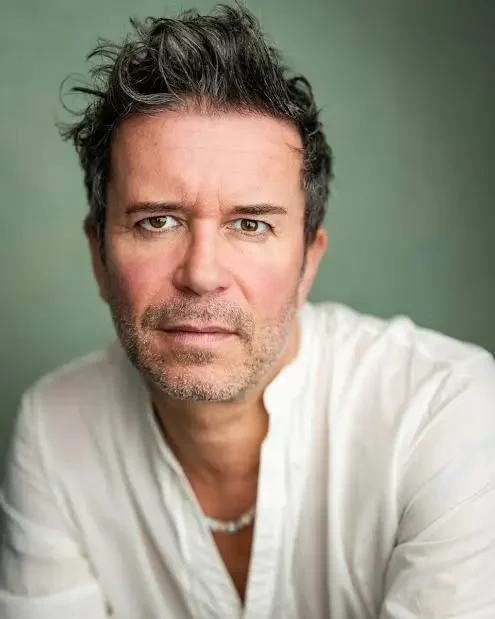
Paul Drayton
Paul Drayton can get anything done for anyone else. For himself, for decades, he couldn't get out of his own way. If you've spent years putting everyone else's needs first and telling yourself that's just who you are, you know this one. Paul is an actor and the author of Ride – Or Die Trying, a memoir about his marriage to comedian Alan Carr, the drinking that got him through it, and an ADHD diagnosis that didn't arrive until fifty, after a divorce, an arrest and a stint in prison. The diagnosis didn't erase any of it. What it did was answer something he'd chased in therapy for years: not one defining trauma, just a brain running on empty and self-medicating with alcohol. He still has rough weeks. He understands them now instead of hating himself for them. If you've spent your life mistaking a character flaw for a brain that works differently, this one's for you. Connect with Paul Drayton Website Books and products Ride – Or Die Trying: A Life Before, During and After the Laughter (book)
-
speaker-0 (00:00.066)
Paul, welcome to Don’t Let The Old Man In. Really good to see you.
speaker-1 (00:04.126)
And you, at this, well it's not too early in England, but yes, I've walked the dogs and I'm here.
speaker-0 (00:11.724)
Well, delighted to have you here. I suspect you're more of a of a late night guy than an early morning guy, so I appreciate you getting up early for us.
speaker-1 (00:19.81)
Well, that used to be the case, but not anymore. I'm usually in bed about half 10 now and rise about seven o'clock because I've got three rescue dogs so they get me up.
speaker-0 (00:31.406)
As opposed to going out at ten and coming home at seven.
speaker-1 (00:34.702)
That's what the life was sometimes in the past, yes.
speaker-0 (00:39.222)
Let's start here. You've you've reas you've released a lovely book called Ride and Die Trying, which I enjoyed reading. And I've heard you say in a few interviews recently that you've stopped being a people pleaser, which I thought was a really interesting phrase and f and an idea that you said. Because in the book there's a phrase that you describe yourself as you were the clown, the clinger, the carer, and the chaos all at the same time, which I thought was a fantastic phrase. When you pause now, Paul
When did you start learning to please people or what did pleasing people give you if you want to use that idea?
speaker-1 (01:15.586)
Well, I think that comes from my father who, again, I think he had undiagnosed ADHD. He always put other people's needs over and above his own. And I think that comes from partly with the ADHD, but obviously he's a very kind, gentle man and wanting to do anything for anybody. And that's the way that I was.
My mum used to say, just sits there, he won't do anything. But then if Mrs. Cannebody next door wanted a, she couldn't start the car or she wanted a lawn mowed, he'd be there doing it. And I think that's something that us ADHDs, they're quite comfortable in sorting other people's problems out and pleasing other people, but they're not very good at doing it for themselves. In fact,
I'm hopeless at doing things for myself, but you know, when somebody else is involved or if I've got a partner, I want to look after them. I want to nurture them. I want to encourage them and support them and be there for them. And that's often at the detriment of my own self. And I've learned that since being diagnosed with ADHD five years ago. I'm 55 now. And so it's been a huge journey of self discovery really.
not just on that, but with lots of things. Yeah, I just like pleasing people. I like making people laugh. like, you know, making them feel good. That makes me feel good. If they're happy, I'm happy. I'm a very sensitive person as well. that's always been quite, again, something that I've learned about myself.
hypersensitive to certain things, you know.
speaker-0 (03:12.588)
I know we I know we're gonna talk about ADHD soon, 'cause you know, you were diagnosed, as you said, as a fifty year old man, which is, you know, quite late in life for compared to a lot of people who get diagnosed, but it did give you a lot of insight into the rest of your life, I suspect. But yeah, the notion of being sensitive and I think the notion of being empathic even is not unusual for people with ADHD in the sense of being able to tune into what other people want and need. And it sounds like that you did that for a long time.
speaker-1 (03:39.798)
A long time, yeah. And I wasn't aware of it. I mean, I know I've always been like my father in certain respects, but, you know, as I've said, I can do anything or everything for anybody else. And at times, you know, I could do stuff for myself and I used to, but I used to leave things till the last minute.
Especially when I was at drama school as well with rehearsing and rehearsals and stuff like that. I used to leave it to last minute because then we would release the dope mean and I was under pressure and I would be working well under pressure. Yeah, it just makes me happy. It gives me a purpose, you know?
speaker-0 (04:30.422)
You you mentioned drama school, you you you obviously graduated from a very prestigious drama school, you went to London, and then you met your partner who's now your ex husband, and you and you in your book you say you put a lot of your own career on hold as you were supporting Alan and his career. Later you as you read a book about codependency, you described lear recognizing that you were disappearing little bit by little bit, and and you started recognizing that. Although you quite clearly say there was no one to blame for that, they just recognized that.
As you started recognizing that, I'm I'm just interested in what did you have to stop doing? What did you have to learn to let go of so you didn't disappear?
speaker-1 (05:10.862)
I don't suppose I looked at it like that. very kind of, I see things for how they are. I don't look too much into stuff. And so everything that I was doing when I was in the relationship with my ex and whatever, I just saw it as being me, as my character. So I don't think I kind of had to let anything go. I just...
assumed that that was my life and this was the way that it was. And it wasn't until, you know, COVID came along and like it did with a lot of people, it pulled the rug from underneath your feet. And I realized that why wasn't I able to do things for myself? Why wasn't I able to get motivated to do things?
The things that I wanted to do were kind of, they didn't come to fruition and I just felt like a failure at times because I'd get hyper-focused on things and then if it didn't happen for whatever reason, say for example, I started my own podcast called How the Other Half Lives and it was talking to other people who were married to celebrities. And I recorded three great episodes.
But then I got overwhelmed by all reaching out to people, getting rejections from people. And then because I wasn't famous per se, I was being overlooked and it didn't really kind of take off. it was a great concept for the show. And I classed that for me as being a failure. that was something before.
I got the ADHD diagnosis that I just thought, you know, I'm a failure and I can't see things through to the end. And I think a lot of people will be able to relate to that. know, I'm not an academic person, but I'm creative person. And that's why really I was so grateful and pleased that when I wrote, well, I had an idea for writing a book for a long time because I've had quite as you read.
speaker-1 (07:37.144)
quite a colourful life, even leading up to before I met my ex. And so I always thought I'd write a book. But then once I got divorced and I moved into my own space, I kind of realised right now is the time I need to do this. So, and the thought of me sitting in front of a laptop, writing and all these thoughts whirling round and...
and I'd got notes on the phone from years ago and notes from rehabs and treatment centers, I'm an alcoholic and I've been to those places. And the thought of trying to put those together, again, was just overwhelming. was absolutely, it was just unthinkable and I couldn't do it. So fortunately, I found an amazing ghostwriter and we met up a couple of times and
We gelled, which is really important. And it was like putting a huge jigsaw puzzle in front of her, like a thousand piece jigsaw puzzle. And bit by bit, slowly but surely, we just kind of started off at the edges and put all these bits in one by one. And she was fantastic. And because I spoke to her quite a lot over a couple of years with different stories and stuff, she managed to capture my voice.
and we came up with a fantastic book which I'm hugely proud of and that's one of my biggest achievements. mean not a lot of people get to write a book and get it published so I'm very very proud of myself for doing that and while we're on I'd just like to add that the profits for the book are going towards dog charities.
speaker-0 (09:28.202)
I I was I was going to mention that this is
speaker-1 (09:31.614)
I love dogs and animals is huge and I do a lot of work for charities and animal activism and stuff like that.
speaker-0 (09:40.418)
Well, well done to you. You said something that I'm recognizing as you're talking. one of my children was diagnosed with ADHD about a year ago. And it was not a surprise to everyone around this person, but a complete surprise, but more importantly, a complete relief for for them when they got the report and suddenly they're going, this is this this validates so much.
speaker-1 (09:42.2)
But you
speaker-1 (10:08.978)
Absolutely, it does. You know, and as you read the book, it kind of it reflects on that and I say, was that just me or was that ADHD? And my diagnosis, mean, nowadays, every bloody person seems to have ADHD, you know. But I think it's probably true, you know, the statistics of undiagnosed ADHD. I remember
Years ago when I first started to really struggle with alcohol, again I was self-diagnosing it and I learnt that. I'd been to AA meetings and you'd hear of people who talk in the meetings about their washing machine brain, thoughts and it just tumbling around and swirling and not stopping and then going on to spin cycle. And I'd go back now, I don't go to AA meetings anymore.
thankfully because I don't need them and other reasons. I'm saying that they don't work for me, but they absolutely do. But I would go back to them now and say, have you thought about having an ADHD test? even if you can't afford it, because I know in some countries the waiting lists and it's huge if you have to go private, they might not be able to afford it. But what I did, when I was diagnosed,
I was in the office of a psychiatrist because I was with an addiction or an addictions clinic and I was in the office and he was asking me loads of questions and I was just answering them as honestly as I could and by the end of it he just said well you've got ADHD and I didn't really know what ADHD was other than you know you were a naughty hyperactive kid and at the time I had so much going on
It didn't really register, like a lot of things with me don't register straight away. And I was going through a divorce, something really bad had happened within my relationship. It was all within the public domain, all in the press, was all out there, the shame and the humiliation of everything that was going on. made a huge mistake which I take accountability for. I was...
speaker-1 (12:37.026)
trying to find a home to live in. One of my dogs was dying. I had brain operations because I had a fall, bang to the head. And all of this was going on. then subsequently, after the arrest, I went to prison. So once I did me a little stint in prison, came out, got divorced, moved into my own safe space, it was then I started to go right.
Where do we start with this ADHD thing? So I started to look, because I'm not very good at I'm not academic. I don't read books. A woman on Instagram, she reached out to me. She sent me one of her books that she'd written called Square Pegs. And I managed to read it because I knew that I had to, again, with ADHD, I'm very bad at reading books. I listen to them basically on an audio. But again, they've got to grab me. Otherwise, I just listen to half of it and then leave it. Leave it.
So I started to learn about follow people with ADHD and you know could relate to so much of the stuff.
speaker-0 (13:43.598)
Wha wh what hit what hit you as soon as you read that book? What was it that you went Christ, that's me. That's th they're describing me.
speaker-1 (13:52.384)
It wasn't one particular thing, it was just everything. The way that they would deal with things, the way that they would feel anxious without reason, the way that they would just cope with life, the injustice sensitivity, the... I can't think. Just all of the characteristics of ADHD.
were there with me. And again, I've always just thought that that was me as a character. And I questioned a lot of things. In fact, when I told my ex, he turned around said to me, you haven't got ADHD. And again, that was kind of gaslighting me a little bit. And I thought, well, and I started to question myself again. Do I really have ADHD?
Because again, it's something that doesn't show up in the brain or whatever, and it's something, it's a character thing. I don't know exactly what it is, but I know it's a neurodivergent brain thing. But yeah, I was questioning it all. And yeah, it was tough. again, it was such a revelation to know that that was why. I remember during COVID,
My sense of self-worth just went down and down and down and down.
speaker-0 (15:29.898)
Why was that Paul?
speaker-1 (15:31.758)
It was because everything was restricted and I was in the marital home with my ex and they were working, they were tapping away writing on their computer and they were doing interviews with television and I was helping them, I was lighting them, making sure that had the correct lighting for the Zoom meetings.
And then I was doing my own chores because I was running a farm as well. But I wanted it like prior to COVID, like I said, was doing, I started to do my own podcast and I was doing a little comedy sketches for Instagram, which I was loving doing. And then, but my creative, the creative side just was, it just kind of went, you know, I used to sit in front of my laptop and
your mind would just go blank and I just thought, why can't I do this? What's happening to me? And I was getting kind of criticized and judged a little bit. And again, I just felt like a piece of shit and a failure basically. And so, it was pretty tough. It was pretty tough. And then that in turn led me to like a lot of people did,
out of sheer boredom drink again because I've been sober for quite some time up until then.
speaker-0 (17:08.586)
You know what the word that comes to mind as you're talking, describing what you now know to be classic symptoms of ADHD is overwhelm. You know, you know, like lots of different stimulation, a lot of stimuli, noise, lights, pressure, expectations, be it self imposed or otherwise. And again, going back to to my my daughter who was diagnosed recently,
She's very, very talented and but watching you can see how suddenly overwhelm just takes over and it almost needs a another person to come in and go, Let me just le relieve you of this or relieve you of that so you can just kinda calm down. Now yeah, I think what's different between she and you A she's younger, but B, I think y and y y you just said this f when that happens to a lot of people we we if we don't know what it is and in your case you didn't then, we tend to go and have a crutch or we we we tend to have a habit. In your case was alcohol.
speaker-1 (18:02.318)
Yeah, absolutely
speaker-0 (18:04.962)
What did the alcohol do for you?
speaker-1 (18:09.162)
It changed the way I felt. It slowed the brain down. It helped me relax. It made me feel better. It made me forget everything that I needed to do. Like, I remember at times there was huge projects that I had on.
with building or at the farm or whatever and I used to be able to really cope and organize things and coordinate things and but then it would get overwhelming and because I'm not the kind of person who likes to reach out for help I used to try and do it all on my own.
And, you know, at times I wasn't getting any help from anybody. And so it used to get really overwhelming. So the pattern was when I had all these things, it was like a pressure cooker in my brain, my person. And then maybe would go out to an event or to a party and have a great time.
or not perhaps. And then I would start drinking and then the drinking would kind of like take over and I couldn't stop drinking because it was just easier for me just to pass out all of the time and just be out of my own mind. And again, that's something that I, as an alcoholic,
I've been to psychiatrists and therapists asking why, why, why was I drinking? And that was basically the reason, because I was just self-medicating and wanting to change the way that I feel. I've told this story in a podcast before. My first recollection of self-medicating was when I was like 15 or 16, I couldn't sleep.
speaker-1 (20:36.57)
And it was when I started working and my brain was going round and round and stupid thoughts. And my auntie said, make yourself a cup of hot whiskey and milk, hot milk and whiskey. So I used to go down and make myself a nice hot milk and whiskey with a good glug of whiskey and then some sugar. Take it back upstairs and sip it. Pop Tony Braxton on the high five.
and that would just calm the brain down and just send me to sleep. So that was basically like taking a sleeping pill. And so that was my first recollection of self-medicating with the booze.
speaker-0 (21:16.43)
Can I can can can I just pause I'm just gonna pause for one second. 'cause I I I I had a question I was gonna be asking to lead into that story. So just so just for the editor's sake, I sh I'm gonna actually ask that question now and then we're just gonna reverse it and Paul already has answered the question. So you can use what Paul said to answer the question I'm just I'm just about to ask, and then I'll come back and keep going.
speaker-1 (21:17.74)
Yeah,
speaker-1 (21:39.342)
Sorry, I do tend to ramble on and go for
speaker-0 (21:41.576)
All right. So so Osh, this is for you and then you can just reverse the edit. Paul, I'm interested, you you told a lovely story in your book about eating chocolate liqueurs that your grandmother had when you were a child so you could just taste the alcohol. And I laughed when I read that because I did the same thing when I was a child and I was wondering w if my mom was watching me, so I recognized the moment when I read your book. Do you remember when you started becoming dependent on alcohol?
And that and that'll go into your story.
speaker-1 (22:13.87)
Okay, great. Beautiful. So I don't have to tell the story. You don't have tell it.
speaker-0 (22:17.006)
Appreciate that. can I go back to something you just said, Paul? In in in the book Ride or Die Trying, you share how you spent many years in therapy trying to figure out where was the trauma or where was the event or where what was the catalyst for you wanting and and indeed drinking a lot, and then you eventually recognized there was none. The answer was actually ADHD. When you figure that out
What was that moment like to realize there was nothing in my past, it's this is who I am?
speaker-1 (22:51.086)
There wasn't a kind of light bulb moment, it was just a kind of slow dawning realisation that yes, and it was so elevating and so wonderful to think yes, you had gone through little bits of trauma, not in comparison to some of the stories that you heard in rehabs, but you you delve into
The tiniest of things, even looked at kind of what Gav or Mate talks about inheriting it or subliminally coming through from your parents' trauma and things like that. But you look at all kinds of things. again, once the diagnosis came, I was just like, I'm not a failure. not, I mean, I am an alcoholic because that's the way.
You know, that's what we're classed as if you have a problem with drinking. But I've kind of, I'm easier on myself now. You know, I wouldn't say I'm an alcoholic in recovery. I'm an alcoholic with ADHD who now knows I don't drink hardly at all now. And so I do, because I do know that picking up a drink.
for whatever reason, can turn that fuck it switch in your head and that, don't know what it is, the brain, once you have one, you have to have more and then more and more. So knowing that about myself has been wonderful because there's been times where I had a couple of drinks and been able to manage it.
And in the past, I've done that before and a lot of alcoholics will say to you, if just one, you can't have just one. And it's true, you can't because it does click something within you and you just feel like you need to carry on until you black out or you pass out and stuff like that. So now I know how my brain works. I do allow myself on occasions to have a drink. But saying that, a year ago,
speaker-1 (25:15.298)
where just my birthday was on September 6th, I was doing an animal campaign, because I'm an animal activist, and I did a campaign to raise awareness on testing on animals. It was called Turn a Blind Eye. It was hugely successful, but leading up to it, there was a lot of pressure. And it was my birthday. I went out with some friends and decided to have a couple of drinks, and then that couple of drinks turned into some more drinks and...
and that turned into kind of not going mad. But the next day I woke up with a hangover and what would I do? What was my go-to to cure the hangover, to medicate for that, was to have another drink. So then I ended up going on like a 10-day unintended bender, which is what I call them, not a relapse, an unintended bender, where I just couldn't stop drinking. And I think that was just a release of all the stuff that had been going on.
And that was the pattern that had gone on throughout my life. That I'd cope with so many things, but then it would all be built up and then once I started drinking it would just go BOOF and that would be it and I just couldn't stop drinking. So now it's all making sense. It's all making sense.
speaker-0 (26:29.602)
You know, y there's a phrase in Ireland, I'm sure you've heard it before, which is one is too many, a hundred is not enough which talks to well, you know, for those of us who have been on a bender, you just can't stop it. And and
Those of us who also have problems with alcohol or any kind of addiction, when we when we are sober and then we have a birthday party like like you did, and go on the on unintended ten day bender, we're often consumed with guilt afterwards, like ferocious guilt that keeps us going on that bender, that doesn't release us. But it sounds like that's that that's not the case for you. It sounds like you've found a way to understand you and able to come back to sobriety and manage that.
Can you can i is that is that to do with forgiveness? Is that to do with rationale? Is that to do with something else? I'm not sure what it is.
speaker-1 (27:19.406)
I used to feel hugely guilty after, you know...
falling off the wagon, going on a bender, or relapsing or whatever, I used to feel hugely guilty because of the things that I would do and the things that I would fuck up and the pressure that it would put on others. So how would I deal with it?
speaker-0 (27:45.932)
Well I'm just not the question is th it sounds like you've moved past that. It sounds like you no longer feel guilty but you manage it differently. So for so for so for the listener who's who's listening to us thinking this sounds like my story and I'm I'm consumed with guilt when this happens to me, how do I do something differently? How how do I learn something different? And it sounds like you've learned something different.
speaker-1 (28:09.324)
Well, I have learned something different and what I would say to the listeners is we're all human, you know, we're not machines. You know, our brains are, we're very complex characters and we're not perfect, we're nowhere near perfect. So I again used to beat myself up because of it, but now, I mean, it doesn't happen.
as it happened for a long time. So I just, start, I don't feel that guilt anymore. I just feel a little bit like the last time it happened, I ashamed of myself for letting it happen. And again, the people that like my family, my brother, who was looking after me, I felt.
sorry for him that I put him through that. And so again, that makes you stronger. It kind of gives you that want not to make it happen again, not to make the same mistakes again, because as alcoholics, make the same mistakes over and over and over again. You hear about it. So I think we just need to be kinder on ourselves and understand that,
We fuck up. That's why I don't I used to set a time I used to set a thing on my phone an app To say how many days you've been sober and I follow people on Instagram who are sober and they say that they're a year sober or the 10-day sober and things like that when I think great But I don't do that anymore. I Used to look at my app and think my god, look how much money I've saved It's like literally thousands But now I just think I just take
I sober yesterday, I'm sober today, I want to be sober tomorrow. You just don't know what's around the corner. And I'm not going out, you know, I don't, I, now I understand myself. I don't use alcohol in a way that I used to. I don't use it because I'm angry. I don't use it because I'm sad. I don't use it because I'm, I need extra courage. I don't use it for any particular reason.
speaker-1 (30:31.008)
other than if I want to have a drink to enjoy it, I'd enjoy it. I don't drink to cope with it kind of thing. And so all of this knowledge has just helped me now on my journey of, I wouldn't say sobriety, but just self-discovery. And I think we all have to learn about ourselves and not just class ourselves as failure just because we've fallen off the wagon or we've had the occasional drink.
Just keep picking yourself back up and keep carrying on, you know?
speaker-0 (31:03.95)
You mentioned your dad a few minutes ago and before we started the recording I was sharing with you some stories about about my own dad 'cause it sounds like your dad and my dad might have been cut from similar cloths or at least similar backgrounds. y your dad didn't drink my dad did, he we he he he was an alcoholic. But but he also wasn't a great communicator. But what he did do, he he used to write me a l a long letter every Christmas, no matter where I was, and again on my birthday.
And then as I got older, he would send me a little note throughout the year just telling me what was gone on in my hometown or whatever. But I remember when I was forty five, which was the year before he died, he's he's he's the dead ten years now. I woke up I was at I was at my parents' house, I woke up at two in the morning, he was sitting on my bed just like was just watching me. And later he saw I just wanted to remember he was my little boy, which I thought was quite extraordinary that he he had that sense of emotion.
And when I read when I read your book, you talk about how your dad wrote you a letter not long before he passed where he he s he said that he felt he had ADHD as well. And it struck me what a lovely note to share with you to go, son, you and I are similar, is is what I took from from that. Yeah. What was that letter like for you?
speaker-1 (32:23.15)
I'll talk to
It was wonderful. I'll tell you why it happened. Again, like I said, I think you had ADHD, had this idea for a wonderful thing that was going to revolutionize the motoring industry and it got hyper-focused on it and I couldn't help him with it because I couldn't connect with it. So that was one of the things and I felt really bad about that. And so...
Then he gave me, he knew that he was getting older and he cleared out his loft and he gave me some memorabilia because he used to have a petrol station, a filling station and he had loads of shell oil memorabilia and he said, I can't do this Paul but can you sell it for me? And so again, I'm shit at doing things like that. I really am. But anyway, there was one day
I kind of psyched myself up, the dopamine was flowing, whatever reason, I thought, right, I can do this today. So I photographed all of the memorabilia, I put it onto Instagram, not on eBay or anything like that, and I sold quite a lot of the stuff, I don't know how much it was worth, you know, some of it was worth 20 pounds, 30 pounds here and and I sold...
the stuff for about £100 and I was so pleased, was so excited that I'd done it and I thought he would be pleased for me. So I rang him up and I via me mum on FaceTime like I sometimes used to and I said, Dad I've sold your stuff from Shell and I said and I've donated it to a dog charity. Well...
speaker-1 (34:17.94)
he wasn't happy at all with that. mean, he loves dogs. He really, really does. But he, for some reason, he, he'd harbored these things for years and years years. And I guess he wanted to kind of get the reward from it. And I thought I was doing something right. And he, and he was furious at me anyway. And so I can't remember exactly what happened, but I ended up losing my rag with him, which I
very very rarely did and I ended up shouting at him because the stuff that I used to do for my parents I felt like he didn't appreciate it and he did. So I wrote him an email and I explained everything about what he wanted to call the Drake and Powell unit and about the way that my brain works and the way that I wasn't enthused by it, I couldn't get enthused by it.
And I explained everything about ADHD. And he sent me this really kind of heartfelt letter back and saying, you know, I understand that we have as families, have fallouts and things that we said, but, I felt like that probably for all my life as well. And it was really, it was really nice. you know, he died earlier this year at the grand old age of 94. And he, as you know, as you said, your dad with
dad did, he kind of softened over the years and we were able to talk about things. Like I used to ask him about his childhood, about trauma and stuff like that. Because again, when you're looking at alcoholism, you think about trauma. And I learned so much about him, you know, as a boy, he was in a boat with his father and it capsized and he was trapped under this boat with his father on a lake. And I thought that might have
the trauma that he'd kind of experienced. But that explained why he didn't like swimming and he never learned to swim. So I learned so much about him and it was really sweet. know, he was a great man. Even though my mum would say that at times.
speaker-0 (36:28.974)
That's a wise prerogative, Paul. You know that. You you've mentioned he he passed this year and and I would imagine he'd have been very proud to read your book. can I ask you what do you miss about him?
speaker-1 (36:32.334)
Yeah, it's like done.
speaker-1 (36:45.932)
I'm going start crying now. Just that he's not there anymore. And he had such, he looked after himself so well and he died because he had COPD, which is a lung thing, which must have been building up over quite a few years. And his breathing became harder and harder.
He went to hospital, he'd had no pneumonia, he fought that off. And then if I'd lived in the Northeast, I would have gotten to the doctor sooner, because he was one of these men who didn't want to go to hospital. He didn't want to go to the doctors and he would just soldier on. But when he went to hospital, me mum had to call for an ambulance because he was struggling so bad to breathe. And when he got to hospital,
They said to him, we've got to ask you this question, if something happened, do you want resuscitated? And without hesitation, he went, yes. He said, I'm going to live till I'm 100, me. And I remember organizing his 90th birthday and making a joke about it. We better start organizing the 100th birthday. But he just wanted to live. And he was fit as a fiddle right up until last year when it.
Still the loans started to kind of break down. But I miss him terribly, you know, he's funny ways and yeah, just, he was a wonderful dad.
speaker-0 (38:21.314)
Thank you. Thank you for sharing that. If ever you get to come to Sydney I need to show you the mural we have in our studio here. We have a twelve foot high mural of my dad drinking a pint of Guinness with the my business partner Steve and his dad drinking a pint of lukewarm English ale. And we we we we imagine 'cause they've never met, we we imagine they're having a conversation about their idiot sons and laughing together as as we paint them on the wall. So next time you're in Sydney I need to I need to show you that.
You you in many senses, Paul, you've had a a an extraordinary, unusual life in the sense of the people you know and like there's a lovely piece in your book where you talk about you know listening to Adele's album before she released it and then how you felt she put a lovely ribbon about her life and as as she released the album. And in many senses this book is similar for you. You putting a ribbon on your life to date and and and releasing that. So in many senses your life is very unusual.
But in mo in mo in many senses it's exactly what most people are going through in the sense of you're going through a divorce, you're changing your life, you're taking some new directions, you're now living in the country, in a in a quieter life than you might have had before. what are some of the positive, surprising changes that have emerged for you as you move into, you know, the the midlife change of life that you're going through?
speaker-1 (39:41.71)
you
speaker-1 (39:45.166)
I think being happier, understanding myself, being not a people pleaser, focusing more on myself, being able to know, I mean, I'm quite lonely, but then if I...
reach out to people. I like my own company, but I don't like too much company. I'm just so much happier not using alcohol to get through life. And that's been a huge thing for me. And the realization of why I was drinking before, again, being in a relationship that wasn't healthy.
the ADHD, the self-medicating, all of this. There's not one thing that I can say that makes me happy. It's just that my animals make me happy. I've just got an altogether kind of healthier, rounder life now that serves me better.
When I was with my ex, you know, I had a house in London and then house in the country, but my preference would always be down in the country in isolation kind of thing. But then dabble in and out of the London life and have maybe the odd party, the pool party at the farm and stuff. But then there would be the excitement of, you know, going on holiday to LA, meeting various people to events and things like that. But...
that would sometimes lead to my downfall of drinking too much. it's been a huge learning experience and so I'm more rounder and I'm more balanced now. Well, I'm less rounder because I've lost a lot more weight.
speaker-0 (41:57.25)
Good on you. Yeah. I was saying to you before we press record that I I have a theory that as life happens to us we have events some events really humble us. as as in we we are I don't mean humiliated, we are truly humbled. And you know, we're knocked around and slapped in the face and and all of that. If we're able to come out the other side of it
A lot of stuff is just stripped away and and we're and we're I I think we we get to a a core version of ourselves and we we we drop the need for stuff like in your case you you've dropped the need for people pleasing or maybe alcohol. And in that moment when you when you when you find yourself in that kind of post humbling, there's almost a l huge liberty of I can I've got a lot of choice here, got a lot of independence as to what I choose to do going forward. I'm interested now that you're you're fifty five, what is the next
what twenty years look like for you today in terms as you look forward from this spot.
speaker-1 (42:55.223)
you
I don't know. When I was with my ex, I had his name tattooed on me. I had A on the ankle, L on the leg, A on the arm, and N on the neck. Now when we got divorced, I didn't want to erase it, because it doesn't spell Alan as such on the thing. So I just had the N on the neck changed to destination, I don't know whether you can see it, destination on no.
And I don't know where my destination is. You know, I've nearly died as the books called, ride or die trying. I've nearly died on a few, well, more than a few occasions. Trying to be this, trying to be that, trying to make the relationship work, you know, just through accidents that I've done when I've been pissed. So I really don't know where my life's going.
I'm focusing more on me. I've signed up with a new acting agent. I've done acting refresher courses. I've hired a wonderful PA who works with me two days a week, who's been an absolute, I won't say godsend, because I'm not religious, but she's just been absolutely wonderful. Grace, the caller, amazing grace. And she's helped me so much, achieve so much that...
I haven't been able to in the past. I've never had a partner who's kind of encouraged me or supported me and pushed me to do things. And so now I've realised if you're going to do something, you're going to have to do it on your own. But Grace has been amazing. Found me recording studio for the book. All of this publishers, PR, it's been incredible. So I've got
speaker-1 (44:53.142)
a great team around me in that respect. And so I'm just gonna see, take things as they come. I'm trying to get, I've auditioned this year for some pantomimes. I want to get writing again. I want to do some comedy. I want to get my confidence back to write some comedy. I want to team up with maybe another person to kind of do some more sketches. I've got my dogs. I do a lot of charity work. And I think
In the next, I mean, I don't know whether I'm going to retire. I don't know whether I'm retired now or dipping in and out of whatever I'm doing. But I also want to maybe move abroad for half the year or permanently and open a dog rescue center, a charity a bit like Niall Harbison does in Thailand. I don't know whether you know.
speaker-0 (45:50.882)
No, no. Yes, yeah. I I know of no. Yes, yeah.
speaker-1 (45:53.484)
Often yes, yes, yes, yes. I would like to do that to save some street dogs and things like that in countries that perhaps need it. So yeah, that's what I'm hoping to do. I'd say after the heat we've had this summer in England, it just wipes it out of you and I don't know whether I could live somewhere too hot all the time.
speaker-0 (46:03.606)
I can see.
speaker-0 (46:13.07)
I'm looking at your face as you're telling me that and you look both happy and excited at the opportunities and and the and the options that you have. And going back to the very, very beginning of conversation where you said, you know, you you were not one to ask for help. It sounds like you've you've learned that gathering people around you can help. And and and it'll it'll and and that's something that men in midlife I think is one of our big learnings is
Yeah, if we do find ourselves in a divorce or or retrenched from a long term career or whatever the change is, reaching out and getting help is the most important step because it opens doors for us that we just can't open by ourselves.
speaker-1 (46:54.072)
especially with ADHD as well. We're good at some things, but the things that we're not, which will inhibit us doing what we like doing, that's what I've realised. Yes, I'm good at this part of something, the creative side, actually getting it, like I'd love this book to be put into a little mini-series or a film or something like that. I mean, I've got high hopes, but...
Would I do that? No, I wouldn't. I'd work with Grace and we'd put it out there or we'd kind of put a treatment together and reach out to people and see if they'd be interested in turning it into something more. So yeah, it's definitely good having the right people around you and to support and encourage you. And if you haven't got that, then I don't know what I'd say.
Don't be too harsh on yourself and just do little bit by little bit by little bit day at a time or when you feel it. Don't put too much pressure on yourself and don't feel like a failure because you're not at all.
speaker-0 (48:06.01)
I've got two last questions for you, Paul. Given everything you've learned, if you could have spoken to the twenty five year old version of yourself and said, by the way, the next thirty years are gonna look like this and here's what you need to know now, what what you reckon you might tell that version of you?
speaker-1 (48:28.13)
Don't change. Don't do anything different. Just live your life as it comes.
speaker-1 (48:38.146)
Be wary of people.
It's difficult. It really is difficult because I've made huge mistakes in my life. I've done a lot of good in my life, but I haven't regret doing any of these things. Maybe I would say to them is don't drink like my dad did. think whatever reason, I would just say to that 25 year old, just do not drink. Learn to deal with whatever you're dealing with in life.
without it. But again, I've had some great times in life with drink and without drink. So I'm quite happy with the way that my life's turned out and I wouldn't look back or change a thing. You know, I think it's made me into the person that I am today. It's took a long time to kind of realize, but you know, I'm really happy with who I am today. And yeah, so I would say that
Just be careful with the drink.
speaker-0 (49:45.718)
And Paul, I've got one more question for you and this this is me being very selfish. I heard you say this on another podcast and I thought it was fantastic answer. so when it comes to the question I'd love for you to add lib the similar answers because I think it's a great way to finish our podcast. So I can't remember what the question that they asked you, but your answer was the goal is not to stop drinking, the goal is to love yourself enough so you can manage it. and
I'm not sure what they asked you that gave you that answer, but when I was listening I was thinking, God, that's a great answer. That that's that's a great learning this man has had. So the question I'm gonna ask you is if there's any tip for our audience, what what what would that tip be? And I'd love for you for you to play with that answer in s in whatever way it makes sense for you.
speaker-1 (50:29.474)
Yeah, yeah.
speaker-0 (50:32.492)
So Paul, thank you. I I've got one more question to finish our interview. Really enjoyed chatting to you, really enjoyed reading your book. I think it's gonna help a lot of people who are both either have alcohol addiction, but also potentially may or may not even know they have ADHD and therefore it's worth learning that the symptoms are often similar and confused, but they're very, very different things. So appreciate you writing not just a really good book, but a funny book at that. So thank you for joining me. I've got a I've got a last question for you.
For our audience, do you have any final tip you'd like to share for them to go and think about based upon your experience?
speaker-1 (51:10.094)
speaker-1 (51:15.85)
If you're struggling in life and you think that you've got an issue with alcohol, ask yourself why. Why are you drinking? You know, is it to make you feel a different way? Is it to change how you want to come across? You know, loads of different reasons why I drink. Yes, you might be drinking to enjoy it, but as an alcoholic...
it just becomes more and more and it takes over. And I've realised now that I can sometimes have a drink to enjoy it, but I'm not drinking to cope with my life, to change the way that I feel. And I love myself much more now. I'm much more happier in my own skin that I don't need to drink. I just don't feel like I need to.
to do it and that's the advice that I would give to anybody. Just learn about yourself and love yourself more and that's basically it, yeah.
speaker-0 (52:28.814)
Sage advice, Paul Drayton. Thank you for joining us on Don't Let the Old Man in.
speaker-1 (52:33.816)
Thank you so much for giving me the platform and I don't know whether you're gonna put anything out about the book, but it's here. It's Ride or Die Trying, A Life Before, During and After the Laughter. it's wherever you get your books from. It's out on Audible as well with yours truly reading it. So it's Dulcet Tones if you can put up with that for, well, it's quite a long book, but it's very interesting, very funny and it's very, well, it's just a good read basically.
speaker-0 (53:02.571)
I agree.
speaker-1 (53:02.99)
Thank you for having me on the podcast. Thank you.
