
You're Not Burnt Out, You're Out of Capacity | Andrew May



Andrew May has spent two decades teaching the Wallabies rugby players, world champion boxers and ASX chief executives how not to fall apart under pressure. He fell apart himself. Twice.
If you've ever told yourself you're just tired, or worn burnout like a badge of honour because everyone around you seems just as fried, this one's for you.
Andrew is a mental skills and leadership coach and founder of Performance Intelligence, the bestselling author of MatchFit, and the performance adviser to some of Australia's biggest CEOs. He built and sold three businesses, including one to KPMG, and burned out doing it, not once but twice.
He's not selling a wearable or a hack. He argues most of what men in midlife call burnout isn't the clinical thing at all, it's a capacity problem, a gap between what's being asked of you and what you've actually got left, and that gap is measurable and fixable with five numbers you can start tracking this week.
If you've been treating exhaustion as your personality, this conversation gives you something to actually do about it.
Top Moments
Meet the Guest
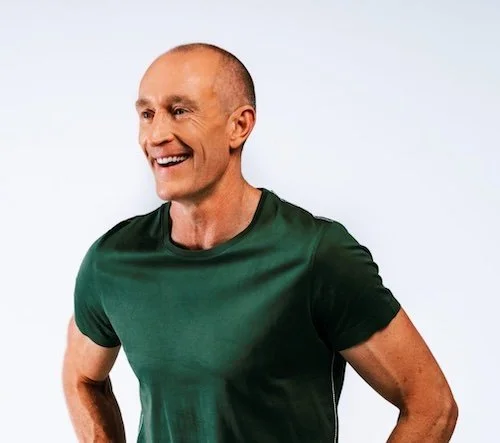
Andrew May
Andrew May is a mental skills and leadership coach and founder of Performance Intelligence. He holds a Bachelor of Applied Science in Exercise Physiology and a Master's in Coaching Psychology, and began his career as an elite middle-distance athlete before working as Physical Performance Manager for the NSW and Australian cricket teams.
He has since coached the Wallabies, the Manly Warringah Sea Eagles and world champion boxer Tim Tszyu, and advises ASX chief executives, including leaders at Commonwealth Bank and IAG, on building capacity for leadership under pressure.
Andrew built and sold three businesses, including The Performance Clinic, sold to KPMG in 2016, where he then worked as a partner. He is the bestselling author of MatchFit, which has sold more than 100,000 copies, and hosts the Performance Intelligence podcast. He lives in Sydney with his four children.
-
speaker-0 (00:00)
What will our audience get from our conversation today?
speaker-1 (00:04)
Burnout is not what I think it is. We have
the wrong definition of burnout and we have the wrong treatment for burnout. My identity was so extrinsic, so external, that I built it up to 40 years of age. I was working with the Australian cricket team, I'd written a book, I'm on The Today Show. I had a a a wife and kids who lived in a waterfront house in Northbridge. External, external, extrinsic, extrinsic bullshit. And then I went through this identity crisis because I was so worried. I've got a term for it now I've adapted from Michael Gervais, the leading psychologist, it was FOPO.
Fear of other people's opinion. Purpose is gonna make you live longer. Purpose is gonna make you bounce back. And purpose is gonna help you in multiple domains in your life. But purpose, it's difficult and it takes a lot of thinking and it takes time. What do most of your audience not have? Time, they're too busy. I think we've got salt. So if I if I look in sporting teams I work with, we train them hard, we push them hard, and we recover them hard. What happens? It grows.
You you rise, you adapt, you learn. Is it hard? Garde, like the life of an elite athlete. It's ruthless.
speaker-0 (01:13)
Andrew, welcome to Donald Your Man Inn. Good to see you.
speaker-1 (01:16)
Don't let the old man in. I I twinged a hamstring this morning while running and I thought, Screw you, Pod. This is a nomen. Good or bad. Well well
speaker-0 (01:26)
whether you walk up the stairs or jumped up the stairs or fell up the stairs, either way.
speaker-1 (01:30)
I was
I I was I'm in Wallaby's camp at the moment at time of recording the Wallabies as you know very well play Ireland on the weekend. I went for a walk and talk with our physio just planning stuff for this week and I thought I'll do a nice little five K run and I was flying along New South Head Road with staying at Double Bay and I put in a few surges because I saw a few of the other coaches. I just felt a little twinge. I'm like, how ironic. Don't let the old man in. Are you gonna edit this out?
speaker-0 (01:54)
Absolutely not. So we are recording this the weekend before my team, Ireland, play your team, the Wallabies. I am a supporter of Ireland, but you are the performance mindset coach for the Wallabies. You've been in the same position for New South Wales cricket and Australian cricket and a whole range of rugby league teams. You bring a huge amount of this conversation and we've also appeared on each other's podcasts in the past.
speaker-1 (02:19)
And and we were study buddies.
speaker-0 (02:21)
Our
study buddies will be both at air, so there you go. How long ago was that? What did our
speaker-1 (02:24)
Long time ago, ladies and gents.
speaker-0 (02:27)
audience get from our conversation today?
speaker-1 (02:30)
Burnout is not what they think it is. We have the wrong definition of burnout and we have the wrong treatment for burnout. I don't think we've got a burnout problem.
speaker-0 (02:41)
What do we have?
speaker-1 (02:41)
Good start to the podcast, isn't it? I think we have a problem between not building enough capacity and poor strategic recovery. Now, we'll go through the definition today. Some of the burnout we see, that's either individual or organizational, yeah, it's true.
I've been doing work like you for 20 plus years in the corporate world, the last 15 at the pointy end. When people are tired and fatigued and their backside's hanging out, it's easy to go to I'm burnt out. They're not. They're tired and fatigued. They don't have the right capacity, they don't have the right systems, they may not have the right connectivity, they may not be on purpose or have meaning or joy. So it's easy to hang I'm burnt out because it's the easiest thing to grasp. In elite sport, th it's very rare for players to burn out.
we spend more time on recovery than we do on training. That hasn't caught up in the corporate world. Yeah. Has not caught up anywhere near where it should have.
speaker-0 (03:33)
I interviewed you way back in twenty twenty two on a different podcast, the Leadership Diet Podcast, with you and Dr. Tom Buckley. And we talked about me
speaker-1 (03:42)
We had subtitles 'cause you and Tom are alright.
speaker-0 (03:44)
and Tom are Irish. We spent more time discussing you two songs than we did actually talk about burnout. But I remember you guys sharing with me five strategies to prevent burnout.
And we were specifically talking about exec leaders at that stage. This audience includes a lot of those folks, but also includes a lot of people who are not in corporate life. And we do hear the word burnout a lot in in modern day language. In fact, I was in a meeting recently where four or five execs were debating how burnt out they all were. And that's a different
speaker-1 (04:15)
I'm more burnout than you.
speaker-0 (04:16)
I'm more burnt out than you. Let me show you how. Tell me what does burnout look like for a man in his forties or fifties?
speaker-1 (04:22)
Let me give the definition for men and women. The definition at its core: burnout occurs when the demands for job outweigh a person's ability to cope with pressure or the requirements. So there's this dance or this relationship between resources and skills and pressure or stress. In 2019, remember COVID, the World Health Organization updated their 11th revision of what burnout is.
in occluded indeed is an occupational phenomenon, stating burnout is a syndrome conceptualized as resulting from chronic workplace stress that has not been successfully managed. I'll say that again. Chronic workplace stress that has not been successfully managed, it's characterized by three
It's characterized by these three dimensions. There's a psychologist who they worked with, I think her name was Edmondson, Edmondson, who looked at these three specific things. Number one, feelings of physical and emotion energy depletion. Number two, increased mental distance from one's job, negativism and cynicism, and number three, reduced personal accomplishment or professional inefficacy. So if I summarise all those big words, all research-backed.
There's no joy, there's no luster in in the job, it's just it's bloody hard work.
speaker-0 (05:32)
And that bloody hard work does not mean it's physically bloody hard work. Right? If you're on a building site fifteen hours a day, that's hard. That's hard. But but you you're not you're not saying that. You're saying that the whole experience of your job is not fulfilling you, it's not rewarding you, there's no sense of positivity and you walk home more tired than you wake up the next day.
speaker-1 (05:52)
Ultimately, and I've seen some of the wonderful guests you've had on this podcast, we want a purpose-filled life. You know, when you're purposeful, you make more money, you're gonna live longer, you bounce back, you are more hardy, so you'll you'll bounce back from stressful situations. But for a lot of people, pod to define purpose, it takes you three to six months. You know that as a coach, it's a real deep dive. We don't go, hey ladies and gentlemen, in the half-day workshop today, from 10 30 a.m. to 11 a.m., we're going to define your purpose and go, you need a shower. Yeah.
So the the next level below that, I talk about vitamin F L P J. Have some fun, laughter, play joy. Let's let's just pause on that. Your audience is from late thirties to early to mid-sixties. So how many of the men watching or listening to this or female partners or friends
are absent of fun, laughter, play and joy. That that's the entry level. So what are you doing that makes you giggle? Like you and I had a bit of a laugh about some stupid things before we started. That that's good. We feel good. There's a whole chemical reaction. Laughter. What about play? I was at my daughter, you know I've got four kids, like you, we've got a lot of kids, and I saw on the wall at our Tarman public school, and I wrote this down for you today, there was an Einstein quote and I thought, Huh, here's a public school in Sydney with an Einstein quote that I love. Play is the highest form of research.
And for years we looked at play as he is frivolous or he's got all the time and you know, midlife crisis a bit reckless. What is a world without play?
There's a wonderful psychologist who at eighty nine years of age, so you're stepping into this wonderful new role. Hey, congratulations. Talk about disruption. You could have easily just coasted into the exec coaching you were doing. But Dr. Stuart Brown, do you know about him? Yeah. Yeah, he he founded the National Institute of Play when he was in his late eighties, been a psychologist, had, I think like you, two masters or two specialist study groups and he just went, All I'm doing is achieving results and
trophies and it's all this external definition of success. Let's go back and play. And he looked at play deprivation, really similar to the signs and symptoms of sleep deprivation. Irritable, cranky, poor where what is it, poor memory recall? dear jokes never were they they haven't got better. But but he looked at at eighty nine years of age, we need to put more research into play and benefits of that.
speaker-0 (08:16)
his story,
which I love. Actually I had forgotten him until until you raised him, is he became more famous for that, despite his previous like forty five year career in in deep deep academia and research. And then that's what he's known for, his investigation
speaker-1 (08:30)
I I th I believe some of his contemporaries at this at that stage thought he lost it, had dementia and and had some serious conversations. You know, Dr. Brown, you are this esteemed, this knowledgeable, this omnipresent psychologist. What are you doing mate? And he said, Well I'm living. I'm really living. So yeah, it's wonderful that he's known for that.
speaker-0 (08:48)
I was in a meeting a few weeks ago and saw top forty, fifty leaders of this organization. they are in an industry that is being absolutely disrupted by AI. Now every industry's been touched by it. This one is being disrupted completely. So existential questions happening at this level of leadership. And this topic of we're working really hard, burnout came up and you know we still make sure we all take care of each other. And the CEO controversially I have to say, but nonetheless, when it came to him doing the speech, he goes, I wanna let you know.
Yeah, I've been the CEO of this organization for blah blah blah, I've been the CEO elsewhere. This person's very well known. This person's a global leader. So I've never in my life been burnt out. Never. And I'm not suggesting that I'm macro or brutal compared to you. What I'm saying is I take care of myself because I need to perform.
And so I just want to make sure that you are allowing yourself and giving yourself permission. In fact, I'm mandating you to take care of yourself and not get burnt out because it is your choice. And he went on and on. Now folks in the crowd didn't like it. But his message basically was: it's in your power to recover.
speaker-1 (09:57)
I bet the ones that didn't like it the most were the ones who were most challenged. I bet the ones who didn't like it the most were the ones who were feeling really vulnerable, really exposed. Because it's easy back to at the start, it's easy to blame the organization. Now there's organizational burnout. That's cultural and that occurs when an organization is in a paralyzed state, which it can no longer positively change on its own. But
The the premise of this conversation about burnout, I think fundamentally we push it to someone else. It's the organization's fault. It's my partner's fault. It's society's fault. Bullshit. It's your fault. Fundamentally, to develop the capacity. Now you know, I coach
Four of five CEOs, men and women, the top forty or fifty ASX. what's out in the public domain? Matt Common from Combank, Nick Hawkins from IAG, Adam Watson, as well from APA. Now th those men, Shelley Roberts, who's now the global operations manager at Compass in the UK with tens of thousands of staff. So those men and women, they train for leadership capacity. So when we look at that, what have we trained with them? Like with Nick Hawkins and Matt, I've been behind the scenes until they spoke on my podcast and now I can tell people.
For a decade, we trained physical capacity. So what is your VO2 max? What's your heart rate? You know, what's your heart rate variability? We've got metrics and data around this. We train their psychological capacity. How how do you look at hardiness as a construct? How do you look at mental agility? I don't like resilience bouncing back from, whereas hardiness is getting ready to run into. We look at operational capacity, that's around productivity systems, better weak, so how you set yourself up, and then there's that social or relational.
So there's layers in all this to develop capacity. it's too hard. I'm gonna blame someone else. Now I'm not saying everyone does that. I I I I think I think we've got soft. I really do. So if I if I look in sporting teams I work with, we train them hard, we push them hard, and we recover them hard. What happens? You grow, you you rise, you adapt, you learn. Is it hard? God, yeah. Like the life of an elite athlete is ruthless.
speaker-0 (12:02)
And
you do you know what's interesting about an athlete? It's an unspoken but understood premise. You're as good as your next game. And your next game might be your last game for us or for a long time. How many of us in in non athletic words go to work going, If I don't perform today, I might I might not be here tomorrow?
speaker-1 (12:22)
But what it trains, it does train whatever you call it, grit, resilience, hardiness. So think about NRL. So for your Australian audience, they know National Rugby League, your global audience, there's twenty-seven weeks and those players in the men's competition play twenty-four games. So let's say in a six month block, you have twenty-four interviews to see whether you've got a job that week.
So the the notion of this, think of your your corporate audience rocking into work on a Monday and all sitting around going, Right, are you in pod? Am I in? I don't know. I and and if I'm not in, I can't carry on. What what's your swear level like on this podcast?
Hi. Okay, you can't carry on like a fucking arsehole. 'Cause I've got to then pack in with you in training and set you up for success 'cause you might get injured or selected to go on to the next level and then I've got to come in. So just the mindset on that. Rocking up to week twenty four times a year, rocking up to work and and not knowing whether you're selected or not.
So what does that change? So what does that train? This wonderful mental agility for those players that last. So yeah, are we too soft? I think so. But so your audience doesn't just get hysterical with me. There's a balance somewhere in between. Because I realise elite sport is cutthroat. Elite athletes might have a ten long career is fifteen. Most of them have five or seven. Yeah. In our lives, your audience, we might have a forty or fifty year career. So there are some differences.
speaker-0 (13:40)
And they perform for ninety minutes, hundred and twenty minutes a week and they train and recover the
speaker-1 (13:45)
They
train for twenty five to thirty, so it is different now. However,
speaker-0 (13:47)
Yeah.
speaker-1 (13:48)
you look at those CEOs that I work with and CEOs you work with, they train to develop capacity. They have systems and processes and accountability. So I like that the CEO pushed it on his team because he's saying, I think in our language, I don't believe in a lot of burnout, it's bullshit. I believe there's a capacity problem and you're under a cover.
speaker-0 (14:07)
In fact what what he said, which goes to the notion of systems, he said I look at my calendar every week. If I don't have enough swims in my calendar, I take out something to put it in my swim because I know that's the process that works.
speaker-1 (14:23)
And I can give you data. I think we might said we might get Dr. Tom in for another discussion, but what we're doing on executive performance, so we go deep with our leadership group. So we get a blood profile, we do DEXA, and we do a lot of questionnaires.
Science-based questionnaires. So on the blood profile, we're looking at glucose markers. We're looking at DHEAX, the precursor to testosterone. We're looking at vitamin D. we're looking at iron levels and we're seeing some fascinating patterns, Pod. So we're seeing the average male exec in Australia and across Asia Pacific, we're seeing really high iron levels. Stress does something to iron and and iron absorption.
speaker-0 (14:58)
What's the impact
of high iron?
speaker-1 (15:00)
you can end up your body spends so much time trying to get rid of the iron, you're fatigued, energy
speaker-0 (15:07)
Yeah,
speaker-1 (15:08)
expenditure in wrong place, has a couple of other upstream effects. We're seeing in Australia, like come from Ireland. What did you love about this beautiful land? Sun. The sun d Why
speaker-0 (15:16)
It's not
speaker-1 (15:18)
are we seeing in two thirds of our executives low vitamin D? Because they're not getting outside. But no, it's a burnout problem. No, no, no. Do one of your meetings and walk outside, get some sun of a morning to wake up your circadian
speaker-0 (15:29)
What are you seeing in testosterone?
speaker-1 (15:31)
Low, especially well low.
Is it nature nurture? And Dr. Tom argues on this as well. If you're feeling like you don't have much self-efficacy or power in the situation, if you're feeling like you're not really connecting, you're not loving what you do, is it nature nurture? So then you're not getting outside, you're not connecting, you're not lifting weights, the fountain of youth. I I work with some people who work ninety to one hundred hours a week and they've done that for decades. They freaking love what they do. I work with some people who work thirty-eight hours
Not a minute more. And and and I love the work we do in the government. Yeah, but there's some government departments we're working with. You get to five o'clock, they're out. And they're the ones telling me, under the pump. I'm so tired, I'm so fatigued. So, no, no, no, what's going on here? I think a lot of that is related to capacity and I think a lot of it is related to what are you doing? Do you love your job or are you finding that your job is giving you some of that meaning and connection and purpose?
speaker-0 (16:29)
Go back to last time we spoke we talked about purpose and purpose alignment is spending time figuring it out. And it's certainly in the work I do, poor people who feel aligned to their work are more purpose driven and that brings a lot of energy and discretionary effort. Put that aside for the moment. you you said below that you went down to fun and joy and those type things. Fun, laughter, play, joy.
speaker-1 (16:49)
Fun, laughter, play, joy. Joy.
Yeah, well I call it vitamin F L P J. So when I do a presentation on this, I've got little tablet, F L P J, and say to everyone, here's the vitamin you all need. And ooh ooh.
speaker-0 (17:01)
What's
up, what's up with that? There's also a lot of research and and the the study I'm doing in England is is helped me figure this out. Men are known compared to women, men are less likely to ask for help around health, less likely to ask for help around loneliness, less likely to ask for help around any kind of mental health illness, particularly depression. Now if you tie that with I'm not in a role where I feel aligned to or my or I'm no longer purpose driven.
how does that show up in in the male executive publishing that you're working with?
speaker-1 (17:33)
Yeah. I've got some stats for you, and then I'll answer that question. So when we look at global stata stats, over half of workers globally report feeling burnt out in twenty twenty four. So over half. Four out of ten executives say they feel always on or they feel exhausted or stressed. That's research from Deloitte. Nearly seventy one percent of C suite leaders have seriously considered quitting for a role that better supports their wellbeing. Cannot tell you how many times, Pod, I've had a senior male executive saying, I want to own a bike store. Don't.
or send you a bike, or I want to have a coffee shop. It's much cheaper to buy coffee up the road. Only thirty-seven percent of men seek support when they need it. That's from Australia Beyond Blue. And almost one in two Australians who eventually sought help waited until they were broken or extremely broken. So how does this show up? It's generational. One of the one of the learnings I I have with sport, and I love this in professional sport contact mainly in their twenties, guys who extend their career into early thirties, women is is similar.
It is so different. I'll look at some of the conversations we've had at Manley, and I'll credit Jake Trovoevich, now the co-captain on this, who'll openly talk about their feelings and emotions. So young men now, I'll look at my son Archie, who's fifteen, he'll say I've had a bad day, or Dad, one of my mates is feeling really, really sad at the moment. I didn't say that greatly in Delbo. Why? Pull your head in, mais you grew up in the country. Harden up, mate, fucking harden up. How'd that end up working out for us? I look at my dad and and I love him, he's almost eighty. And Dad went through the department.
of agriculture where they were told Trev you get a job for life. He said to me when I was seventeen and I finished school at St John's College, Dubai, Andy look at a government job, you get a job for life. What Dad didn't know is five years later they went through economic rationalization, downsizing, upskilling, all words for, Hey, we're gonna retrench you.
And dad was functioning depressed for four or five years. So that really triggered my interest in this mate when I was in my late teens, early twenties, seeing my my dad, a really good footballer, my dad a farmer, my dad a strong man, struggling. And he and he he couldn't acknowledge it. Either could his mate Martin or Bill, or the names go on. And a lot of those men in that generation I just saw, my dad's generation, didn't have the skills or the emotional bandwidth or the emotional regulation to say, hey, I'm not.
Not okay. I don't think this is a problem for young men at the moment in their twenties and early thirties. Wherever this kicks in, I see that's at mid to late 30s, 40s and hello our generation fifties plus, because we've been taught, harden up mate, kick a footy, shear a sheep, cut down a tree.
speaker-0 (20:08)
You're talking about identity, aren't you? In terms of my identity is what I do. I and how well I do it. And if what I do no longer exists or changes or is cut away from me or indeed I thought I would want to do this and forty years later I hate it then I'm in an identity crisis. Yeah.
speaker-1 (20:28)
Two identities to look at. One is your performance-based identity. You have a very strong performance-based identity. I come in here, you've got a five shoot podcast, you're doing multiple channels, you've got a multimedia company. Were you now in your early forties?
speaker-0 (20:42)
Close
enough. Close enough. So everyone knows I'm fifty six.
speaker-1 (20:47)
So so
you had a very strong performance-based identity, as am I, as a former athlete and building businesses and doing the stuff I am. You know my story, a lot of the audience won't. My identity was so extrinsic, so external, that I built it up to forty years of age. Yeah, I was working with the Australian cricket team, I'd written a book, I'm on The Today Show. I had a a a a wife and kids, lived in a a waterfront house in Northbridge,
External, external, extrinsic, extrinsic bullshit. And then I went through this identity crisis and I broke up with separated with my first wife, two young kids from an Irish Catholic background, because I was so worried. I've got a term for it now I've adapted from Michael Gervais, leading psychologist. It was FOPO, fear of other people's opinion. I was so insecure. I overindexed on achievement. Now if you go back to university, I think it was the great man.
Who left this planet way too early, Tony Grant, who was talking about the good life versus the goods life, you know, the good life, pleasure meaning success, the good life, the goods life are power, money, trophies. I studied it, but I didn't listen to it because I was so focused on that performance-based identity. So what I had to do, and what I'm now good at doing with my clients, is going, and you've got to have a performance-based identity if you want to have a crack in in any endeavor in life. There's nothing wrong with that. And
What's your purpose-based identity? Fuck. What do you mean, Razie? can I just do the 30-minute part in the segment we spoke about in the master? No, no, no, no. Purpose, we know the research. Purpose is gonna make you live longer. Purpose is gonna make you bounce back. And purpose is gonna help you in multiple domains in your life. But purpose, it's difficult and it takes a lot of thinking and it takes time. What do most of your audience not have? Time, they're too busy.
speaker-0 (22:31)
Or they don't make time. I mean and then and that's what this whole podcast is trying to do, is to suggest the second half of life can be your best half of life, but it requires you to potentially do things differently. It requires you to go, I've done this for twenty-five years. I had to. I had to feed my family, build a house, get a mortgage, that's all fine. But I don't have to do it going forward. I can choose different things. Now going from a highly paid exec job to buying a coffee shop in one fellow soup may not be the best decision, but you could do.
speaker-1 (23:03)
And you could do it if you really think about it. So just closing out, I say to a lot of my well I I work with men and women, but specifically for our conversation today with your audience men, a lot of them that that that purpose-based identity and that performance-based identity, it's like a a bicycle, a penny farthing. So the purpose-based identity, so the performance-based identity is so big and the purpose-based identity is small, it's like Mulgerville's bicycle. Now when you're travelling along a flat road, you've got good clip, you've got good speed.
What happens when you get to a few bumps on off-road? Shit, it throws you off all the bike stalls. So my story again, picking myself back up.
I sold a previous business to KPMG. And then I got in there and even though I'd gone through all this, it was like, okay, I'm paid more money than I ever thought I was going get paid. I I'm I'm travelling around the world and I've got great opportunities. And they wanted me to do a global role. It was a three year earnout, as you know, selling a business. And into the final year, with nine months left on my contract, I Hey, I'm out. And they freaked out. W w we'll pay you more. No, no, no.
No, I want to do something else. And and I left with Grace, still got good connections with the firm, albeit they're going through a lot of lot of trouble at the moment. And I got a coach to help me work out what my purpose was. And purpose is bigger than you. Purpose is future focused. And purpose excites the freaking living daylights out of you. So when I did that coaching, I thought, I want to go back and start another business. I'm going to have a another crack. And I want to go back to sport.
And I'm gonna go back and move from being an athlete to being a strength and conditioning coach to what combines it all mental skills and leadership. So I left a very big salary, went out on my own, was really brave, and then COVID hit. Thank God I had a clearly articulated because there are moments there, Pot, I'm going, what have I done? Did I burn out during that? No. No. Was I working long hours? Yes. But I was investing in my physical capacity. I was investing in my psychological capacity. I was investing in operational.
Being productive, good systems, good processes, not doing shit that doesn't add value, and really good relationships and people with me.
speaker-0 (25:12)
So let's double down on capacity. That's the word you use a couple of times today. so whether you are an exec in a bank or whether you you are a a trade or a plumber or whether you own a coffee shop, capacity applies to all of us, right? What are the core things that you think about in terms of as a midlife age man, here's the key things to focus on for the next twenty, thirty years to at least maintain capacity, if not increase it.
speaker-1 (25:36)
Yeah. Can I give you two answers on that? And do I get too excited on the first one? Pull me back into line. First one it's really hard to change something if you can't measure it. Yeah?
Second, we'll we'll talk about what people can do. So, how do you measure it first? I'd be looking at some key metrics. I'd be looking at what is your resting heart rate. So Dr. Tom and I talk about five metrics. Any leadership program we do, any large-scale program, the Australian Defence Force, our social mastery program, which is an adaptation of Goldman's emotional intelligence. We've had seven and a half thousand people through this. So we've got lots of data points. We look at with wearable tech, I'm device agnostic, so it doesn't matter what device, but what what do you need to measure? You need to measure hard.
Rate. What's your resting heart rate? You need to measure heart rate variability. That really is an index to show how your body is responding to demands and stress and how you're recovering. I'd look at sleep, deep sleep, sort of 90 minutes of deep sleep. Then I'd look at small some of the inputs, 10,000 steps every day. So look at daily steps and then look at exercise minutes. 300 exercise minutes in a week is what most people need because we're sitting on our asses way too much. Most of that is zone two, so that low steady state cardio where you can have a light conversation.
And it's only a little bit, but that's zone four, the interval, the high intensity, about six minutes, one or two times a week. So you do a couple of intervals and back off. They're your metrics. They're the five metrics. So
speaker-0 (26:59)
So no strength, work?
speaker-1 (27:01)
strength we the grip strength is one of the metrics that's most associated with age. So but from a wearable tech, they're the five metrics I get for people. Yep. So resting heart rate, heart rate variability, deep sleep.
Exercise minutes and then data steps. Then I'd also be looking at what are some basic strength measurements. So well one thing, and I wrote this down for your audience. So I got this off a mate of mine, Paul Taylor. I checked the reference source of this on a very reputable site on the way here today, ChatGPT, and it didn't give it to me. But it's the 50 to the power of four. So I love that. So at 50 in your 50s, aim for a heart rate less than 50 beats a minute.
have a heart rate variability over 50 and have a VO2 max over 50. I'd love to know how many in your audience who are 50 plus have a heart rate less than 50 beats a minute, a heart rate variability over 50, and a VO2 max over 50.
speaker-0 (28:00)
Explain to us why they're important.
speaker-1 (28:02)
So resting
heart rate is is your capacity, your energy management. So your beating heart is the rhythm or the pulse of your body. So if your heart at rest was beating at 75 beats a minute, bang, bang, bang, bang.
speaker-0 (28:15)
Resume is when you're asleep or when you're sitting in the chair when you're doing
speaker-1 (28:18)
There's
a difference between basal pulse rates, which you're gonna get in the early hours of the morning, and we'll go resting heart rate. So but resting heart rate, so when you wake up, the the metric we give people is we want most men to be low to mid-50s. Yeah. Women will be high fifties to low 60s. The female heart is a little bit smaller, so it beats more. But if your resting heart rate is 75 beats a minute and someone else has got a resting heart rate of 55,
How much more energy is that per minute? And then when stress comes, if you've got a low resting heart rate, you can pulse or surge and then come back down. So resting heart rate shows you the cardiac strength. So you've got this four chambered pump. If you've got a low resting heart rate, boom boom.
speaker-0 (28:59)
So let me give me on double double that there. So you were saying it's the slower your heart rate, that's naturally slower as opposed to medically induced or a
speaker-1 (29:09)
We're not talking about beta board.
speaker-0 (29:10)
so the normal the slower it is, that means that the more capacity for your heart to pump and under stress the more l like runway it has to to give you
speaker-1 (29:18)
more
f efficient you are at a lower level and then the more scope you have to go up. Okay. So when when we talk about training, it's this this difference between do interval training and do low steady cardio exercise. Don't just do all this zone three or four on the rivet where you're burning yourself out. So yeah, heart rate is one of the core metrics. Okay. And and it's totally trainable. Because your heart
Myocardial tissue is just like your biceps or shoulders. Yeah, you you're looking lean and fit, so you're obviously lifting. So if you want to get strong, you do reps and sets. You get your heart strong by doing reps and sets, intervals at a high level, and then the magic happens at that zone too. So chase a low heart rate.
speaker-0 (29:57)
High rate variability below fifty, why is that?
speaker-1 (30:00)
heart rate variability is very individual based on genetics and also based on trainability. But a heart rate variable of 50 or plus shows that you've got a really good band to absorb stress. Tom and I had an executive nine or ten years ago, we were talking about this recently, Dr. Tom. He worked in the property sector.
We didn't have heart rate variability on Garmans or Apple Watches or Fitbits or Whoops back then. We'd actually put a monitor on. It was first speak. From Finland, I saw the English cricket trainer, Nigel Stockle. I'll make sure Nigel gets this. Hello Nigel. And I bought it over here. We're the first to have it. So we put a monitor on for 48 hours and we look at your heart rate variability. Heart rate variability, it'll drop during the day because of the demands of the stress in the body. And then it should go up at night. So you'll see this relationship.
your heart rate variability should go up at night and your resting heart rate comes down. Okay, so you you see the beautiful waves between the day. This male exec was late 40s, very close to 50. His HRV was 11 and it was flat. Tom's only said this to one person. You need to do two things. You need to leave your job and you need to go and do something else otherwise you will not be here in six months time.
speaker-0 (31:15)
Was that psychological stress that was pushing that for him or or was it lifestyle conditions because of psychological?
speaker-1 (31:20)
Every hour
it was yeah, chicken egg, but his whole body was saying, Hey, I am just beyond coping. So that is real burnout.
speaker-0 (31:27)
What's the colour of his face, do you remember?
speaker-1 (31:28)
Yeah, I do. He looked ashen faced.
His posture was poor. I'm going back to looking at what he was. 'Cause I've seen him. He has a beach on the northern beaches. He looks frickin' awesome. He looks ten, fifteen years younger. He's got a tan, he's got the buzz haircut, he had the sweep over there and he was he was hanging on. so heart rate, heart rate variability are two very important metrics. Okay.
speaker-0 (31:49)
The O two max, above fifty. Why is that important?
speaker-1 (31:51)
So VO2 max is the maximum amount of oxygen per kilogram per minute you can pump. Yeah. So 50 is more just a metric to change. So that's elite. But if you look at, I think the highest ever recorded VO2 max of an Australian athlete was Cadell Evans. He was 89 or 90. That's off the charts. But if you're above 50, that just shows you've got this massive engine. And again, the ability to pump oxygen and blood through your body when you're under stress. One of the biggest limitations in endurance sport and foot.
it's lactic acid. Yeah. So it's it's getting enough oxygen in and then it's removing the lactic acid. So when you've got a high VO2 max, it's a really efficient pump to get oxygen in and to get waste products out.
speaker-0 (32:36)
what does someone like who's listening to this who has who has not measured in the I guess, who's gone okay, so I I've been hearing stories, I've been listening to podcasts, Andrew sounds like he's narrowed it down to key metrics. Where where would I start?
speaker-1 (32:47)
How serious are you?
speaker-0 (32:48)
How serious am I? Assume that I am the listener, I am serious.
speaker-1 (32:52)
When you renovate a house, how much time and effort do you put into it? How much time and effort would this person put into it? Do you just go and get the first builder, the first kit home, the first tin of paint, yeah, the first windows, the the the first set of curtains? Rubbish. How long does the average person spend getting ready to renovate a house? Question four.
speaker-0 (33:10)
I
would imagine if you look at my I've done two in the last couple of years. Yes,
speaker-1 (33:14)
I've seen you one of the
speaker-0 (33:15)
you have seen one of them, yeah. I've spent probably a year and a half planning it actually and getting a whole lot of research and
speaker-1 (33:21)
minimum of six
to twelve months probably. So just just just just frame that. You asked me the question, what should someone do? So if someone's renovating a house, they will spend six to twelve months. How much money will they spend on planning, on going to showrooms, on on getting consultants in? What would the average person spend on a big build? Fifty to a hundred thousand dollars.
And then you say to someone, let's spend a bit of time talking about the number one thing that's going to help you live to 90 plus. Yeah, mate, but I'm too busy for that shit. So are you really serious as you get into your 40s and 50s about living a long, healthy, prosperous life? Now, if you are, change the narrative. It's bullshit. Like I I say this in my keynotes. So, men in the room, who loves cars? Two-thirds put the audience up. So when a dashboard diagnostic goes off on your car, what do you do?
I take it to the mechanic, mate, or I fix it myself. Why? I love my car, mate. Okay, awesome, great. Who's had a dashboard diagnostic going on on their body or their brain the last ten years? The following. Who wakes up and's got a creaky hip or knee? Who's had a hamstring that keeps twinging every time they run? Who puts the belt on and says to their female partner, babe, did you take these pants to the dry cleaner? No, champ, you've been eating too many donuts and I could go on and on and on. So I would say prioritize this. But yeah, you know, we've both studied
Coaching psychology, we get this web of habits and we get this web of limiting beliefs. You gotta unpack that, and it's hard.
speaker-0 (34:49)
What are some of those beliefs or narratives that you've helped people unravel?
speaker-1 (34:55)
Exercise is for elite. Nutrition is really hard and I've got to be super disciplined. I can't have any alcohol. High performance is boring. Living a long, healthy life is punishing and monotonous. Being connected and having everything in my life is not achievable.
speaker-0 (35:20)
And what are some of the narratives that have emerged when people have played with those to write a new one?
speaker-1 (35:26)
I I think we're I think we've stuffed up exercise, I really do. And I I've seen the the episode you had with Gordon Spence and and Gordon's doing some great work in this. But we sell gym memberships pod.
With before and after. So so yeah, here's here's the before. What does a male look like? If he's got a hairline like yours yours and mine, they'll grow it. So you've got the the sweep over. So you're already off to a bad start. Apologies to any of your audience for the sleep sweep over. And then the guy will be a little bit shoulder shrugged, they'll be tight on the pec mining, and the head will be forward, they'll look white. They they just look a bit like you said, the guy with the HRV, they they just look a bit flat. What does the post look like? Three months after you've gone to a gym. What does it look like?
speaker-0 (36:07)
Yeah.
speaker-1 (36:09)
I like So for anyone who's watching this on YouTube, I'm flexing. You I I a stupid smile, I look like I'm constipated, and I've got a fake tan. So go to the gym, you you do this awkward flex, you get a fake tan, and you look constipated. We should be selling, hey, go to the gym and you've got mental agility. Go to the gym and you're gonna massively decrease your risk of Alzheimer's. Hey, who's got kids? Go to the gym. You know, fit healthy parents have fit healthy kids. The number one defining factor on role modeling for kids is being a parent. That's a lever that I pull in all my coaching sessions.
Imagine if we sold that and then for our female audience that the lady will be there and she's sort of looking a bit slumped and then three months later she's there with high heels and flinging the hand back and it's detrimental to women. Like women don't just go like that when they go to the gym. You've got lean body mass, you're a strong female, you feel good about yourself, you can lift and play with your kids. We've totally got it wrong. So yes, I work in the elite side of sport. Let's bring it back. If you could get a pill, a potion, a bottle or a lotion, that's gonna make you live longer.
That's gonna give you more mental capacity, you know, emotional resilience. You've got something that's gonna help you talk better, understand emotions better, and here's a kicker, it's gonna improve your sex life. Woohoo, what real physical activity does all that.
speaker-0 (37:22)
And it costs you nothing. Cost you nothing.
Time and effort. Yeah. The the narrative that I grew up with, which I took me a long, and you know, I've discussed this the past. It took me a long time to realise it was a narrative I inherited. But it played out in my own mind was at this stage in my life I shouldn't need to dot dot dot. At this stage of my life I should be able to eat whatever I want. At this stage of my life I should able to sit down at nighttime and watch television because I've worked too hard or and it took me a long time to realise, I was twelve or thirty.
when I first started hearing that and I was thirty or forty before I started realizing I'm saying that. It's conditional and I have to un unravel it.
speaker-1 (38:01)
you're too you're too old for that. So like my my mum got lover, she's eighty this year and mum's playful.
A lot of her friends are fifteen to twenty years younger. It's really interesting looking at her birthday invite and she's saying some of her friends can't come because they're incapacitated, some of them are dead. But a lot of her friends are fifteen to twenty years younger. She's playful. But I remember Mum saying to me a few years ago, you're too old for that. I'm like, Well, no, no, no, no. I'm gonna be old because I do this. So I had this really interesting conversation with mum and she went, Yeah, yeah, why did I say that? I said, Because everyone's conditioned. th these are not my terms, I've adapted them.
But we've got to stop shooting all over each other and stop masturbating. I should do that. I must do that. No, no, no. I I I can, I will, I I do. Really look at your language. So going back to and I get a bit passionate about this, but you said for someone who wants to do this and invest in this, get some metrics. Yeah. And but then I I I'd be looking at the result. Why? What do you mean? W why do you want to exercise? Or why do you want to eat better? Or why do you want to build your mental agility?
i it it's not about the way you look and and that's again where Jim's totally stuffed this up pot. It's around my emotional regulation, it's around my brain, it's about my learning and and memory recall. I it's about the influence I have on other people. Like why work until you're fifty or sixty and build up this wealth and then not be able to enjoy it? It's ridiculous.
speaker-0 (39:25)
You said th th the cognitive ability is the thing that I'm learning so much about in terms of how naturally our cognition can decline and how the rates of Alzheimer's increase as we get older too. Like in Australia Alzheimer's dementia is now the number one killer in Australia, number two in the UK.
speaker-1 (39:43)
We're getting older
and and we're seeing more and more brain deterioration because more people are getting older.
speaker-0 (39:49)
And physical health in terms of physically being healthy is one of the biggest mitigation risks against us.
speaker-1 (39:55)
BDNF,
brain-derived neurotropic growth factor. So again, I didn't realise this when I was a young athlete. I didn't realise this when I studied exercise physiology. I sort of had an idea that was a lot more than just your body when I went into coaching psychology. Now it's multifactorial. And and and some of your audience, so this is a really interesting reflection on where people are. You'll have a a a significant or a heavy part of your audience who are head down. They're cerebral, they're intelligent. It's cognition, so it's thoughts.
Yeah, we'll come back to that. And you'll have some who are more like me as a young fella, wear feet up, so you're very movement oriented. Yeah. I want to get everyone here in the middle, so you're heart-centred or purpose-driven. So then the aperture can go up, so you can use your head, it can come down and you use your feet. So what does that mean? Some people will overthink, pontificate, ruminate, castigate about why they should start a program. Just fucking start a program. You know, start walking and then your cognition will catch up.
So again, understanding where you are is really important on this.
speaker-0 (40:55)
Can I look at some I won't say trends 'cause I might be the wrong word, but I've talked about wearables. I'm talking about coal plunges, that's I I read it everywhere. and I've read so much about wearables can be useful and wearables at best infer the data, particularly sleep data at best. And coal plunges, I read some of the online where coal plunges are actually they're not helpful for women at all, that they might be helpful for men. Tell me what you know about those
speaker-1 (41:21)
where wearables
is interesting, 'cause I've just done an article that was published across all of Fairfax papers.
As well. So we did an article on the rise of wearable tech. So when we do one of our leadership or executive programs, we'll get people whoop. So we're doing a global trading program at the moment or a program with global traders called Optiva. So we're working with their analysts and traders here in Australia, in Singapore and and some in Europe as well. So we've got hundred and eighty WHOP bands on this group. Now when we launch a program, whether it's an executive team or whether it's a mid-range team, I run at them and go, right.
Here's where wearables are good. Here's the five metrics, and here's why you need to track that. You run a business based on KPIs and metrics. Here's how you do that for your body. You become the CEO of your body and brain, right? There will be a small percentage of this group. So in a leadership team of 12 to 15, it'll be one or two people who have high functioning or have diagnosed anxiety. Come and have a chat to me after. Because for a lot of people in that group,
The information is going to send you spare. And you'll see you go out tonight and have two glasses of red wine and your heart rate variability drops from forty down to twenty-two. I'm never going to drink wine again. Well, part of what we know with the research about centenarians or people who have a hundred plus, they'll dabble a little bit rather than getting smashed every day. So if you're obsessive about wearable tech, it can send you over.
speaker-0 (42:45)
term for is no orthosomnia where people who wear wearables to measure their sleep and a good sleep that's not let me just check my wearable. it says I didn't have a good sleep. now now I feel tired.
speaker-1 (42:57)
I I didn't know the term, but it makes sense. Yes. If you're looking at a wearable of a morning to actually tell you to dictate what sort of day you're gonna have, the wearable is not working for you. Yeah. But but let's take out that I I would say roughly ten percent of people who I I think shouldn't wear wearables. Yeah. For the rest, wearables is a really good metric. But now I'm gonna zoom out. There's inputs and there's outputs. Inputs would be daily steps, inputs would be exercise.
Inputs would be doing weight training, inputs would be doing recovery. Outputs would be heart rate, resting heart rate, VO two max. So what are the inputs that lead to the outputs? And that's where we do a lot of work individually on dialing those up and down.
speaker-0 (43:40)
I know you said earlier on that you're you're aware of like Gnostic, but is there any ones that you tend to go back to on a regular basis?
speaker-1 (43:45)
for for anyone watching at the moment I've got my my pot Garmin do give me a product every year or two. So I've got a Garmin Phoenix at the moment. I like Garmin, but I've got clients who wear aura rings, I've tried whoop bands, I've tried Apple Watch. Look at the five metrics you need. Choose the device that works for you. I find a lot of executive men will like the Aura ring or a whoop band. Garmin have now got a band which is smart 'cause they've got to be competitive in that market.
So for people who like nice dress watches, they'll tend to go abandon.
speaker-0 (44:17)
And the Apple Watch type genre, do they get the same data?
speaker-1 (44:22)
This is then equals one. Y yes. Apple watch you get similar data. I have it be surprised to you, I reckon I've got undiagnosed ADHD. Do you reckon I need to walk around with a pocket full of songs on my wrist and and email and I I've got enough distractions going on in my head. I tried an Apple Watch a number of years ago and I I got rid of it. Again, from need
speaker-0 (44:42)
Because of the stimulation outside of the
speaker-1 (44:44)
the stimulation. And from a cognition point of view, when we've got operational capacity to get into deep work, I don't want micro
distractions taken out of deep work or flow.
speaker-0 (44:54)
How about coal plungers?
speaker-1 (44:56)
So on cold water we teach three levels. So for most of your audience, having a cold shower a few times a week is really good. I'll come back why in a moment. Then you could swim in an ocean. Now it's in Sydney at the moment. The sharks, I've never worried about sharks until recently. Another story for another day, but I'm still ocean swimming. We'll be lucky if it gets as cold as sixteen or seventeen degrees. That's okay. Now a cold water plunge of four degrees is dangerous for a lot of people.
Do we do cold water plunges in elite sport? Yes, they're elite athletes and they they they're super, super fit. So for the average person listening to this, do not do a cold water plunger.
speaker-0 (45:33)
And what's the link between that and cortisol?
speaker-1 (45:37)
So d dropping your
temperature down will elevate cortisol as well. But the the problem with people when they're getting so cold, if you've got a heart defect, it can bring on a heart attack. So on those three levels, cold shower for most people, fine. Swimming in a cold ocean, as long as it's not too cold, will be fine. If you're going to do the ice bath like the Wim Hof method, and you're forty plus, get your heart checked, or my view for most, you don't need to do it. Cold water at about ten degrees, you get most of the benefits you need.
And and a cold shower, the main benefit on a cold shower is emotional regulation. 'Cause if you just jump into a cold shower, you'll scream. So if you you know, wash all your bits and wash everything and then turn it to cold, do a couple of breaths.
30 seconds then cold, you scream a lot less pod. But what that is doing, it's teaching you that state management. So I think the biggest benefits about a cold shower is every day or regularly, you're training your nervous system to
speaker-0 (46:38)
I've never heard anyone say that. And I and I don't do cold showers on a regular basis because I actually don't like cold showers, but when I have done it, what I've noticed is it's forced me to start after the first Okay, nice now to breathe slowly. And and once you get into that rhythm, okay.
speaker-1 (46:54)
Do feel good. Yeah.
The science on cold water is nowhere near as conclusive as the science on sauna. some of the science on cold, the the nervous system regulation is is the biggest benefit. Some brown fat, so you get that that deeper brown fat, cold water swimming will get rid of or start to move some of that. But they've got a longitudinal study, I think it's now forty-five years. In Finland, the average Finnish male who saunas
three plus times a week for fifteen to twenty minutes, lives eight to ten years longer. So when I heard that research I totally upped my sauna game. So
speaker-0 (47:30)
Well I mean I am ecstatically happy you tell me that. Because I went home to my wife, Carol, who you know a few weeks ago and said, I've just I'm gonna buy a sauna. And she goes, Why? I said Dr. Jennifer Lumen was on my podcast today and she recommended it. And she recommended a particular Australian brand and I just realized they're five kilometers from our house. So we had it installed last week.
speaker-1 (47:53)
So you got a is it
in infrared or a dry sauna?
speaker-0 (47:57)
It's a steam so to the traditional sauna. It's electricity powered steam, water on the coals type shower as sauna. And I've had sauna four nights of the last five. I haven't slept as well in years. And I've only done between twelve actually the first night was ten minutes, last night was fifteen minutes.
speaker-1 (48:19)
So f
protocol is fifteen to twenty minutes, eighty to one hundred degrees, about three or four times a week when you're getting into it. I do know a number of people who've got a sauna and they've done it every day and to whack them out. You can get a bit dehydrated, a few other challenges by doing it too much. So I I do it say three times a week, four times a week.
speaker-0 (48:36)
How how
does that help muscle recovery?
speaker-1 (48:39)
Sauna you're getting low level
zone two training. So you can literally get those cardiovascular and metabolic benefits sitting on your ass. So who in your audience doesn't want to get some fitness benefits sitting on your ass? So your heart rate will get up into that zone two. You're also on dry soil. So the research infrared haven't been around as long, but the initial research is still promising. I still prefer dry heat. But you're also because you're sweating from the inside out, so you're getting rid of a lot of the toxins. So you so getting a lot of those toxins out of your body. One thing a lot of people miss
is when you finish, have a shower and wash it all off. That's a really big thing you've got to do. Okay. So so again, we're talking about burnout, and we've gone to physical exercise, we're talking about sauna. This all builds capacity.
speaker-0 (49:25)
I'm gonna pause this for one second. Guys wanna alert you to some amazing conversations that are coming up over the next couple of weeks on the show. So make sure you subscribe so they come into your feed.
One conversation is with a former sporting superstar who now is an ambassador talking about men's body image and the role fathers play in this regard. That's one not to be missed. I talked to someone who has written a book all about a conversation that many of us in midlife are about to have, and that is with our own parents who are coming to the end of their life. And I also talked to a global expert on imposter syndrome.
Three different conversations, all of them are amazing. Make sure you stay tuned. Back to the show. Let's go back to where we started, and then I want to finish up with the listener who's going, give me two things I can do right now. You've got a lot a really useful diagram here where we're talking about low risk to extreme risk, and just to help our listeners understand why you started by going, we don't have a burnout problem, we have a capacity problem, recovery problem. This will help explain it.
speaker-1 (50:34)
Life is not
like a share portfolio. You don't just lock in and do a full dividend reinvestment plan. You've got ups and downs and that's the pulse of life. Yeah. There's times where you need to go really hard. You might have started a new role, you're starting a new family, you're wanting to create a relationship, whatever it is, you're wanting to get fit. There's times in our life pod where we've got to go a little bit harder. This model takes that into context. So we've got here in the green, I call that the go zone, your match fit, you've got mental clarity and focus, high energy and capacity
To absorb pressure. I'd say people in that would have a low resting heart rate, a high HRV, they're getting 90 minutes of deep sleep, they're doing 300 minutes of exercise, they're doing zone two, they're probably doing sauna, and they're doing enough interval training that week as well. That's where you're flourishing. You teach this. You've had times where you just like you.
Probably metaphorically, or maybe you do look in the mirror and go, You're the man, you're the guy, and everything's great. But then what happens? A kid gets sick, a relationship challenge, a change in the market, so life. You move into that moderate risk. You've got poor or inadequate recovery, you find there's emotional and physical fatigue, you find that there's maladaptive coping, so you may start to have more alcohol or sugary foods, or those that like those that like the burners or other stuff, and then you start questioning why I am doing this. The the the sign.
on this that's really clear is irritability. Yeah. how this shows up for me, and I know, it's when I'm carrying the groceries from the car inside and I get pissed off. And then I just get a check on myself.
I live in a beautiful city, I live in a beautiful house, I've got a beautiful family, yeah, most of the time for all that stuff. What the fuck am I going on about? That carry my groceries in and then I have a bit of a laugh about it. Now, if you don't do something and recover harder, you then get in the orange, which is higher risk. You start to feel overwhelmed, you get disillusioned and you get despondent.
You make more mistakes, you become irrational, and your cognitive capacity drops. We've all been there. Now, to flex with this, I work with clients and groups and say, hey, if you don't get into that moderate risk of irritability a few times a year, you're not having a crack. So we're changing the narrative. Well you mean I'm not meant to wake up every day and feel amazing. No. There's there's periods, there's cycles where you'll be pushing it and you will feel a little bit irritable or a little bit pissed off.
What do you do then to downregulate? What do you do to recover? Back to the initial part. We're under recovering. You need parasympathetic activation, relaxing the body, psychological detachment, not thinking about work. So then when you know you get into that moderate risk, or you can push to the edges of cynicism, but if I find or I find my clients are getting cynical, let's have a real conversation. Right, you need to recover really frickin' hard now. But what do we tend to do? We overcompensate when I
When I get this business deal done, when I get through this quarter, when I get my bonus, back it off, play a longo. Now the guy I was telling you about in in the in the property business, he was in the red. He was in that extreme risk. He'd cooked himself so much. I love the analogy of a piece of toast. Beautiful piece of sourdough. Yeah, which we get into our fifties, we can't eat as much because straight from the lips onto our hips. But you know, you cook a nice piece of sourdough. If it's undercooked, what do you do? Put it back in the toaster.
So you're going from that green to moderate risk. Now, if it's just a little bit too brown, you can scrape it back. You bring it back to a beautiful piece of fresh outdo. If you put it in there for way too long and it's cooked and it's crisp, you're gone. That's real burnout. Most burnout is in that moderate to the start of the high risk. So at the start I said we've got a problem with defining it and measuring it. So then we've got a problem with treating it.
speaker-0 (54:17)
What I really like about this visual document for folks who are listening to this, we effectively have a four columns going from low risk to extreme risk and and as you said, go being green, being low risk and it's what happens every single day for for most of us. But it allows us to see irritability but compared to cynicism like like you, when I'm irritable, my wife says to me, I know you're irritable 'cause the the fuck fuck fucks have gone up. I you're cursing and you work.
speaker-1 (54:45)
Y you guys, you you patties can swear, 'cause you know my great grandfather my grandfather's Patty Flynn, so my my my family's Irish. I've had feedback in some corporate programmes where I've said, Fuck, and I've I've been reported, you th the the police have reported me. Doctor Tom's gone fuck and they go, how funny's Irish and get away.
speaker-0 (55:04)
Yeah, so
in our house that's that's the signal for me that okay, something's not right.
speaker-1 (55:07)
What
you've done there with your wife, which doesn't surprise me, is you've named it and you've framed it. And when you do that, you have some capacity over it. Yeah, babe. Yeah, I am feeling a bit irritable or a bit shitty.
speaker-0 (55:19)
Yeah. And I and I I've learned now that that th the the n the calling ya out is not a problem. Whereas I used to react to it. Now I've learned okay that's a sign, it's a signal here. I can choose to just just to stay annoyed or I can choose to now go downstairs to a son or go for a movie, which is what I usually do because then that disconnection is what works for me.
speaker-1 (55:38)
What's your
F L P J? What do you do for fun, laughter, play, joy? 'Cause y that's when you need vitamin F L P G, when you feel that moderate risk. So question, what do you do?
speaker-0 (55:48)
for me.
I've I've got a music club, I got a movie club, I'm now training for Hyrox. So so they for they they are not open the Hyrux is I won't say it's fun yet, but the music club and Mutant Club they're the fun parts. That's where laughter, that's where the joy comes from.
speaker-1 (56:03)
So if I
was coaching you in setting up your businesses and and everything I know, the the the big empire you guys are gonna build, when you start to fuck, fuck fook fuck fuck, if you're not clubbing, okay, we need to have a chat. And if you keep doing that, you're gonna be able to push and push and grow and grow. Yeah.
Then I'd look at science and I'd look at your heart rate, heart rate variability, and I'd look at the inputs that lead to that, or your deep wave sleep 90 minutes, and then I'd look at exercise minutes and daily steps. I've been doing this for a long time. You know, I'm not a rocket scientist, but we use science.
And you can now put this in a narrative that most people will understand. Now, yes, when we do some of our programs, we'll get deep into the neuroscience and the physiology pathways and and we can go really deep. Today though, I want people to know there's science behind it. But don't don't procrastinate because you want more science. Just start to put this into practice.
speaker-0 (56:55)
So coming to the end of this conversation for the listeners going, this has been fantastic. H what do we get them to do in the next week? Wh where do we start in the next week?
speaker-1 (57:05)
made a note on this because you you know I get a little bit passionate and a bit excited and I thought I want to give you something that's bit punchy. There'd be three activities and they're really simple. First I'd do that morning wake up.
so this is what I get my elite athletes to do. So when I was at where the wallabies are staying, I won't let people know where we're staying this morning. What I loved seeing after I went for the walk with the physio and then run and twinged Miami a little bit, a few of the boys are going out to get coffee. It's called a morning wake up.
So your body clock is set on about twenty-four point five hours. Huh? No, no, no. Sun comes up every twenty-four hours, yeah, but our our circadian rhythm is not aligned to the external world. So every day we have to do a reset. This is called the free running cycle. You know, you go on holidays, you go to bed a bit later, you get up a bit later. What happens after two weeks? You're going to bed at midnight, you're getting up at eight AM, back to work on Monday,
You feel like you're jet lagged. For you, you feel like you got on a plane from here in Sydney, you flew into Dublin, and you're walking around the streets of Dublin going, I'm not feeling the crack, my body is totally out of connection. So every day you've got to reset. Get some sunshine, 10 to 30 minutes. Outside and skin exposure. Move your body for about 20 to 30 minutes and push caffeine back. You don't want to bring on those adenosine receptors first thing. Caffeine can be powerful, but use it during the day. So that's the first thing, a 30-minute morning wake-up.
Two is I would just periodically during the day do some thirty second micro recovery breaks. So to recharge on the run, how it would look like in a busy day. You have a meeting and then just spend 30 seconds. Do a panoramic reframe, so look out at a window, daydream for a while for 30 seconds and then bring your focus back. Or do deep breathing. Now we could get really technical and do a one hour podcast on breathing, but the main mechanism to make it relaxing, make the exhalation slightly longer than in here.
Innovation. So I love four eight. In for four. Out for eight. And and and I teach this to like executives, CEOs, I teach this to broader leadership teams. I teach this to employee groups and you sort of see them start this guy with a shiny head really teaching us his basic shit. And then you come back a month or two months later. I'm doing that panoramic reframe or I'm doing the thirty second breath. Yeah, or I'm humming, because when you hum, that's a great one.
The the vagus nerve is close to the larynx, the voice box. So when you hum, get that vagus nerve, which connects the brain, the heart and the lungs. Mmm, it's why kids self-soothe. Now so choose one of those 30 second resets. And if you do a few of those during the day, so do your morning wake up, that gets everything. You get the sunlight on the eyes, pfft, iris hits the pineal gland, five hundred plus chemicals wake you up. Then work during the day in pulse, periods of high intensity, and then just down regulate.
But even then just try and have a lunch break away from your desk and everything else. And the third one, I've got a cafe and curfew. So tea with flowers after three PM.
Yeah, but don't don't have strong normal tea like English breaky tea, because that can be still sixty to seventy milligrams of caffeine. So do a morning wake up, do a few little pulses during the day and have some thirty second breaks and then cut out caffeine. If people are listening to this and they're not doing those three things, you do that for three or four weeks, your energy levels will go through the roof. Then go past go get your two hundred bucks. Then start to look at maybe a an exercise program or a bit of a different nutrition plan. We go from zero
to full on straight away and it's too freaking hard. That'll that'll get the energy pathways going.
speaker-0 (1:00:41)
What have I not asked you that I should be asking you?
speaker-1 (1:00:46)
How you measure this?
We've done the wearable tech, but we do a lot of metrics with our corporate program. Although we did we did talk about the high level, so doing the human performance assessment. But one thing we haven't discussed with our programs on leadership capacity, we we've got a PQ, a performance intelligence index, a PQ index. So we measure strategic recovery, we measure mental agility, we measure energy management, and we measure their biological age. So when we go in and do a program, because you know consumers are intelligent and smart.
It's gotta be backed in science. Okay, there's the science. Nearly every group we do, they under recover. They're not training either enough or they're not focused enough on what they're training and they're tired and fatigued. So that metric is really powerful. That's one thing. How long a little detail.
speaker-0 (1:01:36)
Right. In thirty seconds.
speaker-1 (1:01:39)
How how long was our masters?
speaker-0 (1:01:41)
Yeah, we did two I did three years, got took a break. Is it was a two year full outmasters?
speaker-1 (1:01:45)
You from all masters. And what was the primary learning after two years? So we all went to do this masters in coaching psychology. What did we all understand at the end of two or three years or however long? How freaking complex it is. Yeah. You'll have some people listening to this who are ready to go. You know, if you look at that I love proections trans theoretical model, you'll have some people who've heard some of this stuff before, they just needed a nudge, bang, they're off. We'll have some people listening to this pod, they're in pre-contemplation. They don't even know what they need to know.
Some are in contemplation. They're stacking the Cesaw. God, I Tony Grant's analogies. So hopefully we've stacked the Cesaw enough for positives and minimize some of the challenges or negatives that then you get ready to start. What? Prepare. So ask yourself the right questions. Am I going to go to a gym? No, I hate gyms. Do I have a friend or do I need to buy a dog? Then the other thing we know on behavior change, everyone's going to relapse. So you'll start a new program. You will relapse. I think the average person, I'm a bit dusty on the sides.
Will relapse eight to ten times when they start a program. If they work with someone like you or I, you'll halve that'll get it down.
speaker-0 (1:02:48)
And and you can plan for it. And you can know we'll relapse or
speaker-1 (1:02:50)
Hey, I knew this was going to happen. And then the other thing is new behavior takes three to six months. So yeah, we didn't talk a lot about that. I think it would be remiss of us to go, hey, buy a watch, wearable tech, measure your leadership capacity. Understanding where you are and understanding behavior change, it's really complex. But what I find when you educate people about that, that change is freaking hard. You're going to take two steps forward and five back. And when that happens, this is normal. There's nothing wrong with me.
speaker-0 (1:03:17)
Which
is why the kind of six to eight week, you know, challenge competitions are great for reality T V but not great for anything else. Because three to six months is the normal
speaker-1 (1:03:26)
We do a lot of short, sharp twenty one day challenges as part of an ongoing programme. So it's like a surge and they let come back, but then you come back after. So that that they're pulsing are surging. I'll flip it back onto you. Is there anything
speaker-0 (1:03:40)
Question part of it. what would the seventy five year old version of you be asking of you now? Given everything you know, everything you've done, all the various challenges you've been through and have come out of?
speaker-1 (1:03:53)
Jeez, that's a that's a good question. What would the seventy five year old version be asking me now? he'd be asking of me? Yeah.
speaker-0 (1:04:02)
So you U US seventy five you can say, Hey I I can get a word into you net.
speaker-1 (1:04:07)
Back off a bit, champ. I think I'm I'm fifty too. I I think my seventy five year old self would be saying, You got twenty-three years. Like I'm still pushing hard, like I'm yeah, building a business. I do fifty plus keynotes a year. I work with two sporting teams, a number of individual athletes, record fifty podcasts, and I've got four kids. I reckon my seventy five year old self will be saying, Just back the fuck off, champ. What's my narrative? I love what I do.
I've burned out almost twice. I almost burned out when I sold a business to KPMG. I almost burnt out when I sold a business to Accor Hotel Room. Why did I burn out both those times? Why did I not learn the first time? I tried to become the people I was working with rather than being me. So I tried to become a hotel manager, putting gyms in hotel chains across Asia Pacific. Not me. I tried to become a partner, really cerebral, really strategic.
Really focused on money and revenue. Not me. Yeah. So I love what I do, but I am conscious to answer your question. I've given myself a time, so there's a mission I'm on. I've got another twelve to eighteen months at this intensity. If I'm still going at this, I'm either full of shit or or maybe I've tapped this better. But yeah, I reckon my seventy five year old self would say, Maisie, you can talk about yourself in third person now without being a wanker, right? Maisie.
At some stage you need to shift and start practicing a lot of the philosophies and strategies you're teaching your clients and just have a bit more time, a bit more space.
speaker-0 (1:05:42)
So I'm gonna bring you and Tom Buckley back onto this. Let's say six months to go. You said in six to anyone, so we're getting closer. Maisie, where are you?
speaker-1 (1:05:52)
Six
months, no. Twelve to eighteen. Well
speaker-0 (1:05:55)
I don't want to see that. Okay.
speaker-1 (1:05:56)
that I'd love to come back with Tom and we can really dive into that.
speaker-0 (1:05:59)
As we finish up, Andrew, what's your final word of wisdom for our audience today?
speaker-1 (1:06:05)
Take accountability. Be the CEO of your body and brain. We've put so much time and effort into renovating homes. We put so much thought into what car we're gonna buy and the miles we're gonna get. We put so much time into KPIs and KRAs and metrics and performance reviews to run wonderful businesses. Just put a bit of that into running your body and brain and change the narrative. Stop just jumping out on burnt out. You may be feeling burnt out. Yeah, but that's why I really I really like we've used that continuum.
Build capacity, invest in strategic recovery, and then if you're still struggling, okay, then that definition of burnout that might be more aligned. I reckon so much of it though, it's not diagnosed properly and we're not training to build capacity and to recover properly.
speaker-0 (1:06:51)
And Jermaine, always a pleasure. Thank you so much.
speaker-1 (1:06:53)
Thank
you. I'm really looking forward to doing that and I'm really looking forward to Queen's too. See all the Q.
speaker-0 (1:06:59)
Hey, I hope you enjoyed that episode and you got some value from it. New listeners keep telling me that they found our show because someone like you shared an episode with them. So if you think this was helpful for you, can I ask you just to think about one or two of your friends or someone in your family that might enjoy it and share it with them? If you haven't been onto our website, donateoldmanin.com, please go there because there's some free resources that might be useful for you, and you can subscribe to our weekly newsletter so you.
never miss out on what's coming next. And lastly, if you haven't subscribed one more time, can I ask you? Press the button to subscribe on whatever video or audio platform you're on. Until next time, don't let the old man in.
