



Allan Tillack and Andy Sheats both walked away from the top of the ladder, and neither of them hated the job he left.
That is the part nobody warns you about. You can be good at the work and well paid for it and still notice that the stimulation has quietly gone out of you.
Allan spent more than 35 years in pharmaceuticals, the last ten as country head for Australia and New Zealand. Andy spent about 30 years in tech, starting in Silicon Valley in the nineties. Both coach senior leaders now.
Neither of them jumped. Andy took years to pull the trigger and still refuses the word reinvention, calling it iterating towards the man he already was. Allan stepped out in 2018, then COVID arrived and his work fell off a cliff. What held was the plan he and his wife had talked through long before he resigned.
Start the thinking now. Both of them mean that literally.
Top Moments
Meet the Guests
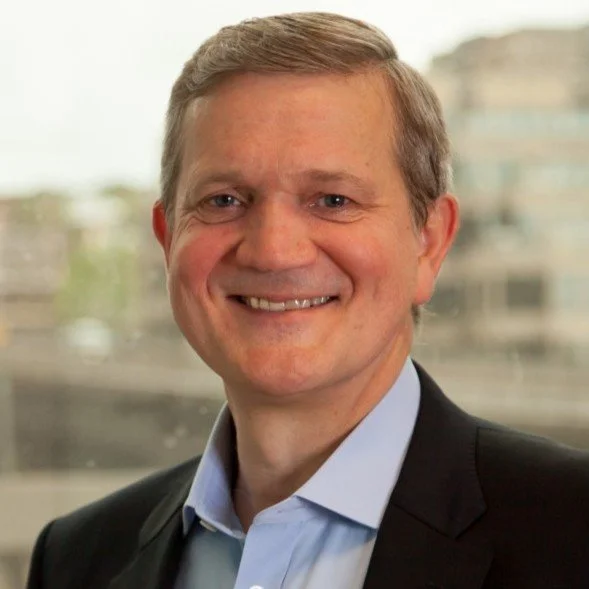
Allan Tillack
Allan Tillack is a Sydney-based executive and team coach with more than 35 years in the global pharmaceutical industry, the last ten as country head for Australia and New Zealand. He was CEO and General Manager at Abbott Nutrition ANZ and at Sandoz Australia before leaving corporate life in 2018, and he holds a Master of Business Coaching and an MBA from Macquarie.

Andy Sheats
Andy Sheats is a Melbourne-based executive coach who works almost entirely with CTOs and CIOs. Born in California and raised in Hawaii, he started out in Silicon Valley in the nineties and moved to Australia in 2000, where he led strategy and M&A at REA Group and co-founded health.com.au. He left his last CTO role after running the downsizing of his own team and choosing to be the last one out the door.
-
Pod (08:11.251)
Alan, Andy, welcome to the podcast. Great to see you both again. It's been a while.
Allan Tillack (08:16.946)
to be here.
Andy (08:18.082)
Yeah, thanks for having me.
Pod (08:19.851)
I've invited you both onto the show because I was really keen to hear your stories of not just career transformation, but life transformation after 50, because you both have done something quite extraordinary in a similar way and in your own way. But before we jump there, maybe Alan, I might get you to have a stab at this first question. And what will our audience learn from our conversation today? And why should they stay listening to the three of us talking?
Allan Tillack (08:46.218)
Well, with a little bit of luck at the end of our discussion today, they may get a better insight in terms of what are some of the really important considerations that you should grapple with if you're looking to change the direction of your life at this mid-stage of life. And hopefully come out of it better prepared to do so rather than doing something spontaneous and hoping for the best. Maybe this is a reflection of why I think, but...
you know, have a plan and really give some deep thought to this is a big step and if I'm going to take that big step, what are some of the things I should really consider not only at an intellectual level, but also at a deeply personal level.
Pod (09:30.125)
Fantastic. And Andy, how about you?
Andy (09:33.23)
think with me, you're to hear with somebody who had a perfectly good life, role, identity, and decided to blow it up and walk away anyway. It's not running away from it, but running towards something that I was really excited about, which actually wasn't to be an executive coach, but was to spend the vast portion of my year hiking, skiing, backcountry climbing, mountain biking, and remaining professionally engaged because I enjoy that to a degree.
And so basically founding or forming an executive coaching practice around that to sort of help me be on the whole much more fulfilled than if I was just skiing every day, which ironically isn't completely fulfilling.
Pod (10:23.715)
I've said to you both over the last couple of years, or watching you both do what you do, that you've done an amazing job of designing a life and maybe even engineering a life that you really want. And as you said, Alan, it's not a spontaneous thing. We just throw out an idea and follow. You've actually very purposefully designed something that you wanted to grow into and live into that included.
the ability to travel the world regularly whilst you're still working. And I'm going to start with you and then Alan be keen to hear you. Before we jump into the change that you started thinking about it and crafting, give us a snapshot of your career in terms of where you were at that peak of the career we decided is no longer what I want. I want to blow it up.
Andy (11:09.55)
Yeah. I mean, for probably 30 years, was a tech exec. You know, I started working in Silicon Valley in the nineties. You know, CTO, engineer, CEO, sort of the whole thing. And by any measure, it was working like it was great. really enjoyed actually towards the end, you know, I would say I enjoyed a quarter of my work. I liked half of it and I probably hated the last quarter. So on average, I liked my work.
But there was a lot in there that wasn't so satisfying. And so the question for me really was really not about am I succeeding, but is this actually the person that I want to be? Is this how I see myself living through the rest of my life? And for me, I guess I'm really lucky to have a really supportive wife, Jane, who I don't think you've met. And, you know, yeah, this was a transition we were going to make together. So we've been sort of working through those questions over a couple of years.
And, you know, but ultimately it ended up with me walking away from working as a CTO and started coaching other leaders, CTOs and CIOs who were kind of going through many of the versions of things that I was and spending huge amounts of time away, just generally adventuring, chasing snow. Last year I've been up, you know, into the Himalayas quite a lot, Canada, Japan, here in Australia. And that gives me like tremendous joy.
Working with emerging leaders really caps it off and makes it great.
Pod (12:45.027)
And I've watched you over the years getting an increasing sense of joy from just the last thing you said, working with emerging leaders and being able to help them look around corners, specifically the corners you've already been around in the past, and therefore able to help them understand that that's a pretty dead end, that corner you're about to go around. How about you move over here a little bit? It seems to bring you a lot of joy, that process.
Andy (13:08.462)
Yeah, I mean, I actually, you know, in retrospect, when I was in my last job, which you knew me there, right? And I really enjoyed the job. So I was CTO, it was a really great company, full of purpose. But I was able to influence one company, eight or 10 direct reports, couple of hundred people. And, you know, now I find that I'm having a similar level of contribution, but probably about 10x.
what I was able to do as a full-time employee and still doing all these other really enjoyable, great things that I really want to do in my life while I still have the physical ability to do them. yeah, so think that's, it's quite a good, for me, I mean, being able to sort of create that has been really wonderful.
Pod (13:55.906)
Alan, how about you? You weren't in technology, you were in the broader healthcare industry. Give us a snapshot of where you were leading up to the idea of this may no longer be the right place for me going forward and I want to reinvent myself.
Allan Tillack (14:08.554)
Sure, sure. Well, my career spanned over 35 years in the pharmaceutical industry. So I started as a sales rep on the road and then moved through different levels of sales management leadership into sales and marketing. And then ultimately the last 10 years I had with two separate companies as country head for Australia and New Zealand. So working for a very, very large multinational pharmaceutical companies. And it was a great industry to work in. It was very exciting, very rewarding.
And I really enjoyed the corporate path that I had. And a bit like what just Andy said, so at the time when I was starting to think about, well, what next? It wasn't as if I was saying to myself, I'm hating getting up and going to work in the morning. But the sense of fulfillment, the sense of stimulation was starting to wane. Because in reality, I had been doing that sort of work for 10 years.
And so I was looking for the next opportunity, next opportunity for challenge and for growth. And personal circumstances were such that that wasn't going to occur within that environment that I was in. But I enjoyed the corporate career that I had. It was very good to me in terms of my own personal growth and professional growth. It was very rewarding financially, but that was no longer enough. And so I needed something.
something more, something different. So I first of all looked within the corporate environment, but then thought that maybe the answer lies elsewhere.
Pod (15:44.067)
conversation with you at the time where the organization had asked you to consider a bigger role going to an Asia wide role where you were leading several countries and for family reasons then that was not possible for you and I remember you saying if I have to stay on my current role doing these quarterly budgets for another two or three years it's gonna drive me mad as in I've been doing these quarters every quarter for ten years and you know doesn't get very new after a while
Allan Tillack (16:09.866)
Well, maybe to expand on that, I remember one pivotal discussion I had during this transition period was with a colleague who was the head of HR regionally for one of the companies I was working for. And we were discussing the fact that when you achieve these senior positions, you spend the first 12 to 18 months learning the role, then you understand the processes that you need to go through.
So the quarterly budgets, the annual operating budget, the strategic plan, et cetera, et cetera. And so you get to build up a competence there. And then the next step is you get to a state where the mere thought of going through those processes make you physically ill. And I was starting to get to that stage, you know? So I'd been through it many times and the excitement, the stimulation was starting to wane.
Pod (17:03.339)
Andy, can come back to you? You said that you were enjoying very much a quarter of your role. Half the role was good, and there was a third or a quarter, whatever the figure is, was not good. You have said in the past that in hindsight, you were probably going through some degree of burnout, and that might be part of what was leading to not liking some of the job. Can you talk to that in terms of to what degree in hindsight do you look back now and go, this is where I was,
whilst I was no longer enjoying all of my job there's also this happening for me and therefore that might be part of your thinking.
Andy (17:40.162)
Yeah, I I sort of said earlier, you know, I think I enjoyed about a quarter of my job. I liked about half of it and I probably hated a quarter of it. So on average, it sounded good. But, you know, I mean, I met you through a period when, you know, some of these for the parts of your job that you dislike. mean, how many more budget meetings can I do? The thousandth one is very much like the first one. And so, you know, not a lot of joy and fulfillment in that.
quarter of my day. But I found that the quarter of the day that I liked the most was actually coaching of a sort. I mean, it's one up coaching. So you're not, coaching people who work for you. And it's not exactly like coaching outside of the company. But I really enjoyed that being part of a person's development in a way that was probably new and kind of interesting and exciting to me. And
And that got me, that kept me going, but I couldn't see myself moving to a bigger, better version of the job I had at another company because that was just rerunning the play again. I would still really be sick of that last part of the job. I think it was a sense of a type of burnout actually that maybe it's just a task related burnout as opposed to really the whole job or the role.
And so, yeah, I found really wanting to design a way that I could do more of the part that I loved and very little or none of the part that I hated. that was really kind of part of what really got me moving down the path to reimagine a different future. At the same time, I had friends dropping from cancer and other things. And I realized that, you
I mean, I was probably only in my early mid fifties when this started and you you realize you just don't have forever. And I have a lot of very physical aspirations that I know I won't be able to do. You know, I would think even in 10 years. So yeah, so the clock was ticking and kind of it all came together that it was best really for me to actually jump into it. But
Andy (20:03.5)
Beginning, and we can talk more about it later, but beginning that process of designing a future took a while. It didn't happen in one day.
Pod (20:12.651)
So executive coaching has been around for a long time, certainly in the UK, the US, Australia, where we all are. It's quite a mature industry in the sense of most organizations who are 50 people or above will engage with executive coaching at some stage and most people who are sitting in the C-suite like you guys were will have engaged in coaching at different levels. Either hiring coaches for your team or engaging for yourself. So the notion of that is not new. The number of people who are sitting in C-suite roles like you guys were
who then become executive coaches is actually very rare. So I'm interested in the second half to help other people understand the transition of building a third life. But maybe without sharing whatever you want to share, what experience did you have in executive coaching that allowed you to think, this is something useful, maybe I should go and explore the process of doing it for somebody else? And Alan, I might start with you on that one.
Allan Tillack (21:11.038)
Yeah, that's an interesting question, Pod. I think for me, the realization by having access to an executive coach, the realization that a lot of the challenges that I was facing in these senior leadership roles were common, were not just singular to me. I think that helped a great deal to realize that
hey, there are some very real challenges here. Some of them are very deeply personal, you know, but sometimes we just show up in the best light. But I think also to understand that these are challenges that are faced by many, many people in the senior role. So I think that I was surprised at the benefit that I got out of executive coaching. was initially tapping into that because it was offered to me within the corporate environment. I thought, well, why not?
It can't What I was surprised at was how helpfully beneficial it was and quickly. I do remember, you you indeed, my executive coach, I do remember in our first meeting you asking me a series of questions and I can't remember what the questions were. What I do remember was the feeling of, well, it was an shit moment for me because I didn't have an answer for those questions.
And it was painfully obvious to me that I should have, if I was going to be an effective leader, have a perspective on that. And so that was really, really powerful early on for me to understand. Now, if I jump around a little bit here, if we go to Marshall Goldsmith's, what got you here won't get you there. That was one of those moments for me to realize, my God, if I'm going to be successful in this new senior role, I really do have to make some shifts. So what I've done in the past, great, but it's not going to be enough.
And so I thought the executive coaching was, it was an eye-opener for me in terms of where I could take my leadership.
Pod (23:11.875)
You and I have become fast friends ever since you left corporate life and you moved into your next career. But can I safely say you've never forgiven me for that uncomfortable moment? You made me buy beers ever since, that first moment. But I think the point here is the process of coaching forced you to look at aspects of you or your leadership that either wasn't obvious to you or you hadn't considered before then.
Allan Tillack (23:23.402)
you
Allan Tillack (23:40.606)
Yeah, I think that's true and probably I'd add one other element, look at elements of leadership that I wasn't comfortable in looking at.
Pod (23:49.539)
Andy, how about you? What was the actual process of coaching for you that got you to a place of considering, this is interesting, therefore maybe I should consider it elsewhere.
Andy (24:02.03)
I mean, I had many years ago when I had my first CEO job.
All did not go as planned. And so I had actually a very kind coach who came in and helped me through it. at the time I just thought, oh, this is sort of a one time thing. And that wrapped up and it worked really well. And I was really blown away that I was helpful as was. But then several years later, I don't know if you'll remember the first time we met was when you were giving me a debrief on a 360. And I walked in like,
Fully protective. I think I might have said I've worn my box in here because I've been through this before and I know what to expect. And I was very protective and I don't know if you, I'm not sure if other clients were quite as bad as I was, but I remember, I think I leaving the room at one point because I just couldn't do it. And then to find that like not a month later, we're having these fantastic deep conversations and it's actually making a fundamental shift.
in a number of behaviors that I had that were really holding me back and hurting people around me at work and all kinds of things. was like when I look back, I think how could anyone have liked me? And you look, think, and many people did, so it wasn't that bad, but it was not as good as it could have been. And yeah, for me, I think it was just so fundamental. And when...
In one of our later sessions at the end, I was talking about someday life in the future and you had said, you know, I've, I've been coaching for a long time and I think it's, this is something that you might enjoy and might be good at. And you might be good with tech leaders, but more likely you might be good at getting the gig with tech leaders. But if you use what you know in that coaching, you'll blow it. And so.
Andy (26:03.926)
I mean, I took that to heart. took me a while. I mean, it was probably a couple of years later when I rang you back and said, what did you mean by that? And then ultimately started down that path, but it did put a seed in my head, you know, at that, wow, maybe I could have the positive influence on other people that coaching has had on me. And it turns out that I could. So, learning.
Pod (26:30.019)
There's a few things you said there that I think are worth talking to if you wouldn't mind. And that is the first, like, do I remember our first meeting? Very much. I remember you walking out. But more importantly, I remember you walking back. And to me, that was the real sign of, you know, none of us as human beings like getting feedback that we think is going to be bad or, you know, or not what we want. And
think we men as men tend to protect ourselves very quickly in order to try and logically disarm that feedback to find another way around it. anyone who's got to a senior level who can do that regularly knows how to do it really, really well. And Andy, think it's fair to say you and I have discussed this many times. You were masterful at that particular piece. But you came back in, right? You came back in to go, hold on, there's something in that feedback that's not quite right.
I remember you and the team, you were with the time we went away for a few days together as a group. And I think the day after that retreat finished, you rang me and said, okay, I really want to work in this now. to me, that was the first sign of this person can really, really truly own, as my friend Steve says, own their own mess and take responsibility for it, which is a key part of human development to mind any kind of leadership.
But what I've taken a lot of joy watching over the years for yourself is the subsequent joy you got in mentoring and coaching your own teams later during massive transformations in the organization. And then the board you were sitting on, again, it was the mentoring of the CEO and leadership team in that charity business. The joy you were getting from that aspect was just palpable, which talks to your own development a couple of years earlier.
Andy (28:19.79)
Yeah, I think it was always there. It was always underlying. But I think, you like many people, I was wrapped up in my own story and probably, you know, one of my colleagues that I worked with at the time, when just prior to coming back to you, he said, you know, at your best, you're the best I've ever worked with. At your worst, you're the worst. And he said, I just want you to be
closer to your best more often. That would be great. Like that would be so much fun. And that really gave me sort of like a touchstone. Like, I need to actually move in this direction. And I want to because we have a vision of ourself as the sort of person that we think we are. And if that doesn't align with what other people see, the choice is do we retreat further into it or do we try to move towards that person that we actually already thought we were?
and want to be, and so that, mean, for me that really struck a chord and has been, yeah, fundamental in kind of making life more enjoyable to be quite honest.
Pod (29:31.607)
You've reminded me of something one of my mentors said to me years ago in terms of the way I gave feedback or insight. They said, when you're at your best pod, it's like a sushi master. It's so clean. It's beautiful. It's masterful. When you're at your worst, it's like a machete and there's blood on the floor. Just choose which version do you want to be today. And I've never forgotten that. Like you've never forgotten your phrase.
Allan Tillack (29:48.65)
You
Andy (29:50.925)
Yeah.
Andy (29:55.95)
Well, and sometimes you need blood on the floor to make the change. But I've found actually one of the things that's been really great for me because I found hard. It's so hard to take feedback that I go into my coaching engagements. And by the time we get to the debrief, I kind of know how that person is going to react to feedback. And I go in with a, with a, I think a lot of empathy about making it effective for them.
so that they don't throw the tools on the ground as I did, because they may not come back. so I, yeah, I mean, one lesson for me from that was that I've actually approached that really carefully. I'm much more trying to be the sushi master now. And look, that's been just, it's probably more of a hangover on my own experience, but I think that that's been really beneficial for people who actually have our time with feedback.
Pod (30:54.595)
Fantastic. Let's talk about the building process. You've both arrived to the point of, I'm doing what I'm doing. I've been doing it a long time and very successful, but it's not what I want to do going forward. There's a chasm between that and where you are today. I'll maybe start with you. What was the process or the thinking or the building of, I want to stop doing what I'm doing to where you are?
Allan Tillack (31:19.242)
So then when I realized that we weren't gonna go overseas, my wife wanted to stay in Sydney, I started to think about, what is it that I really wanna do? Because she said, hey, you've got a great job, you've got a great income, why don't you do that for the next 10 or 15 years? And that really just didn't sit comfortably with me. So I started to think, well, what do I wanna do over the next 10 or 15 years? And we touched on,
with Andy this issue of burnout, I don't know that I was at a position where I was burning out, but I do think I was at a position where that was going to become an increasing risk. And would I be able to maintain the same levels of performance if I stayed in that current job? And so, you my wife said, stay in your current role, you're doing well, another 10, 15 years, that'll be great. And I said to her, well, one of the things that...
makes me concerned about that is, and this is ego driven, but I did not want to be one of those people where you got tapped on the shoulder and they said, well, you know, thanks for all of the time, effort and what have you, but you you're blocking the way and thank you and goodbye. So I wanted to be the master of my own destiny. So then that's when I started to think about what is it that I'm really enjoying? And in listening to Andy, I'm really
surprised at the parallels between our thinking and I started to realize that over the last sort of four or five years I was getting far more enjoyment and satisfaction out of seeing my senior leadership team develop than I had in previous years. So for most of my corporate career I was driven by personal ambition and achievement climbing the corporate ladder you know all of the classical stuff but I realized that I was getting
far more satisfaction out of seeing my team develop. So as you'd be well, truly aware, I had the head of legal move into a business development role in a secondment role there, the CFO transitioned permanently into a commercial role and I had several of my team take on regional and or global responsibilities. And so that was a real, that was really good. And then I started sort of bring together some of the threads of my own experience and some of the discussions that we'd had about, well,
Allan Tillack (33:39.658)
if that's where I'm getting the sense of satisfaction, is there a tie up here between the benefits I've seen from one-on-one executive coaching and where I might like to put my efforts? And there was a conversation that we had had many, many years ago that still resonated really, really strongly with me, which was you had shared with me that one managing director that you had worked with, they used as their litmus test for how they showed up.
day in, day out, and throughout the day, you said that this person kept on saying to themselves, the decision I'm about to make or the discussion that we're about to have, how is that going to resonate with the 300 dinner table conversations that are going to occur that night? And that really struck a chord with me in terms of the power of leadership. And again, I'm going to build on Andy's comments. You can do it one on one.
actually have a bigger impact. so that started to get me to think about, what truly do you want to do with this last chapter? What have you? Now there are a number of personal elements as well, because I wanted to travel beyond the corporate travel experience. I wanted to spend more than a day and a half in each city. And so I started to think about blending. How can I blend some work that's going to be intellectually stimulating, incredibly rewarding,
And maybe from an idealistic point of view, I started to think about how could I maybe give back? Because I did have the benefit of working in the pharmaceutical industry where there's lots and lots of professional development. And I thought, you know, if I can make people's lives as they're going through their own leadership journey, a bit easier, or maybe not so much easier, but more impactful, well, then maybe there'll be a lot more people having pleasant.
dinner table conversations rather than having somebody who's grumpy, disengaged and broadly irritable.
Pod (35:49.795)
I love that. I forgot that conversation you referring to, but I love that idea of...
How do you be mindful of, I've got 300 or 200 or 2000 or whatever number the number is, people in our business and they will have conversations at their family tables tonight because of the ripple effect down the organisation. So what can I do to make that a more pleasant conversation? Yeah, it's really powerful and really powerful North Star to be happy in terms of, and of course, as you both know, because you've both done this in terms of leading organisations and done restructures. Not every single day is a good conversation in an organisation, but if the majority
Allan Tillack (36:10.996)
Yeah.
Pod (36:25.221)
majority are, then there's something going on that's pretty good.
Allan Tillack (36:30.244)
And I think the, well, so you're right. The conversations aren't always pleasant and it's not always about harmony. But if you can have high impact, I do, you mentioned reorganization. One of the last things I did in my corporate career was a very, very significant reorganization. One in five positions were impacted and, you know, had gone through an exhaustive planning process for this.
but I still remember on the day that I was to make the announcement to the organization, it's five minutes before making the announcement and the group head of HR came and spoke to me just moments before and she said something again, which has stayed with me ever since and that is, they don't have to agree with you, Alan, they just need to understand. And I thought that was really, really powerful because leadership is not about getting everybody to agree. It is about
moving the business forward and taking the organization forward. Not everybody's going to agree with the calls that you make, but if they understand where you're coming from, then you'll be far better to get alignment.
Pod (37:38.733)
So what was your process from deciding, I am going to leave, I want to design a life that allows me to travel, allows me to give back, allows me to do work that's interesting, to you then decided to go to uni.
Allan Tillack (37:52.488)
Well, it's interesting the way you frame that part. I sort of recollect it differently. I do think it occurred to me that I might find executive coaching rewarding. so I enjoyed doing high impact work. And I thought that moving into executive coaching could tick that box, doing high impact work. So I started to think about that.
And my recollection pod is that we had a discussion and I said to you, listen, I'm thinking about this. And is there a course and I'm thinking sort of a two or three day residential course that I might be able to do. And you said, well, there is some additional programs that you could do. And six weeks later, I'm signed up for a three year master's degree in business coaching, executive coaching. And so I did half of that while I was still working.
I was heading up Australia and New Zealand for that company. I was also chairing the industry association at the time. And because I didn't have enough to do, I decided to do a master's degree at the same time. So, but that was really, really powerful. Because what I didn't understand at the time was, you know, I had all this lived experience in multinational organizations, leading teams from as little as four people up to about 120, I think it was at the max.
But that was my lived experience. What I didn't have was a broader theoretical framework, access to different models and ways of thinking. So doing that course was absolutely pivotal, I think, in rounding me out as an executive coach. It also, I think in many respects, was a three-year reflection on
the good, the bad, and maybe even the decidedly ugly elements of my own leadership. So I thought that was really, really helpful to see where I had demonstrated really positive leadership impact, but also where I had maybe fell short of the mark. Happened occasionally, I think.
Pod (40:05.367)
Very rarely, very rarely, but it was loud at the time, is that it? Andy, how about you? You had a slightly different angle than that. You were very clear early on when you started thinking about this, that because of your background, because of your tech sector, because of the...
Allan Tillack (40:09.482)
Diffening maybe, diffening.
Pod (40:24.515)
various roles you had and the board positions you had in tech companies, you could bring a lot of value to technology leaders. And from memory, you started just to do a small piece of mentoring type roles to begin with. Is that correct? And then you built from there.
Andy (40:41.452)
Yeah, I mean, I'll start, I'll back up just a little bit. So, you know, through my early fifties, I was, I was actually attracted to doing more skiing and the coaching, nothing that none of that even registered. It was actually, how do I quit my job and go hiking in the Himalayas for three months at a time. And coming out of COVID, the company that I worked at, you mentioned earlier, Open University of Australia, they had a series of workshops that how would we reemerge from COVID?
Ironically, right after the workshop, we locked down again. And the facilitator there was actually really good. He asked this question that was magic for me. was, can you describe your perfect average day? Not your perfect day, which is unachievable, not your average day, which is probably mundane, but the perfect average day that you could have. And he said, take 30 minutes and write it down. I had mine in two minutes. It just came out.
know, stream of consciousness. had never thought about it. Didn't have any words in my head and they just spilled out two minutes. I spent 28 minutes waiting for everyone to finish. And he said, does anyone want to tell their story? And I was like, I will, I will. I jumped up and, and our CEO at the time who you know well, leaned over and said, so how much longer have I got you? Because it was so clear where I was going. And this is actually on the back of having probably
three years of conversations with Jane about where we could go. And it just came together. And I went home and I read it to her. And from that point on, it was implementation. And then through that period of implementation, I really came down to, I actually just can't go off and do this alone. I'll be bored. And so then entered through this conversation of coaching could actually really fit into this well.
And so, yeah, when I left my job, I I left under similar circumstances to Alan, we had a pretty significant downsizing and I was having to let go a number of just fantastic engineers just because we couldn't afford. And it was clear to me that at the end of that, they didn't need me. We were simplifying things so much, they didn't need me. So I went to Stu, the CEO and said, hey, you know, at the end of this,
Andy (43:06.758)
I will let go of, I will do this with the people who work for me. I want to handle that myself because I want to handle it in my way. But then at the end of that, why don't I come and you do that for me and I will leave as well. You know, I'll let them go and I'll be the last one out the door. And so that was, know, and I went out of that and I was in a coaching course two days later and it was a short one. It was like a week.
And then, yeah, I started off just doing a lot of pro bono work with not-for-profits and friends and eventually kind of skilled up a bit. I was probably like the self-taught mechanic, I suppose, did the class, but then jumped in with the tools and just kind of built from there. And I actually went, I went broad. just was like Andy Sheets executive coach. And I realized that
pretty soon all my clients were tech leaders and then came back what you had said to me earlier about this would be a kind of a niche that you should probably consider and it became super clear and then I just went down to know CTOs and CIOs and that's pretty much 90 % of what I of the type of people I work with now and so it became very clear it went from you know a non-existent kind of reality to
to beginning but foggy to really clear.
Pod (44:34.945)
Yeah, two questions for Andy on that. The conversation you had with your CEO, Stuart, at the time, let me do this for my team and then you can do it for me. What was that like for him in terms of he had preempted based upon that two minutes exercise that, I might lose Andy. But then now you come into him and going, I put my hands up to go and.
So that's my first question. Second question I have for you is, for me, years earlier, the idea of you working with CTOs was so obvious, because your background is so huge. I'm not sure if you put the signpost onto Silicon Valley, but you were there. You were there at the beginning of Silicon Valley, so you've got this massive, extraordinary history of technology all over the world. And so my second question is, now that you're working with CTOs, how obvious is it to you now that that experience you have is so valuable? So two different questions for you.
Andy (45:25.794)
Yeah, so, you know, Stuart, our CEO was great. mean, in truth, this was the answer that he needed to get to because and I wouldn't be surprised if he would have come to me. It was that clear. For me, what was important that I handled my own people. These are people I really like love. You know, that's how I feel about them. And, you know, I want them to be treated with the respect and empathy that
I would want to be treated with. And the only way that I know for sure that's going to happen is if I do it. So I was really uncomfortable being the first one out the door, but it was pretty clear that I would need to be the last one out the door. And I also recognized that the job was going to become, you know, the 25 % that I didn't like was going to become 50 % of the new job. And so it was really just time. It was the right time. And I think it was right for the company.
So was actually, I think it was a wonderful conversation at the end of the day because we both were aligned on what was the right thing and it was a very simple thing to make happen. yeah, I'm actually, I would consider that one of my better days to be honest. I think that was probably one of the times that I felt like the real me came out into the room and I remain really proud of that particular interaction and all of the things around that.
Nonetheless, mean, we all, a lot of us lost jobs, but we did that in a way that was really genuinely respectful, I think. Then the second question was how obvious is this, the jump to coaching tech execs? It was, look, it's become now pretty clear, although it's interesting because I call my practice CTO coach, but almost all of my clients are CIOs. So whilst it's a very subtle difference to people who aren't in the field, it's a very
significant difference to people who are. So, but yeah, that's mostly, you in Australia, most of what we have are CIOs who run the tech for broader industrial companies, not necessarily inventing new technology. And so, but that's where most of my work actually is. And it's really, it's great because, you know, the CIOs, tech execs generally have the same leadership issues that all leaders have, but the context of the work is different.
Andy (47:53.654)
And so, you know, I often tell them any good coach can coach you. So, but really the reason why I enjoy working with them and the reason why I think they choose to work with me is with the con understand the context of the work. And there are, there are some things that are specific about CIOs and there are some things that are specific about CFOs and other execs. And so having, it turns out there aren't that, there just aren't that many coaches who have worked in tech.
and can bring that context to the engagement. And I think that that helps clients feel a sense of understanding and trust in being heard without having to explain the same story over and over. So yeah, in retrospect, it's super obvious, but it just wasn't at the time.
Pod (48:37.079)
Yeah. Now that you've both gone from running companies, you've both been CEOs, you've been a founder, Andy, you've been a CTO, and you've worked for some of largest pharmaceutical companies in the world. Now that you're sitting across from a C-suite executive that you're coaching, what's the hardest thing you find in helping them overcome whatever issue that they have facing them? And I might start with you with that one.
Allan Tillack (49:07.707)
So I think the hardest thing I found for myself is now what I'm seeing in many of the people that I'm working with. And that is to move from the intellectual to the deeply personal. And so, and I'm saying this in the context of a leadership challenge or a corporate challenge. So a professional work challenge and understanding what
how can you move beyond the intellectual to what is the role that you are playing in the challenge that you see in front of you? And one of the struggles I had was that my sense of worth over many of the years was I thought it was the intellect that I was bringing to the position, the problem solving abilities, the critical analysis and
those that that sort of thing, maybe best described, I had this this penchant for wanting to be right. And right all of the time. And so one of the the things that I had to work on was becoming comfortable with not having all of the answers, not being the sole repository of all great insight and what have you. And what that meant was that you had to
We'll use the word vulnerable, be vulnerable to the fact that, I may be in the most senior leadership role within this organization, but I don't have the answers. And some of these problems are just so complex that I cannot be the owner or the sole repository of these answers. And so what I had to grapple with was this really strong desire, my wife will confirm this, that I do have a desire to be right.
And so I found it a real, real challenge. And I think this is one of the things that I try and work with people is to say, well, let's not just stay at the intellectual level here, at the conceptual and what have you. Because I spent many, many years being very adept at defraying the real issue because I could string a sentence together and I could sound pretty coherent.
Allan Tillack (51:28.136)
but getting into the really deep issue about what is driving the behavior that you're showing up with. So I think that that is a really... That question that you're posing, it resonates very, very strongly with a particular leader that I'm working with at the moment, who is stuck in the hamster wheel of intellect. And I think that that's a real challenge to step out of that, to say what fundamental behavioral and mindset shift are you going to make?
so you can elevate the impact of the work that you're doing and the leading that you're doing.
Pod (52:04.077)
This talks to me about this ongoing conversation about...
What is strength? And what is strength for men, particularly as we come into midlife or beyond? Because those of our particular age or even a decade younger, the notion of being strong meant being self resilient, being the go to person, being stoic, not necessarily vulnerable, defend yourself because you might be attacked from all corners, et cetera. So therefore the notion of being right kind of emerges from that. Yet, as you've said, Alan, one of your learnings was we
allowed you to be even a more stronger leader was actually I don't need to be right and in fact I can't be right therefore being open to that is the most important thing. What's the jump from one version of strong means being protective or defensive versus strong means being open and therefore vulnerable?
Allan Tillack (52:57.94)
Well, there was one pivotal event that sort of demonstrated that for me. And this was a big shift for me. So I'm working for a European based pharmaceutical company. I still remember coming home from a European meeting. I'm landing in Dubai to read a text message from one of my team saying, we've got a crisis. I knew what the crisis, what the looming crisis was about. So you're landing tomorrow morning. We'll have a meeting at 9 a.m. So I'm landing at sort of quarter to seven in the morning.
Race Home Habit Shower and we have this crisis meeting and maybe trying to keep it very high level. We had an issue with the local health authority, the Therapeutic Goods Administration and an internal supply issue around the life saving antibiotic. And the remit from the Therapeutic Goods Administration was in
stark contrast to the internal desire globally as to how we would resolve this issue.
So it was very complex, very difficult. And I remember we had this meeting for two and a half hours and the discussion is circular, but it's very, very complex. Lots of competing agendas here. And then one of my team said to me, Alan, you're the boss. What should we do about this? And I remember pausing and I thought, well, I could try and talk my way through and sound very clever here. And then I thought, no,
call it as it is. And I said to him, have no idea what the answer is. All I do know is that it's super complex. It's really challenging. And we as a collective leadership team have the responsibility of mapping out a way forward. But if you're asking me, what should we do? My answer is I don't know. And I think that was pivotal that my leadership I was far more open to being
Allan Tillack (54:59.774)
vulnerable from that point on.
Pod (55:02.755)
and the stakes are big, right? So saying, you know, the answer and getting it wrong was really a higher risk, high loss game for you. That's right, right, And how about you? Is there a question that you find that your clients need to answer or need to try and answer but are scared to or trying to avoid a particular question?
Allan Tillack (55:05.63)
The segment is very high.
Allan Tillack (55:11.21)
could have been life-changing and career-changing.
Andy (55:30.414)
I think with the work that I do, most of my clients, think the hard part is
Andy (55:38.126)
Let me just restart that. Although I would, before I restart, I might actually just chip in on what Alan just said. I remember when you were giving me the feedback, the debrief from all of my peers, and I said, how did you get this answer? Show me the math that adds up to that number. And you said, it's highly validated. I could tell you the answer, but.
I'm not going to, I'm just going to say this is the feedback from your friends and your colleagues and you can take it any way you want. And I thought, but having to be right, know, I'm like, show me the arithmetic. I don't think you're correct on that. So I just remember that moment and your answer really just stopped me. So.
Andy (56:33.122)
So I start every engagement just as a matter of course, working on self-awareness. So who is this person? Who do they think they are? Who do other people think they are? And I definitely buy into the maxim that self-awareness is the start line for a career development or leadership development. But it's also really hard. mean, people generally, they have a view of themselves. Other people have a of them. Very rarely do those things intersect.
And so getting that moving towards that intersection, even just recognizing that they aren't the same and then it's okay. That's a good start. And that's really hard, right? Just to say, they see me here, I'm over here. And just accepting that I am, they don't see me the way I see me. That's really tough. And then that's the beginning of how do we map out, you know, where do you want to be? Do you want to be, do you want to...
overlap to them or do you want to go somewhere else and both of you you have to go there and take them along. That is a really challenging thing for people because we all have this view that our definition of the universe is the universe and you know, clearly it's not but that's that's it's a tough start and but I think it's really necessary and so yeah, that's that's where
That's the hardest part for our clients.
Pod (58:03.235)
How about...
You guys, as many folks who work in corporate roles, have had the benefit of either somebody internally doing some coaching with you or somebody externally doing some coaching with you. There'll be many folks listening to this show who have never been exposed to that. And therefore they go, oh, that's fine for you guys, but that's not my life. That's not my environment. That's not my industry, et cetera. So thinking about the man who's listening to this who's 40 or 45 or 50, who's going, I've never been in a coaching process, but it sounds interesting. It sounds useful.
What would you recommend that person to start doing in terms of how do you build up some self-awareness or self-reflection? How do you take stock of who you are and where you come from in order to make some decisions from that point? Or at least as you said Andy, to at least bring your perspective closer to what it actually is. What's the starting point for someone who doesn't have the benefit of an executive coach?
Andy (58:58.476)
I think there's a really easy way to get going, which is just ask people. And so, you know, there's a great process. Goldsmith talks about, right, his feed forward process, which is easy, right? Go to someone who you work with and say, hey, can you tell me what are some things I can do to be better for you in the future? And then you go back two months later and say,
As you know, this is what I'm working on. This is the feedback you've gave me. As of now, what are some things I could do to be better for you in the future? And you just get this constant feedback loop, which is free. It's available. You could do it yourself. And if you get three or four of those that you can triangulate off of, you sort of have the diligence to follow up and get mid-course information correct.
and just work towards a sort of continuous improvement process in that way. That's like a great start. That's a great start.
Pod (01:00:04.205)
You know what's so cool about that Andy is that doesn't just apply to work, right? That can apply to your home life with your partner or to your mates or to your being a father. And I remember you and I had a conversation about something similar a number of years ago where we both went to our kids and said, it's just a matter of interest. How could I be a better dad for you? And I think we both got feedback, didn't know that. There you go. All right, I can try that.
Andy (01:00:24.685)
Yeah.
Andy (01:00:28.782)
Yeah, yeah. Well, I mean, you know, I, you know, I all times I hear I had a client recent the other day said, you know, well, at home, I'm like this at work, I'm like that. And I actually just, you know, you're a person, right? You're only one person. And unless you've got split personality sort of disorder of some sort, you're the same person. And in one of those places, you're being that person maybe comfortably and at the other person at the other place, you're being you're presenting uncomfortably.
But I think it's important that you actually are that person at home, at work. And if you're showing different sides, it's probably hurting. Because it's fake. Something's fake. And it's usually hurting you as well, because you're trying to keep these two different versions of yourself synced. yeah, think it's really... That's actually one thing we try to work towards is be the person you are. And in fact, at work...
Pod (01:01:08.107)
Yeah, it's hurting somebody somewhere, whether it's you or somebody else. It's definitely hurting them. Yeah, that's right.
Andy (01:01:27.01)
being more of the person you are rather than less.
Pod (01:01:30.755)
Yeah, yeah, yeah. And then when you said the person you are, the better version of the person you are, try to be more of that person. Yeah, I understand what that is. And how about you for someone who doesn't have the benefit of your skills or your services, but is interested in doing more of what you have done? Where would you encourage them to start in terms of they don't have access to you, but they could do something by themselves?
Andy (01:01:37.132)
Yeah. Yeah. Yeah.
Allan Tillack (01:01:57.214)
Yeah, I like a lot of what Andy has just said. This idea of feed forward, I think is really powerful. That is, and maybe even taking it one step further, say, I've identified there's some things that I'm working on. Could you give me feedback as to when I do it well, or when I'm maybe I'm taking a half a half a half a step back. What I did add to Andy's insights there would be saying to develop a real discipline around
reflection and I found this difficult. know early on in the work I did with you on coaching, you were quite enthusiastic and encouraging about this reflection. At the time I was too busy to really spend a hell of a lot of time on reflecting and you know that's one of the I think one of the challenges for people is that they're caught up in their own business but I do think
sticking at it and even if it's starting slowly and starting with only a little bit, but having this discipline and developing a practice of reflection, I found it hugely beneficial, not only in the professional sphere, but also in the in the personal sphere. And then I think it was during the master's degree that I got exposed to this idea of three different levels of reflection. So reflecting on on the moment of what has happened.
So at the end of the day, what happened? What went to hell and why? What went really, really well and why? And maybe the most challenging question, what was my role in all of that? Then reflecting ahead of the moment. So what's ahead of me today? How do I need to show up as a leader or a person in that? And then this.
When I first started to experience this third level of reflection, it sort of dipped my head in a little bit, but it's a bit like an out of body experience, know, that reflecting in the moment saying, well, gee, I'm having this discussion with Bill and it's not going well, but what is happening and doing it real time as in, so it's almost like this out of body experience to sort of get off the dance floor under the balcony and have a look at what more broadly is happening. But I found
Allan Tillack (01:04:16.714)
professionally and personally, that I had greater clarity the more I dedicated to that discipline of reflection. And so, you know, we're talking more broadly about the transition. I found it a lot easier to make the key decisions when I had spent that time reflecting about what is it that motivated me? Where did I get my sense of satisfaction? And truly, what did I want to do with the next 20 years of my life?
Pod (01:04:47.196)
I love what you've outlined there, Alan, that notion of...
you can reflect on an event that's happened already. So what happens? You said, good, bad, how was my role and all that. You can apply that to an argument with your spouse, an argument with your kids, a footy game or work. You can apply it to anywhere. So what happened? As you said, preempting and going into this conversation, how do I want it to happen? But then that meta view of I'm in this moment, I'm about to shout at my dog or my wife or whatever, what's happening?
right now. And how do I pause that? That is the self-awareness that you're both talking about is I'm catching myself here. And the version I'm catching is not the version I want to be. So what do I do? What do do with that?
Allan Tillack (01:05:34.602)
Well, I have to say, I found it a hell of a lot easier to do in my professional life than my personal life.
Pod (01:05:40.323)
but I'm sure your personal life has benefited enormously because of all that. Speaking of personal lives, you've both referred to your wives in glowing terms, have to say, of course, but in terms of the role that they had to play. mean, Alan, for you, your wife was clear that the family was not interested or willing to move and therefore that was a catalyst for you. Andy, you talked about you and Jane were getting
I have a 30-minute exercise I did in two minutes. Here is the outcome. Can you talk to the importance or the credit of the relationship with our partner, our spouse, or your case your wives, in terms of as we move into and past midlife, how that relationship helps or grounds us? Many of our listeners are coming out of or going into divorces and therefore that may not be a
Andy (01:06:13.07)
you
Pod (01:06:40.197)
strong, but many of our listeners are very, very strong in the relationship and that's a core foundation for them. What's your sense of that question in terms of the women in your lives and the role they've played for you both?
Andy (01:06:52.65)
I mean, for me, actually, I'm lucky Jane was actually probably as much a catalyst for my change as anything, recognizing some realities in my diminishing physical ability, which I'm still fine. But you can definitely feel it from year to year and definitely decade to decade. And knowing that ultimately this was something that was that important to me. And in some ways, catalyzing me to
to begin to consider what else, how I'm gonna make it happen. I've also found it really useful because I think, like if you are in a relationship, being able to work on a vision that you have together is a really important part of the relationship. And if you're in a relationship and you fail to do that, you may not be in a relationship for very long. And so for me, that actually working with her towards a more
interesting future for both of us has been amazing. look, in truth, we're on different stages of the changes we're making. Jane's still working in her job as a university lecturer. She loves it. And she's working through being, you know, we do a lot of the things that I wanted to do together. Sometimes we can't. But ultimately, we will be. think, you know, it's just we're working down the path at different speeds, but we know that we're on the same path.
And that's really powerful, because otherwise without that, I think it would be difficult. I think if you're not in a relationship or exiting a relationship, being careful to kind of moderate your hopes and aspirations around things that if in five years you look back and feel confident that those that you've tested your thoughts enough. I have a person to bounce them up against. think without that, I might have actually jumped to some
conclusions too early or incorrectly. And I think that that's just something to be aware of. But in some ways, making the changes easier then because you don't have to take someone along. And so it's, I think just being aware of what your situation is and making sure to get the most benefit out of that.
Pod (01:09:16.289)
How about you, Alan?
Allan Tillack (01:09:19.38)
Well, I think it would be fair to say that my wife has been a catalyst and the support right throughout my career. So I don't think I would have achieved the heavy heights that I did, you know, scaling the corporate ladder if it wasn't for her support. Or if I did do it, I would have done it in a less a less principled way, if I can put it that way. I've always found her to be a great source of moral and
moral guidance and principle guidance. So we started our family a little bit on the latter side and I remember when my son was first born one of the questions I had for myself was well what's going to give here? So I've been dedicating a huge amount of energy and effort in growing my career so am I going to have to put that to one side to be a good dad, a good parent or am I going to be a
you know, continue on with the corporate thing and leave all of the parenting to my wife. And I think, well, what I subsequently realized is these things are not mutually exclusive. But along at some of the key pivot points, what I realized was that my wife's insights and perspectives protected me from maybe just being a bull at a gate with let's move this career forward.
You know, so a good example is the pivotal decision. You know, when I said to her, the next moves to Singapore or Europe or what have you. And she said, I didn't want to leave Sydney. And she helped me understand where her thinking was, which was really insightful. She said, do you really want to go and do a couple of international assignments? Break the sort of the sense of community, the sense of, you know, some of our deep friendships here in Australia, and then come back to retire when those people have moved on.
and you've broken those connections or what have you. And that proven to be a really, really deep, a deep insight. So I think in many respects, you've been a fantastic safety net for me to make decisions that probably I would have sacrificed things that are important to me that I wouldn't have appreciated at the time.
Pod (01:11:41.869)
We started with this combination with the notion that you both have, in my view, taken great steps to designing two or three decades of your life very, very proactively with a lot of thought and panache even. I know, Alan, you never think I use the same word to you and panache in the same sentence, but you both have designed life in a lovely way that suits exactly what you both need. For someone listening to this who's going, that sounds great. I'd love to have some of what they have.
and I'm there at the early stage of thinking what would you be encouraging them to do or to think about or to reflect on in the sense of you could design, you can design your life, just think about xyz and I'll start with you.
Andy (01:12:28.28)
What I hope people take away from this conversation is that making planning a life transition takes time. And so if you're sitting there wondering whether you're too early to worry about it or that it's just too risky to change or you're too late, I really would want to make the case that right now is the time to begin thinking about where you want to be to paint the, it takes time to paint the picture. And as I said before, if you're in a relationship, takes
maybe a little bit more time. But that future is there, right? And I think most people ask them, and I think it's this question of what you wanna do when the flexibility is there in your life. Kids could slow the transition or could make it a different transition. Financial stability.
There's always the question, how much is enough? And the answer from everyone is more than I have. But in truth, that's really not always the case. And so I think it's thinking through those things and then beginning to figure out what it is that actually draws you to something else rather than concentrating on what it is you don't like in the current situation. But that takes time. And I think it's like right now is the time to begin thinking about it. It took me probably six years.
to actually pull the trigger. And I think that time has made it a transition that didn't feel like a dislocation. It actually went smoothly. I avoid the word reinvention for myself because I don't think I am. I think I'm just iterating towards the person that I actually was always meant to be and that I actually probably always was on one level. And that's how I want it to feel for me. I'm not reinventing myself.
I'm actually just moving towards being that person that I think I'll enjoy being and that other people will enjoy as well. And that takes time.
Pod (01:14:35.107)
What does that feel like, Andy?
Andy (01:14:38.25)
I mean, ask me, was skiing, you know, wastey powder three days ago and now I'm here today and I had a client yesterday and I'm with a different one today. You know, it's an amazing, it's great because I'm being able to mix, you know, like truthfully.
I'll read you this perfect average day thing that I wrote. So perfect average day. I wake up to the sun through the window, looking out at nature. It's about 730. Coffee and a read with Jane here until about eight. Then I'm on my skis or mountain bike till about 10 or noon if it's a ripper day. Riding with my tribe in the winter or the summer, breathing hard on the way up, buzzed on the way down, just scared enough. Yeah, it's really hilly here. Coffee.
and then on the phone or video with professional stuff with people I care about through the afternoon. Yep, I'll see you in the office on Wednesday. We can have lunch. I'm thinking I can get a quick nap or maybe a couple more laps in before dark. As the sun drops, having a drink at the pub with our kids or mates, comfort food, debriefing the day, planning tomorrow, a hot bath outside, a book, bed by nine, sleeping with the windows open. Like that was my vision of what I wanted to do.
And, you know, I'm pretty much doing it. And so that's, yeah.
Pod (01:16:07.011)
That's the perfect average day. How good is that? How good is that? How about you, Alan? What's your sense for someone who's sitting here going, want more of that perfect average day? Not his version, but my version. Just don't know what to start with.
Allan Tillack (01:16:21.162)
Well, I'd broadly echo Andy's comments here. I've only met Andy for the first time this morning, and I'm amazed at the parallels between his experience and perspectives and my own. I think the planning element of this is really, really important. And when I say planning, I'm really thinking about it, not only from an individual perspective, but if you do have a partner, I think it's really, really important.
to have those discussions and to really flesh out where it is you're heading. know, when I think about, you know, so I stepped out of the corporate world mid 2018, I still had 18 months of the master's degree. I did a deep dive into that. Graduated at the end of 19. And then in March of 2020, a little thing came along called COVID. And I was gonna say I had a bit of, I had a very large oh shit moment there. And I'd stepped out of the corporate world.
Covid came along, I had all these proposals for work out and then it all fell off a cliff at that time. And so the fact that we had been through this together, wife and I, in terms of where we were heading to and what was Nirvana going to look like, Nirvana was very much, and this just described lots of travel, blending work and travel, the kids getting a little bit older and self-sufficient and what have you. But to have that hiccup of Covid,
and the clarity on both of our parts as, well, we didn't expect COVID, but we are moving to something beyond the pandemic was really, really important, which touches on another point. a lot of what we've discussed here has been, I think, highly aspirational. But the other element was that we had a solid financial position to do this. So we're in a position where we could take a bold step.
And it wasn't going to mean that the family would end up destitute if things didn't happen. And I think that was really, really important and absolutely amplified through this little thing called COVID. So I think having that really, really clear was very, important. now Andy talks about being waist deep in powder snow three days ago. Well, on Friday, I head off
Allan Tillack (01:18:47.966)
to Bali to meet my wife. She's been there for a week and will be in Bali. And then I'll zip across to Singapore for a couple of days work. you know, it really is, I sort of pinch yourself stuff to say that we've landed where we have.
Pod (01:19:03.107)
I'm taking from you both is first of all designing a second half of life is absolutely within our mandate and premise and ability. We need to get clear on what our perfect average day looks like as per year or beautiful reading their ending but also we need to bring our partner and family with us a little bit and at least make sure we're not making rash decisions and they're planned and we have enough finance to allow us to do it. don't need too much but we need to have enough to give us the ability to do that. But I'm also hearing from you both
you listen to or you're aware of what you enjoy doing and you thought I enjoy this part of my work in my life I wonder could I take that and make that more often because I'm not keep enjoying it and in your case it happens to be executive coaching or leadership coaching it doesn't have to be that could be could be many many things but you've you've taken something you're going I can make that and I can I can do that more often and I mean I can design my life around that which which is really really cool coming to the end of this conversation Andy is there anything
I haven't asked you that you think would be useful to ask you for this conversation.
Andy (01:20:14.05)
I come back to that in a second? Let me just consider that for a second.
Pod (01:20:15.715)
You can. And, how about you? Is there anything I haven't asked you that you think I should be asking for this conversation?
Allan Tillack (01:20:24.33)
Well, as has been my experience, Pod, you're very good in your questioning. So I think we've covered a lot of material here. I guess the one thing that I would say, it's not so much you haven't asked the question, but the thing that really resonates with me through this, and I certainly don't want to put a religious context onto this, but I think what's really, really important in making a transition like this.
is, you know, I think it's in the Bible somewhere, man, know thyself, and then be true to thyself. I think that as a principle is really, really important. So we've covered a lot of territory in the discussion that we've had today. But the essence of it for me is distilled in this. Do you really know who you are and what it is that motivates you and gives you a sense of fulfillment, satisfaction, enjoyment?
And can you be true to that on a day-to-day basis? And maybe I can give a really simple example of this. One of the most palpable differences I've noticed moving out of the corporate world is when I was in the corporate world, traveling all the time internationally for work or what have you, on the weekends, I'd catch up with mates for a coffee. And we'd have a great coffee. And we'd spend 45 minutes together, lots of banter, big, fun. But there was always, I found for me anyhow, there was this cloud of
gosh, there's this work, it's sort of on 24 seven. What I know now is I'll catch up with mates for a coffee, it won't be 45 minutes, it'll be two hours, and then maybe another 30 minutes tapped onto that. And the richness of those friendships now, I could never have foretold that that's the way it will go, but they're the same people.
We're engaging in the same activity, having coffee, having banter, but I just find it that there is a much, much deeper connection.
Pod (01:22:28.707)
having had my wife say to me many times, Alan, are you going for a nine o'clock coffee with Alan or I'll see you at lunchtime? I can attest that what you just said is true. Andy, how about you? Has anything come to light with that question?
Andy (01:22:43.66)
Yeah, I think one good question would be what is it that I'm grieving or missing from my previous identity? And because there are things, you know, I think and look, everyone, regardless of what they do, in my case, have to take exact somebody else's auto mechanic. Everybody has their history. In my case, I miss on one level the easy certainty of seeing people through the day.
I miss, you I could go to work and for me work was always a lot of it was a social experience. Now I actually need to work to make and keep and engage with my friends because they're not all sitting here with me. And I read something actually around the time that I was making this transition. was an article in the Wall Street Journal that basically said men over their 50 are on average much more
lonely than they have been in the past. They had half as many friends as they had 20 years ago. think it was. And that on average, most men make no new friends after age 57. No new friends. I'm basically quite introverted. And for me, that was hell because I actually love people, but it's harder for me to make friends. And for me, like knowing that I have to go out and work to make and keep friends.
is it's a very conscious thing. But I miss just being able to show up at work and having it taken care of for me. So it's not the status or any of that. I don't never really, it's the social connection is something that takes a lot of effort that you really just have to invest in. I think that's true.
Pod (01:24:21.667)
No, it's a social connection. Yeah,
Pod (01:24:29.355)
It's a really important point you make, Andy. it's one of reasons this podcast exists is for that reason is to acknowledge that, as you quite rightly said, men are not good in this space as we get older. As we retire, we often tend to rely on our spouses, our wives, our partners, circular friends, assuming that we are in a relationship. And they don't always like that, of course, the fact that we're relying on them. yes, it doesn't take a lot of action.
To go out and get involved in activities where friendships can surface or emerge, but we seem to be reluctant to do so and So this is one of reasons for his podcast is is to shine a light on it's much easier than you think but We gotta do something about it. Yeah
Andy (01:25:15.886)
Well, and actually relying on our partners for our new friends means that we don't necessarily make friends that suit us. We make friends that suited our partner. I mean, I think, you know, it is true that, you know, people who take on sort of structured hobbies, you know, have regular cadence of meeting with friends and share kind of goals or challenges with their friends actually continue to build friendships. And so like I've actually have built like a real habit.
like a discipline around that for myself because I don't want to be that guy who dies someday with fewer friends than I had today.
Pod (01:25:54.115)
Yeah, Two questions for you, one for you Andy, one for you Alan. Alan, I'll start with you. What would the 75 year old version of you be asking of you today if they could ask you anything?
Allan Tillack (01:25:55.306)
That's a really
Allan Tillack (01:26:09.674)
Well, I think it's strongly related to what I just expressed a little while ago, which was, Alan, are you clear on where you gain your sense of enjoyment satisfaction? And are you being true to that on a day-to-day basis? So are you actually living to your spouse values and desires for the next period? And are you taking enough?
enough action there. I want to build on something that Andy just said if I could. I think it talks to the question that you have. And one of the learnings I've taken from my wife is that she is very, she's got all these multiple friendship groups and is always out having coffee. I reckon she's always out having lunch and having dinner or what have you. She might characterize it somewhat differently. Initially I thought, well, gosh, this is all just a bit excessive.
And then the penny dropped for me. She is very, very good at staying connected with multiple friendship groups. And I think that's one of the things. I'm a bit like you Andy in terms of my natural inclination is to be introverted. I don't like really meeting new people. But what I've taken out of observing what she does is I've tried to instill this multiple friendship groups and regular contacts and create different mechanisms.
for all that contact to happen naturally rather than it being sort of be forced. So I think that I'm moving towards that and I'd like to stay on that course.
Pod (01:27:47.661)
Peter Rieck, who was on this episode a few weeks ago, he said that his wife, like yours, Alan, is in multiple groups and each group seems to have a happy hour on different days. And she goes, she's happy every day because every day is a happy hour because she's in a different group. Thank you both. Last question, Andy, for you. What are your final words of wisdom for our listeners today?
Allan Tillack (01:28:02.961)
yeah.
Andy (01:28:11.906)
I'd say start now. Obviously, you're listening to this podcast because you know that you don't want to let the old man in. How are you going to keep the old man out? And I think, like I said before, it takes time to actually answer that question in a way that you can live with. So I just think starting considering that now is really helpful.
Pod (01:28:38.115)
Thank you both. It's been a joy watching you both go through the process of designing your second half of your life, not just designing it, living it fully and living it the way that you had planned and as you said earlier, and iterating it the whole time. that plan becomes more of a living document every single day. Thank you both. Glad you were here.
Allan Tillack (01:28:58.932)
Absolutely.
Andy (01:28:59.118)
Thank you.
